Last updated November 23, 2026
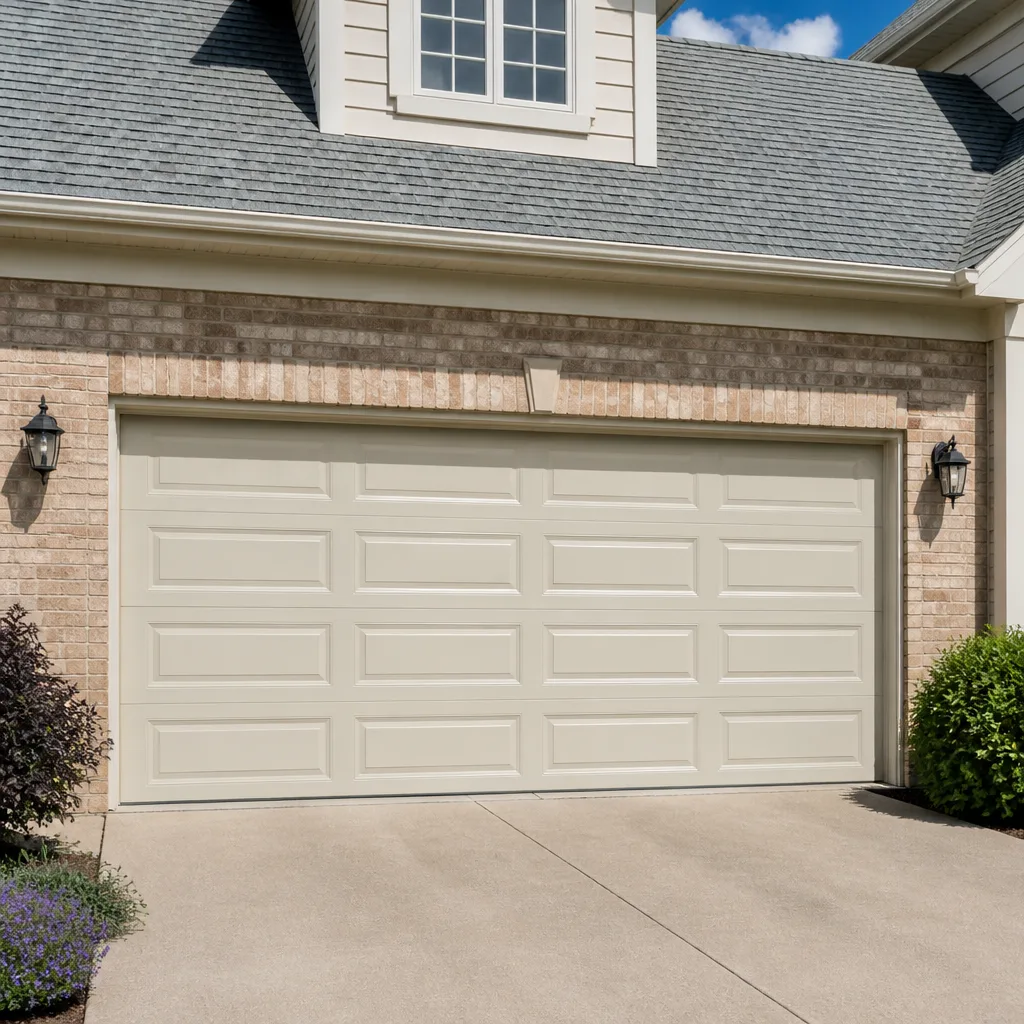 Raised-panel steel
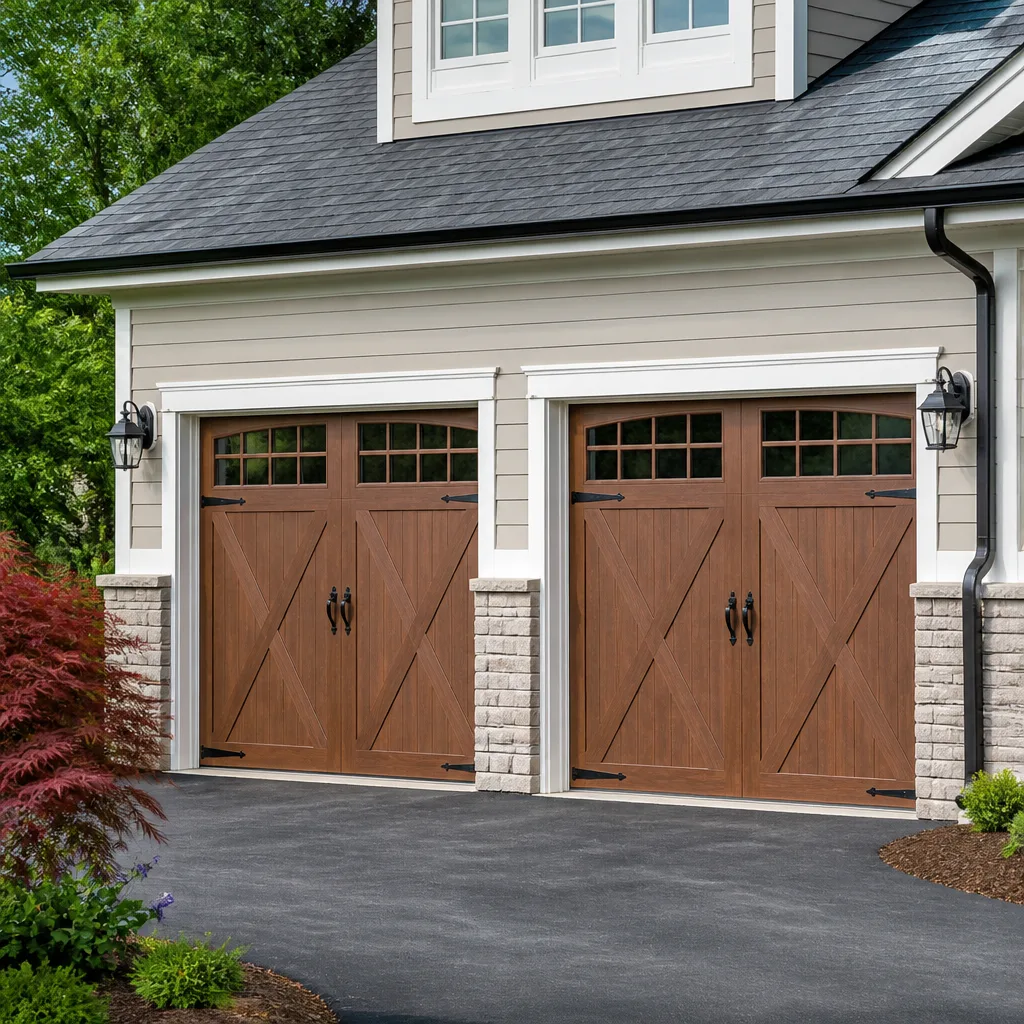 Carriage house
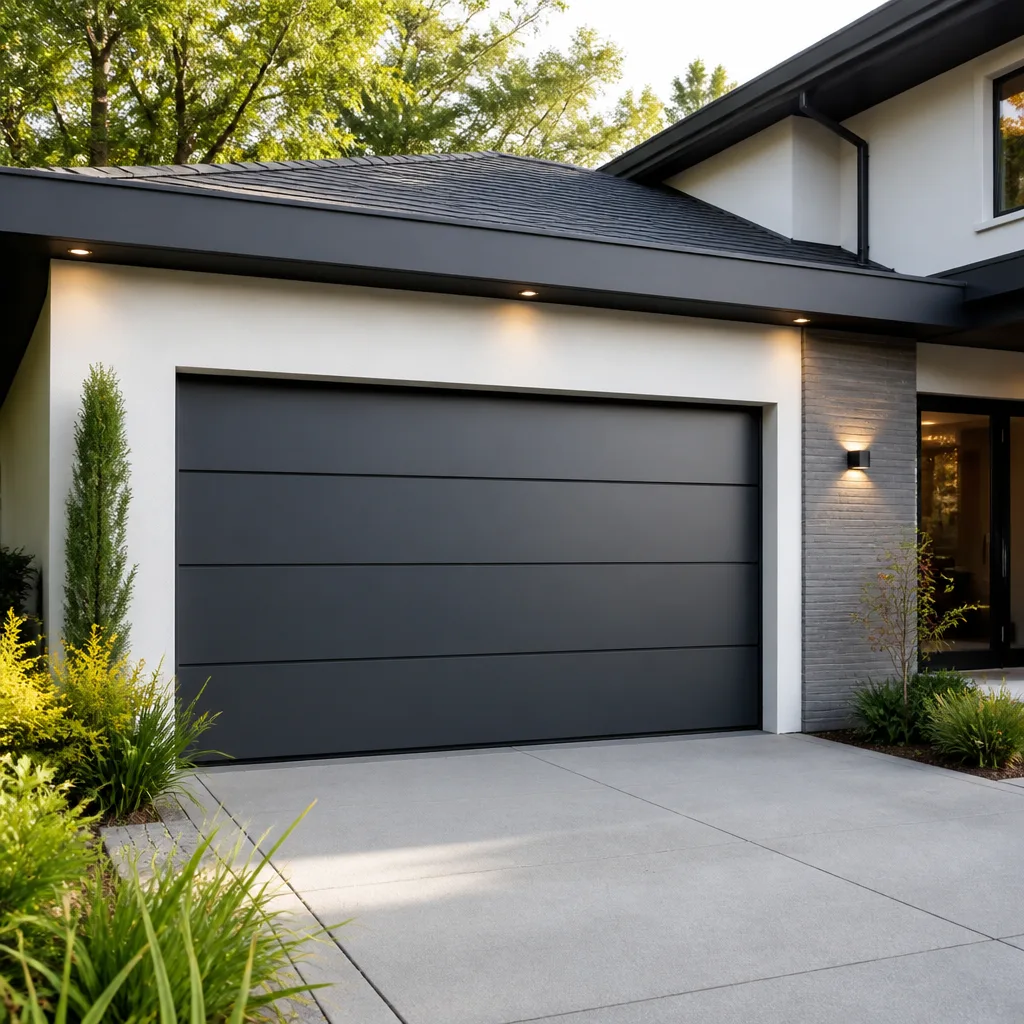 Modern flush
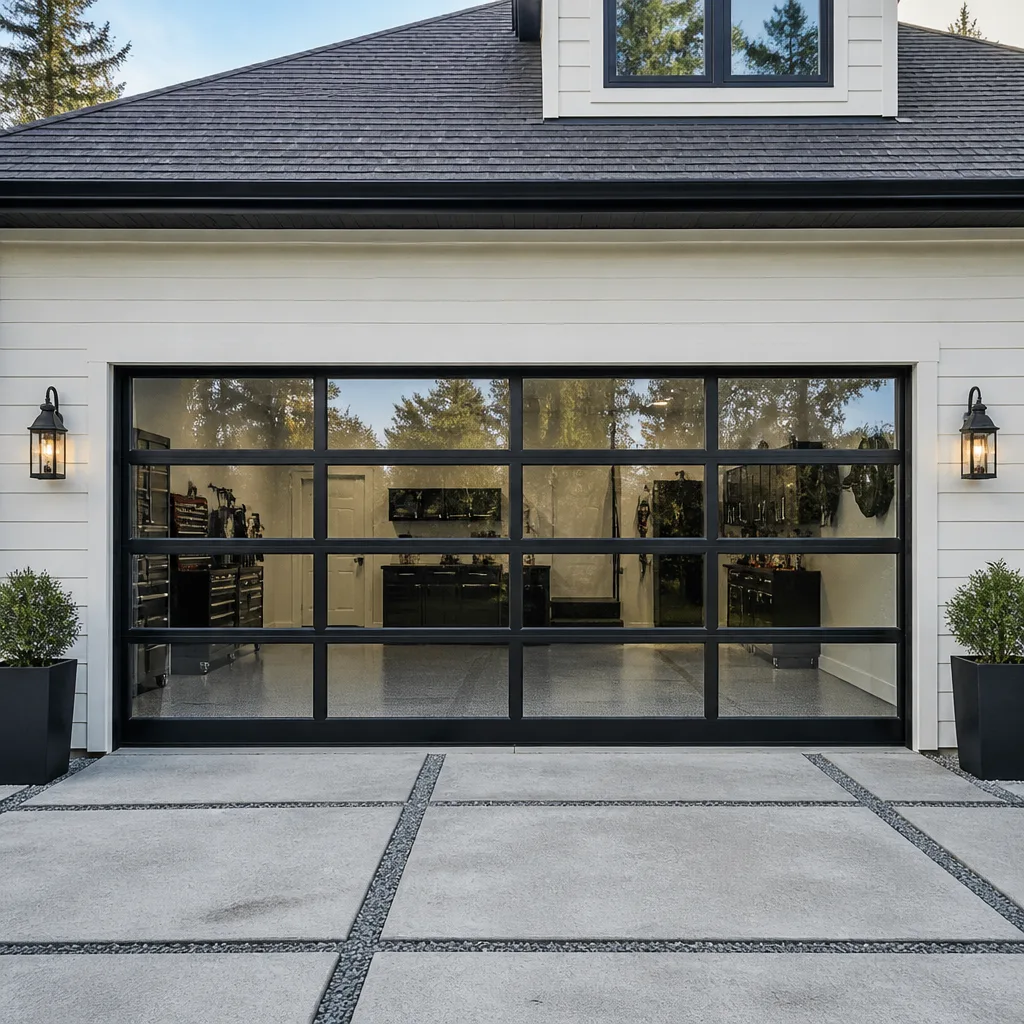 Full-view glass
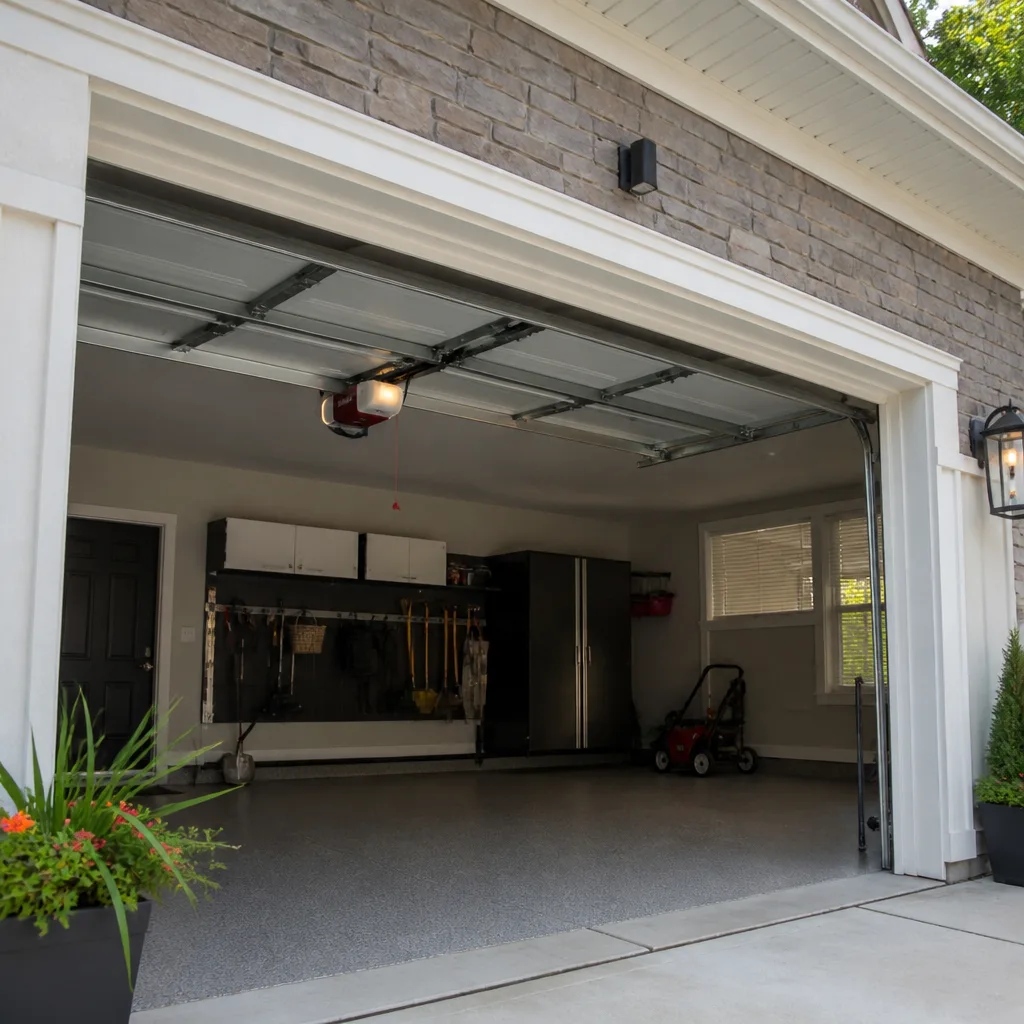 LiftMaster openers
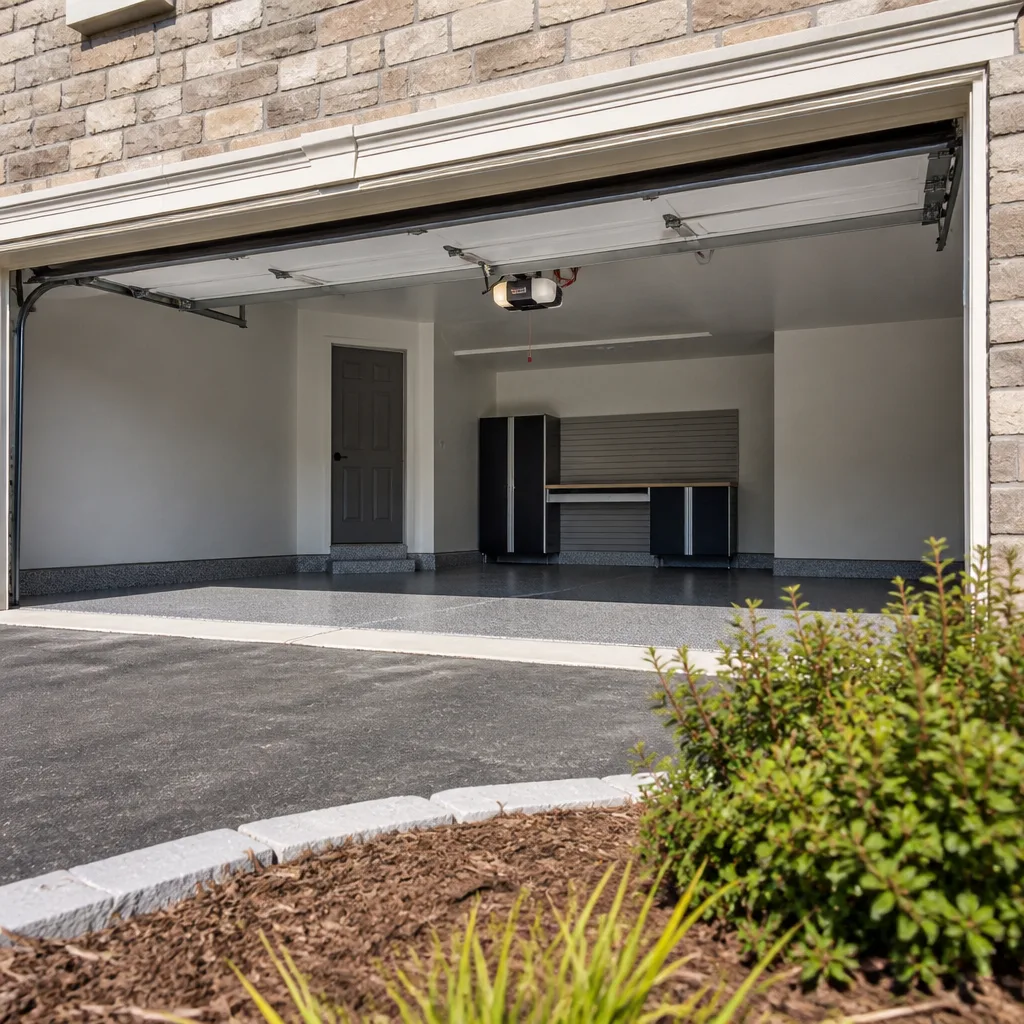 Chamberlain openers
Full 25-point door and opener safety check with every visit - springs, cables, rollers, tracks, and your LiftMaster or Chamberlain opener included
You get a price before we start. It does not change when the pro arrives.
Get your free estimateGarage Door Permits, Codes & Inspections in Franklin, MA: What You Need to Know
Most Franklin homeowners assume a garage door is like a refrigerator: if you’re swapping one box for another, nobody needs to sign off. That assumption is where the trouble starts. Replacing a garage door under Massachusetts building code is a structural and safety event, not a cosmetic upgrade, and it can trigger a permit requirement the same way a new deck or a load-bearing wall change would. The distinction between repair, replacement, and new installation matters more than most people realize, and the paper trail follows the house, not the person who ordered the work. This guide walks through when a permit is required, how the Franklin building process works, what inspectors actually examine, and why skipping the permit can cost far more than applying for one.
Quick Answer
In Franklin, MA, replacing a garage door or installing a new one generally requires a building permit under the Massachusetts State Building Code (780 CMR), while routine repairs like a broken spring, a snapped cable, or an opener swap typically do not. The Franklin Building Department reviews the application, and inspection focuses on structural attachment, wind-load resistance, and safety devices. Unpermitted replacement work can surface during a title search or a buyer’s inspection and stall a sale until it’s corrected. Call (888) 484-8160 for a free estimate and a straight answer on what your specific project needs.
Styles & brands we work with
- Raised-panel steel
- Carriage house
- Modern flush
- Full-view glass
- LiftMaster openers
- Chamberlain openers
Table of Contents
- Does a Garage Door Replacement Need a Permit in Franklin?
- Repair vs. Replacement vs. New Installation: Where the Line Sits
- How the Franklin Building Department Permit Process Works
- Wind Load Requirements Under Massachusetts Code
- What Inspectors Look For During a Garage Door Inspection
- How Unpermitted Work Shows Up at Sale and What It Costs to Fix
- Common Mistakes to Avoid
- When to Call a Professional
Does a Garage Door Replacement Need a Permit in Franklin?
A garage door replacement in Franklin generally requires a building permit, and the reason is straightforward: Massachusetts treats the garage door as part of the building envelope, and the code governs how it’s anchored, how it resists wind, and how its safety systems function. When you replace an existing door, you’re not just changing a panel – you’re changing a structural assembly that the original permit was issued against.
The confusion comes from how people categorize the work. A homeowner calls a contractor and says “I need a new door.” The contractor hears “replacement.” The code official hears “alteration to a regulated building component.” Those are different conversations.
Here’s how the categories typically break down in Franklin:
- Repair – Fixing a broken spring, replacing a cable, realigning tracks, swapping a roller. Generally no permit required because the door assembly and its structural attachment stay the same.
- Opener replacement or repair – Swapping a dead LiftMaster or Chamberlain unit for a new one, or repairing the motor, gear, or logic board. Generally no permit required, since the opener mounts to existing structure and the door itself is unchanged.
- Replacement – Removing the old door and installing a new one, whether it’s the same size or a different model from a brand like Clopay or Amarr. This is where the permit question usually starts.
- New installation – Adding a door to a structure that didn’t have one, or converting a carport to an enclosed garage. Almost always requires a permit and often additional review.
We work across the major brands – LiftMaster, Chamberlain, Genie, Clopay, Amarr, Wayne Dalton, Craftsman, and Raynor – and the permit question comes up regardless of which system is in the home. It’s about the building code, not the label on the door. If you want to know whether your specific project needs a permit, our garage door repair team can walk you through it, but the final word rests with the Franklin Building Department.
Repair vs. Replacement vs. New Installation: Where the Line Sits
The single most useful thing a Franklin homeowner can understand about garage door permits is the distinction between repair and replacement. The code draws that line based on whether the door assembly and its structural connection to the building are changing, not on how big the job feels.
Repair work that generally stays below the permit threshold:
- Replacing one or both torsion or extension springs
- Replacing cables, drums, or rollers
- Realigning bent tracks after impact damage
- Replacing hinges or bottom brackets
- Repairing or replacing the opener, whether it’s a smart-home LiftMaster or an older Craftsman chain drive
- Replacing a single damaged panel where the panel is designed to be field-replaceable
Work that typically crosses into permit territory:
- Replacing the entire door and its hardware system
- Changing the door size or the rough opening
- Converting from a manual door to an opener-equipped door in some configurations
- Installing a new door where none existed
- Changing the door type in a way that alters the header, jambs, or anchorage
The gray area worth flagging: high-lift and vertical-lift conversions that change the track configuration and the way the door loads the header. In our experience, these are the jobs where a Franklin homeowner most often discovers a permit was needed after the fact. When in doubt, the safe answer isn’t “do it and hope” – it’s to call the Building Department and describe the scope in plain terms. Ask whether they classify it as a repair or an alteration. That one phone call prevents the majority of the problems we describe later in this guide.
How the Franklin Building Department Permit Process Works
The Franklin Building Department handles residential building permits for garage door work as part of its general permitting function. The exact forms and fees are set by the town, so the most current information always comes from the department directly rather than from any guide online, including this one. What we can describe with confidence is the general sequence a Franklin homeowner should expect.
Step-by-step: the typical permitting sequence
- Confirm the scope. Call the Franklin Building Department and describe the work as either repair or replacement. Ask whether a permit is required for your specific situation. Get the answer from them, not from the contractor’s assumption.
- Gather the product information. Most residential garage door permit applications need the door model, the manufacturer, and the wind-load rating documentation. A Clopay or Amarr dealer can supply the specification sheet for the door you’re installing.
- Submit the application. The Franklin Building Department either accepts the application over the counter or through the town’s online portal, depending on current practice. Ask whether a site plan or a simple sketch is needed for a like-for-like replacement.
- Pay the fee and wait for issuance. Permit fees are set by the town and vary with project valuation. Issuance timing depends on the department’s current workload and whether the application is complete.
- Schedule the inspection. Once the door is installed, request the inspection. The inspector reviews the installation against the permitted scope before the permit is closed.
- Keep the paperwork. Retain the issued permit, the inspection record, and the manufacturer’s documentation with your home records. This is the file that gets pulled during a future sale.
Timelines for residential garage door permits in Franklin depend on how complete the application is and the department’s queue. A clean, well-documented application moves faster than one that arrives without product specifications or with an unclear scope. If you’re planning a replacement on a tight schedule, factor in both the permit window and the manufacturer’s lead time on the door – which is often the longer of the two.
Wind Load Requirements Under Massachusetts Code
Massachusetts building code requires that exterior building components, including garage doors, be designed to resist the wind pressures expected at the building’s location. That’s why a garage door replacement in Franklin isn’t just about picking a color and a panel style – the door you choose has to be rated for the wind load at your address.
Here’s what that means practically:
- Standard residential door constructions from major manufacturers like Clopay, Amarr, Wayne Dalton, and Raynor are typically rated to meet the wind-load requirements for most Franklin residential properties without any special engineering. The manufacturer publishes the rating for each model and size.
- Larger doors and doors in more exposed configurations may require a reinforced construction or additional anchorage to meet the same threshold. This is where the door choice and the installation method get evaluated together.
- Special engineering – stamped calculations from a structural engineer – is usually reserved for unusual spans, unusual exposure, or non-standard installations. Most Franklin homeowners never need it, but the door has to be rated and installed to the specification that matches the code requirement for the site.
The wind-load documentation is one of the most common reasons a garage door permit application gets held up. The Franklin Building Department needs a paper trail showing the door is rated for the load, and the installer has to anchor it according to the manufacturer’s instructions. A door rated for the wrong load, installed with the wrong anchorage, fails inspection regardless of how well the panels fit. When we quote a replacement, we match the door specification to the code requirement before the order goes in, so there’s no surprise at the counter or at the inspection.
What Inspectors Look For During a Garage Door Inspection
A garage door inspection in Franklin is not a cosmetic review. The inspector is checking whether the installed door matches the permitted scope and whether the safety and structural elements meet code. Knowing what they look at helps you understand why the permit exists in the first place.
The core items on the checklist:
- Structural attachment. How the door’s header, jambs, and bottom brackets are anchored to the building. Undersized fasteners or missed framing are the most common fail.
- Wind-load documentation. The door’s published rating matching the requirement for the site, and the installation matching the manufacturer’s instructions for that rating.
- Spring and cable system. Whether the torsion or extension system is correctly sized for the door weight and whether the counterbalance is set so the door operates safely. This is one area where we always recommend trained hands – a torsion spring under load carries enough energy to cause serious injury, and it’s not a job for a homeowner with a winding bar and a video.
- Safety devices. The photoelectric safety sensors at the floor line and any other safety reverse features the opener provides. For a smart-home LiftMaster or Chamberlain opener, the sensors still have to be installed, aligned, and testing correctly.
- Clearances and travel. Whether the door travels fully open and closed without binding, whether the tracks are aligned, and whether the opener’s travel limits are set correctly.
- Labeling and documentation. The door’s manufacturer label and the installation information matching the permit application.
We’ve seen inspections fail most often on the least glamorous items: anchorage that doesn’t line up with framing, and safety sensors that were installed but never actually tested. Both are quick fixes when done right the first time, and both are the kind of thing an inspector catches in five minutes.
How Unpermitted Work Shows Up at Sale and What It Costs to Fix
Unpermitted garage door work is rarely a problem in the moment. The problem arrives years later, during a sale, when the buyer’s inspector pulls the permit history and finds a gap. That gap is where a routine closing turns into a negotiation.
The sequence is predictable:
- Title search or inspection reveals missing permit history. A buyer’s inspector sees a recent door, checks the town record, and finds no permit for the replacement.
- Lender gets involved. Many lenders won’t close on a property with open or missing permits on structural components. The garage door counts.
- The seller has to remediate. Depending on the Franklin Building Department’s process, that can mean retroactive permitting and inspection, and in some cases opening up the installation so the inspector can verify anchorage and wind-load compliance.
- The timeline stretches. Retroactive permits take time, and the closing doesn’t move until the permit is closed.
- Real money gets spent. Remediation costs vary widely with the condition of the installation and what the inspector requires, but the total – new paperwork, possible reinstallation, and closing delays – almost always exceeds what the original permit would have cost.
The phrase that comes up again and again in these situations is “tear-out.” Buying a house with a freshly replaced garage door that has no permit history means either accepting the risk or requiring the seller to make it right, and making it right can mean pulling the door to demonstrate compliance. That’s the scenario nobody wants to be in during a sale. Doing the permit up front is a fraction of the cost and a fraction of the stress. If you’re planning a replacement and want to do it correctly from the start, our garage door spring repair and replacement teams can help you sort out the permit scope before anything is ordered.
Common Mistakes to Avoid
- Assuming replacement never needs a permit. Repair usually doesn’t. Replacement and new installation usually do. The mistake is treating the whole category as “repair” because the new door looks like the old one.
- Trusting a contractor who says “we don’t need a permit for this.” The contractor’s opinion isn’t the official answer. Call the Franklin Building Department and confirm. A contractor who shrugs off the permit question is telling you something about how they handle the rest of the job.
- Skipping the wind-load documentation. A door without rated documentation for the site fails inspection even if the installation is beautiful. The paperwork is part of the job, not an optional extra.
- Leaving the permit open after the work is done. A permit that’s issued but never inspected and closed is worse than no permit at all at a title search. Schedule the inspection and close the file.
- Treating the spring and cable system as DIY. This is the most common serious injury in the trade. Torsion springs and cables are under enough tension to break bones, and a garage door inspection in Franklin expects the counterbalance to be professionally set. Leave it to trained hands.
- Ordering the door before confirming the permit scope. Lead times on brands like Clopay, Amarr, and Raynor are often longer than the permit process, so confirm the scope first and let the order follow.
- Ignoring the opener’s role in inspection. A new door paired with an old Craftsman opener that doesn’t have working safety sensors is a fail. Test the safety systems before the inspector arrives, and repair any faults in advance.
See the difference
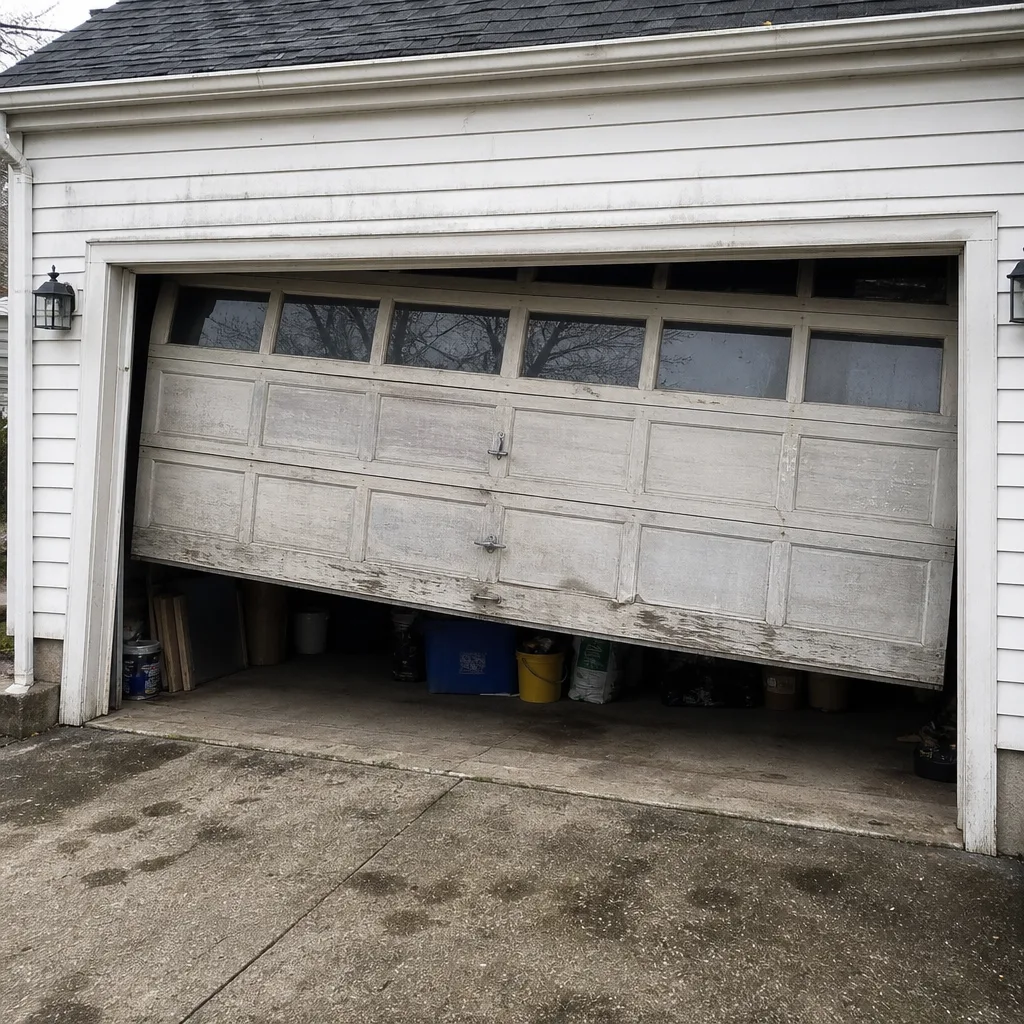 Before
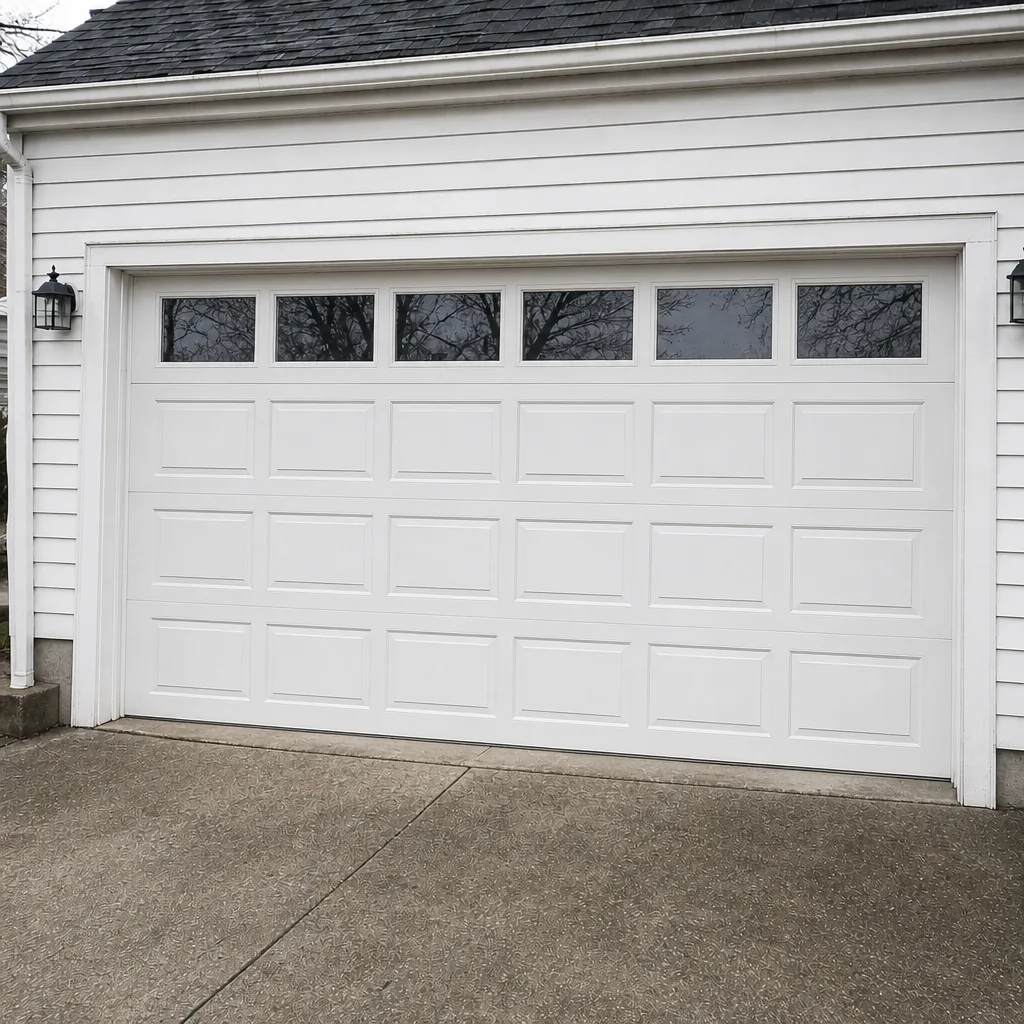 After
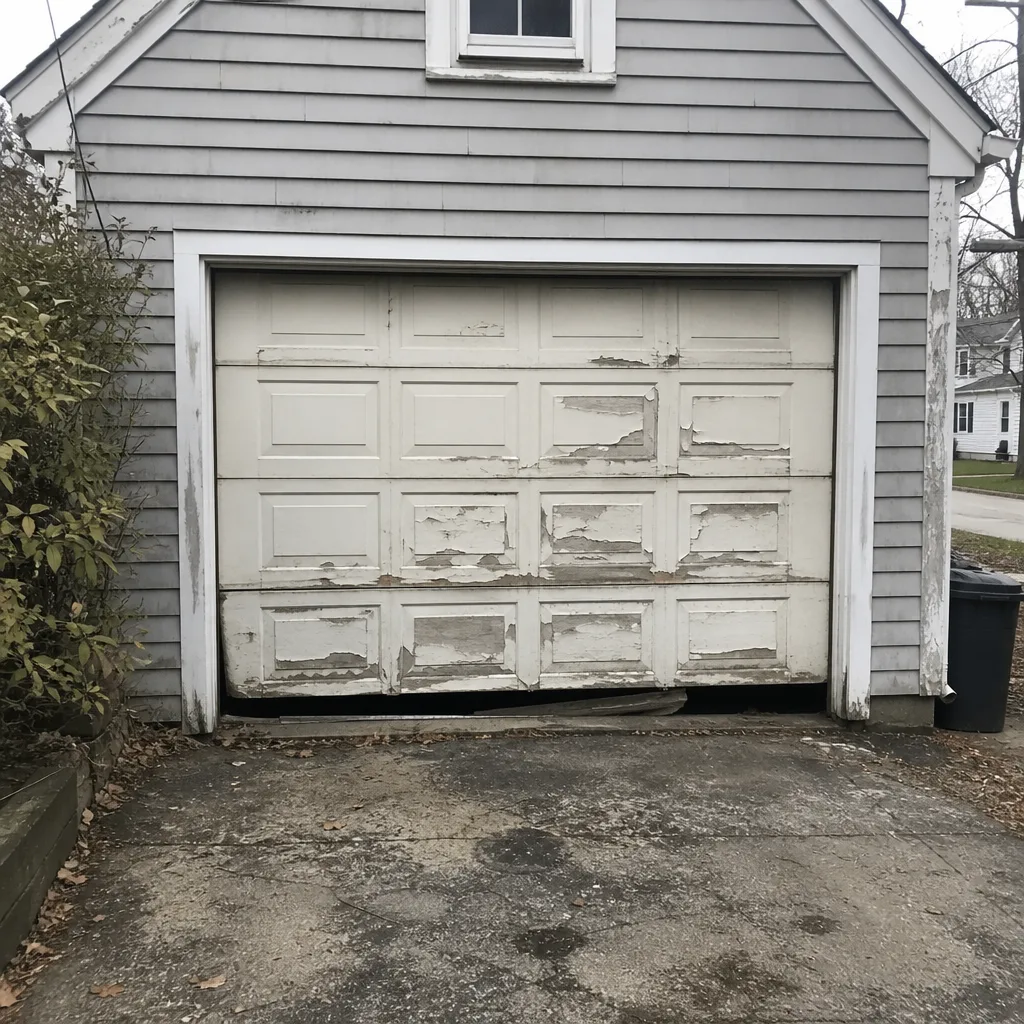 Before
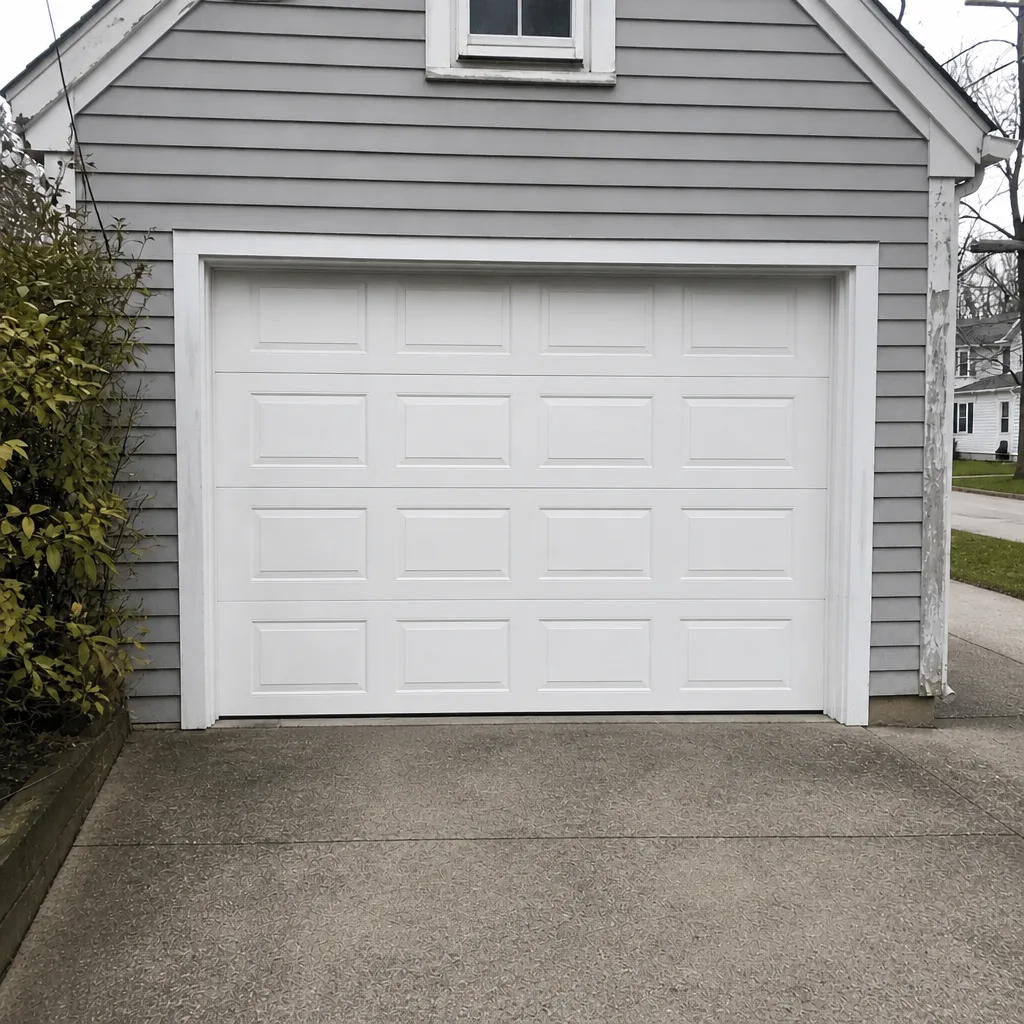 After
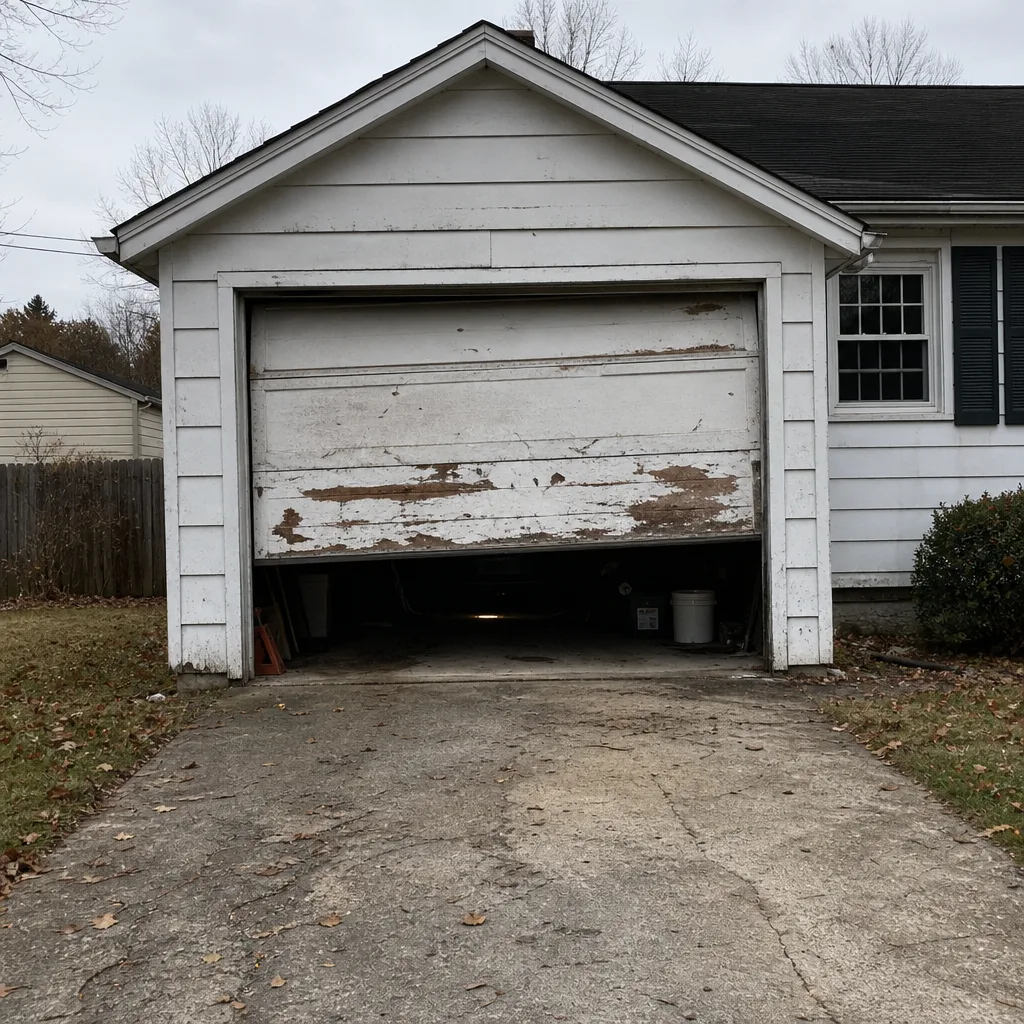 Before
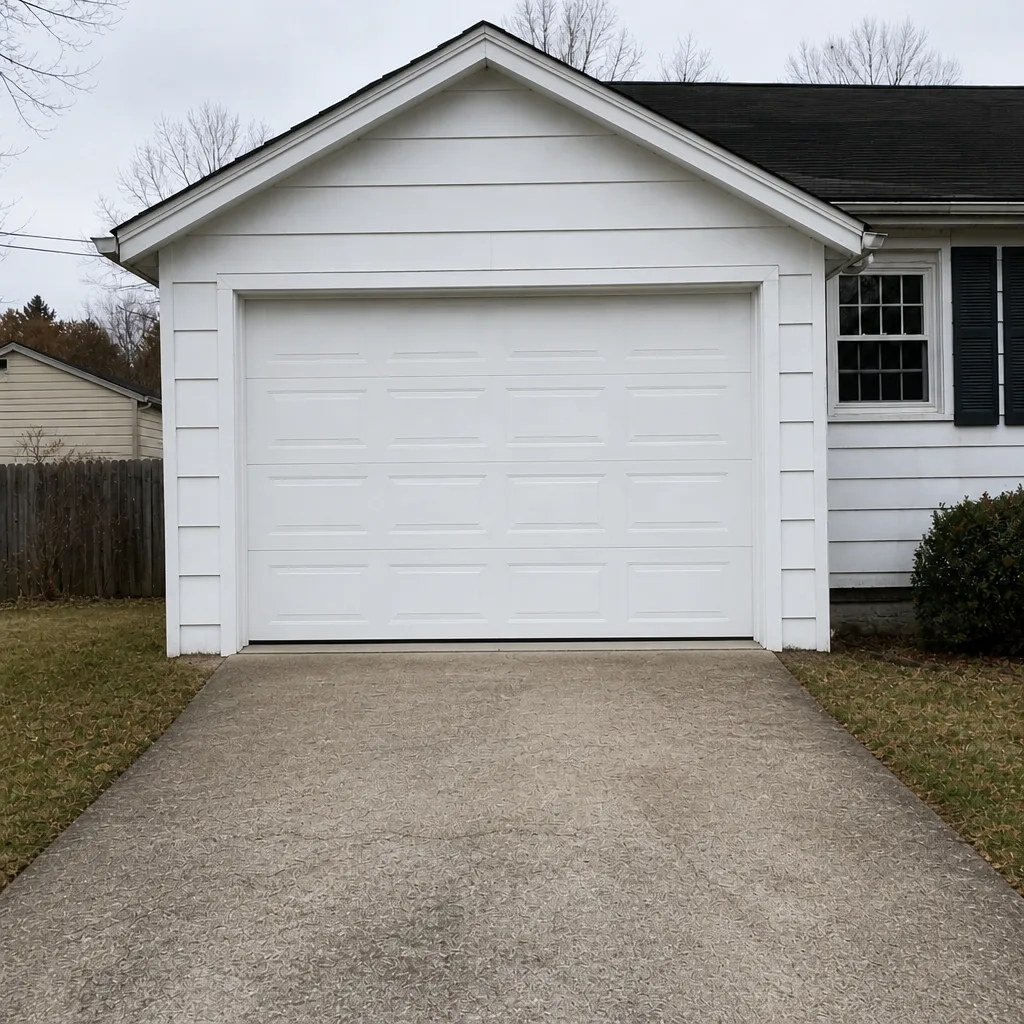 After
Neighborhood and Climate Context for Franklin Homeowners
Franklin’s housing stock is a mix of older homes near the town center and newer construction spread across neighborhoods like Chestnut Hill, Unionville, and the areas near Franklin State Forest, and each of those settings has its own garage door reality. Older homes often have a door and opener system that’s been through several generations of hardware – maybe a Craftsman opener from the 1990s paired with a door that was replaced once without a paper trail. Newer construction tends to come with a modern LiftMaster or Chamberlain opener already installed, and the permit history is more likely to be clean.
Weather plays a role in how often replacement comes up. New England winters put the door through freeze-thaw cycles that work on seals, hinges, and the panel joints, and the summer humidity in this part of Massachusetts means hardware corrosion is a real factor on doors that face west or sit under a lot of shade. When a door reaches the end of its service life here, it’s usually because of cumulative wear on the hardware – which lines up with the code’s focus on the assembly, not just the panels. A replacement done correctly in Franklin includes new hardware and new anchorage, and that’s part of why the permit matters.
The garage door opener repair side of our work intersects with the permit conversation more often than people expect, because a door that’s being replaced sometimes needs its opener brought up to current safety standards at the same time. We handle both under the same roof, and we recommend the right fix before the permit is filed so the scope line matches what actually gets installed.
When to Call a Professional
Some garage door questions are simple enough to answer over the phone. Others involve structural work, permit filings, and safety systems where the cost of a wrong guess is high. Call a professional when you’re replacing the entire door, when the door size or track configuration is changing, when the spring or cable system is involved, when the safety sensors aren’t testing correctly, or when you’re not sure whether the work crosses the permit line in Franklin.
Franklin Garage Door Repair Pros works on every major brand system, whether the door in your home is a LiftMaster, a Chamberlain, a Genie, a Craftsman, or any of the others we service, and we do it without a preference for a particular product line. We diagnose before we recommend replacement, and we tell you what the permit process is likely to involve for your specific project. Our technicians have up to 12 years of experience, and free estimates are available in Franklin – call (888) 484-8160 to get started.
Frequently Asked Questions
Yes, replacing a garage door in Franklin generally requires a building permit under the Massachusetts State Building Code (780 CMR), while a repair like a spring or opener replacement typically does not. Confirm the classification with the Franklin Building Department before you order the door. Call (888) 484-8160 for a free estimate and help with the scope.
No – size isn’t the deciding factor. The permit requirement follows the work category, and a replacement of the same-size door still involves removing and reinstalling a regulated building component. The Franklin Building Department is the authority on your specific case; call (888) 484-8160 for help understanding the scope.
The door has to be rated for the wind pressures expected at your specific site under Massachusetts code, which is why the manufacturer’s published rating for each model and size matters. Most standard residential constructions from brands like Clopay, Amarr, Wayne Dalton, and Raynor meet Franklin residential requirements without special engineering, but the documentation has to be on file. Call (888) 484-8160 for a free estimate.
Unpermitted replacement work usually surfaces during a sale, when a buyer’s inspector or a title search reveals the gap in the record, and the seller may need to obtain a retroactive permit and demonstrate compliance. Remediation often costs more than the original permit, and closing delays add to that. Call (888) 484-8160 to get ahead of the problem.
Generally no, because an opener replacement doesn’t alter the door assembly or its structural attachment, which is the trigger for most garage door permit requirements. Confirm with the Franklin Building Department if you’re unsure, and call (888) 484-8160 for opener work on any major brand system.
The inspector checks structural attachment, wind-load documentation, spring and cable systems, safety device operation, and whether the door travels and clears correctly. The purpose is verifying the work matches the permitted scope and the code. Call (888) 484-8160 for a free estimate if your installation needs attention before or after inspection.
We don’t recommend it. The torsion spring system carries enough stored energy to cause serious injury, and the structural anchorage and wind-load compliance are exactly the items a Franklin building inspector scrutinizes. Call (888) 484-8160 – the estimate is free.
Timing depends on the department’s current queue and whether your application is complete with product specifications and wind-load documentation. A complete application moves faster than one missing documents, and the door manufacturer’s lead time is often the longer part of the schedule. Call (888) 484-8160 if you want help organizing the paperwork before you file.
The Bottom Line
The permit question for a garage door in Franklin comes down to one distinction: repair is one thing, replacement is another. Repair work like a broken spring, a snapped cable, or an opener swap usually stays below the permit threshold. Replacement and new installation generally require a building permit under 780 CMR, and the paperwork follows the house – not the person who ordered the work. Doing it right from the start costs a permit fee and a little patience. Skipping it can cost a tear-out, a closing delay, and a negotiation at the worst possible moment. Whether you’re planning a replacement or working through an existing issue, our team at Franklin Garage Door Repair Pros can help you sort out the scope. For a free estimate in Franklin, call (888) 484-8160.
Written by the team at Franklin Garage Door Repair Pros.