Last updated November 23, 2026
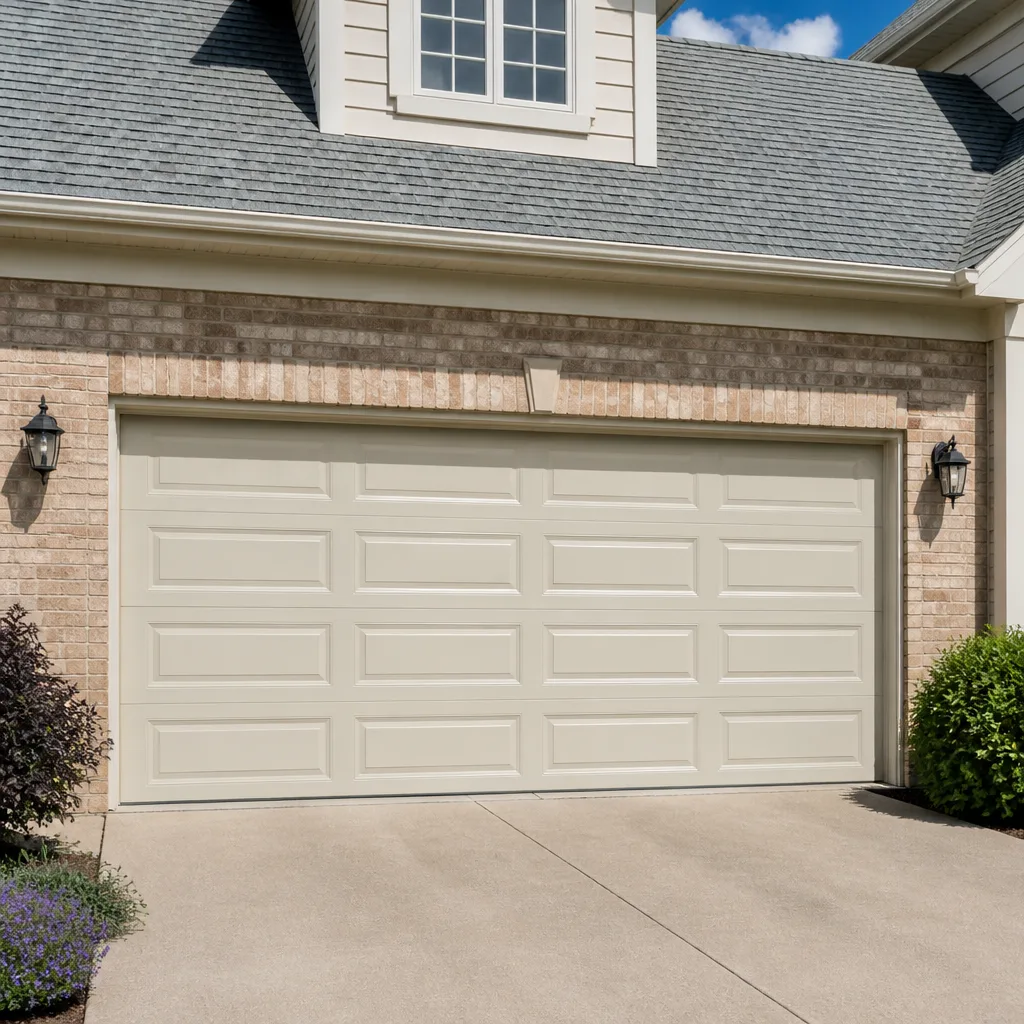 Raised-panel steel
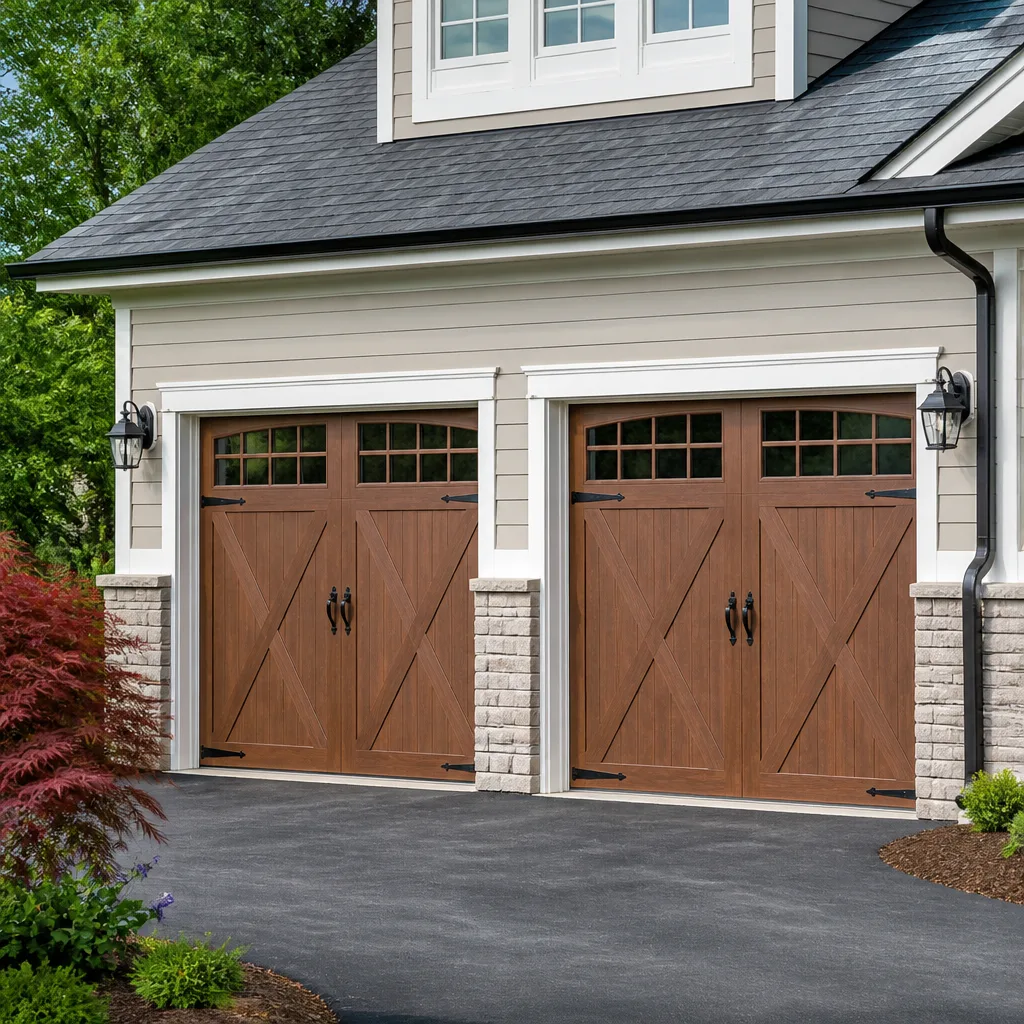 Carriage house
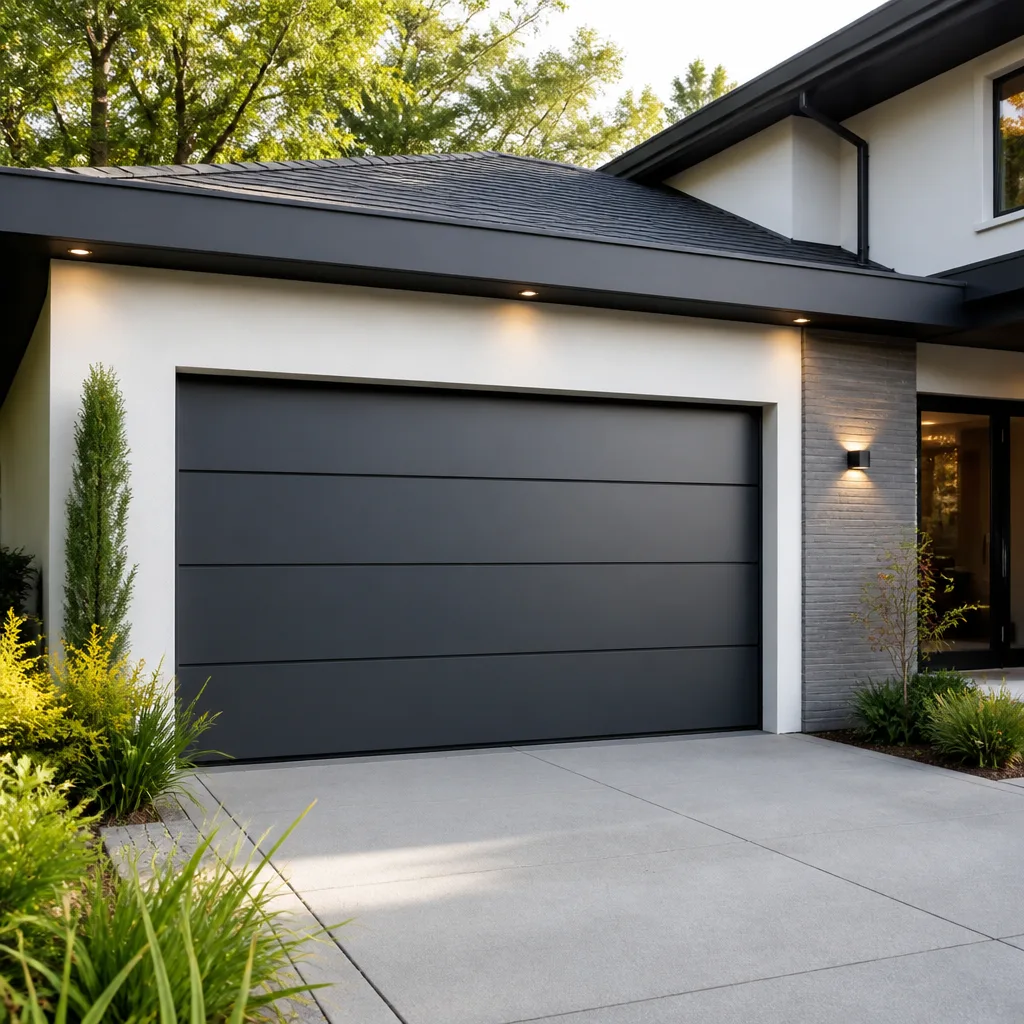 Modern flush
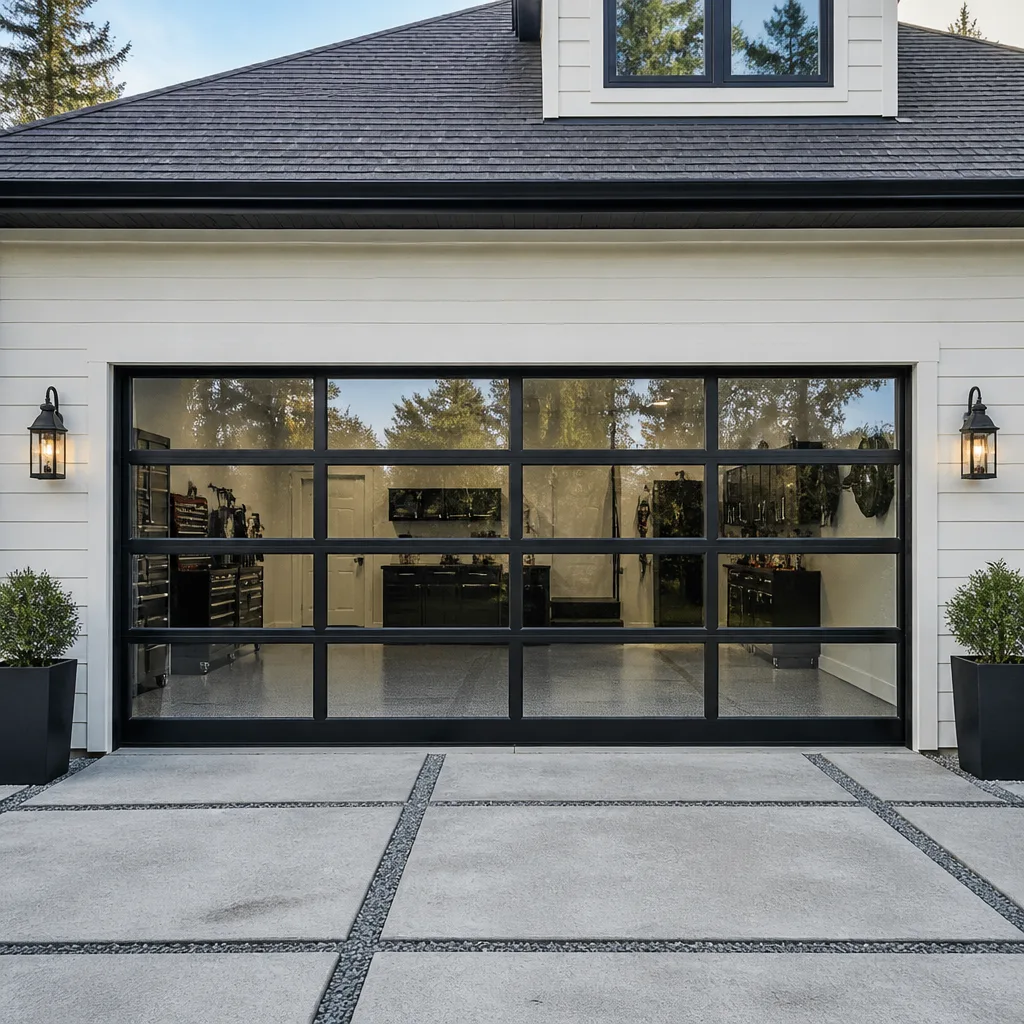 Full-view glass
 LiftMaster openers
 Chamberlain openers
Full 25-point door and opener safety check with every visit - springs, cables, rollers, tracks, and your LiftMaster or Chamberlain opener included
You get a price before we start. It does not change when the pro arrives.
Get your free estimateSeasonal Garage Door Care for Franklin: Year-Round Homeowner’s Guide
Most homeowners think a garage door needs the same attention in January as it does in July. It doesn’t. In Franklin, the door works against four very different opponents over twelve months, and each one attacks a different part of the system. Cold tightens metal and stresses springs. Thaw heaves the ground under tracks. Summer humidity works on wood and seals. Fall is your last real window to prepare for all of it. What follows is a calendar, not a checklist for its own sake: a season-by-season map of which components tend to fail when in Franklin, Massachusetts, and what you can do ahead of each failure. By the end you’ll know what to inspect, when to call, and why timing matters more than effort.
Quick Answer
Garage doors in Franklin should be inspected four times a year, with the heaviest work done in fall: lubricating moving parts, testing the safety reverse, clearing the tracks, and sealing the bottom weatherstrip before the first freeze. Winter is about watching spring behavior and opener force settings; spring means checking tracks after frost leaves the ground; summer means watching for humidity damage on wood doors.
Styles & brands we work with
- Raised-panel steel
- Carriage house
- Modern flush
- Full-view glass
- LiftMaster openers
- Chamberlain openers
Table of Contents
- Why Franklin’s Climate Creates a Predictable Failure Calendar
- Fall: The Preparation Season That Prevents Winter Failures
- Winter: Springs, Force Limits, and the Cold-Weather Adjustment
- Spring: Post-Frost Track Inspection and Clay Soil
- Summer: Humidity and Wood Composite Doors
- The One Annual Task That Covers Most Preventable Failures
- Franklin Month-by-Month Maintenance Calendar
- Common Mistakes to Avoid
- When to Call a Professional
Why Franklin’s Climate Creates a Predictable Failure Calendar
Garage door failures don’t happen at random here. They follow the weather. In our experience working on doors across Franklin, repair calls cluster at the same points every year, and the reasons are mechanical, not mysterious.
A torsion spring is a coiled piece of steel held under constant tension. When the temperature drops into the single digits or below zero, that steel contracts slightly and the stored tension climbs. The spring sits under that extra load for weeks at a time through a Franklin winter. Then comes the first mild stretch where the garage door suddenly gets more daily use – school runs resume after a vacation, cars come and go again after a stretch of hunkering down – and the cycle count jumps along with it. That’s the spike we see in February and early March: springs that survived the cold but couldn’t survive the warm-week workload on top of it.
The rest of the year has its own rhythms:
- Fall is the only stretch where you can still work comfortably outside and get ahead of winter. It’s the preparation month.
- Winter tests springs, opener force limits, and the bottom seal’s grip on a cold slab.
- Spring is frost-leaving time, and the ground moves when the frost does. Tracks follow.
- Summer brings the humidity that Franklin’s older neighborhoods know well, and wood or composite doors feel it first.
Knowing that map lets you stop chasing problems and start preventing them. You inspect for spring wear in late fall, not after the door won’t open. You look at your tracks in March, not when the door starts scraping in April.
Fall: The Preparation Season That Prevents Winter Failures
If you do one season of work well, make it this one. Fall is when a Franklin homeowner can still fix the small things that become January problems. The single biggest item is the bottom seal and the surface it meets.
Here’s the mechanism. The weatherstripping along the bottom of the door sits against a concrete slab. Through a wet Franklin fall and into winter, moisture collects between the rubber and the concrete. When temperatures drop below freezing, any trapped water bonds the weatherstrip to the slab. The opener then has to tear that bond loose on every cycle, and the seal gets progressively worse – cracking, splitting, or pulling free of its retainer. A door that seemed fine all summer suddenly doesn’t close flush in January.
- Clean the seal and the slab. Wipe the bottom weatherstrip and the concrete strip it contacts so there’s nothing for water to collect against.
- Check the seal for gaps. Look for daylight under the door with it closed. Any visible light means the weatherstrip is compressed, torn, or missing chunks – weatherstrip is one of the cheapest parts on the whole system to replace.
- Test the seal’s flexibility. Cold stiffens old rubber. A seal that’s already hard and brittle in November will be worse in February.
- Lubricate the moving parts that don’t involve springs under tension. A garage door lubricant on hinges, rollers, and the pivot points keeps everything moving easily when the metal contracts. Never put your hands or tools near a torsion spring while doing this.
- Test the safety reverse. Place a piece of wood on the ground under the door and lower it. The door should reverse on contact. This is a safety device, and fall is the right time to verify it works before the door gets heavier-feeling in cold weather.
This is also the season to look up. We’ve seen plenty of doors where the fall inspection found a frayed cable or a worn bearing that a homeowner had no idea was there. If the fall walk-through turns up anything that looks unsafe, don’t force the issue. That’s the point at which a garage door repair visit makes more sense than a DIY fix.
Winter: Springs, Force Limits, and the Cold-Weather Adjustment
When temperatures drop below 20°F, the opener has a real job to do and its settings may not be ready for it. Cold thickens lubricants, stiffens weatherstripping, and shrinks the clearances the door rides through. The door requires more force to move, but the opener’s force-limit settings were probably set back in mild weather. The result is a door that reverses partway up or stops on the way down and blinks a diagnostic code at you.
Here’s what to watch for and what to check – note that these are observations, not instructions for adjusting the system yourself:
- The door reverses immediately after starting up. That’s the opener sensing resistance and treating it as an obstruction. It can mean the force limit is too low for the cold, or it can mean a binding track, worn rollers, or failing springs are genuinely fighting the door.
- The door is sluggish to raise but smooth to lower. That’s usually a spring that’s lost some of its lift, not an opener problem.
- A loud bang from inside the garage. If you hear a sharp snap, treat it as a broken spring until proven otherwise. Stop using the door and call for service. A door with a broken spring can be dangerous to operate, and the unbalanced weight strains the opener and cables.
Force-limit adjustment on a LiftMaster or Chamberlain unit is possible to adjust yourself through the opener’s own controls, but if you can’t tell whether the door is binding or the setting is simply too tight, don’t guess. Testing the door’s balance by hand – disengaging the opener and lifting the door partway – tells you whether the problem is the door or the operator. If it’s the door, this is a garage door opener repair question only in the sense that the opener is telling you about a door problem.
On the spring side, honor the danger. Garage door torsion and extension springs hold enormous stored energy, and adjusting or removing them requires the right winding bars and training. Our technicians have up to 12 years of experience and handle garage door spring repair safely – this is not a component to work on yourself.
Spring: Post-Frost Track Inspection and Clay Soil
Franklin’s clay-heavy soil holds water. When the ground freezes, that water expands; when it thaws in spring, the soil settles back, sometimes unevenly. The concrete slabs and framing the garage door tracks attach to can shift a small amount through that cycle, and “small amount” matters: a track that moved a quarter inch out of plumb is enough to make rollers bind, the door scrape, or the opener strain.
Spring is when you look at this. Walk into the garage after the last hard frost and check:
- Stand back and look at both vertical tracks side by side. They should look parallel and plumb. If one visibly leans or the gap between them widens toward the top or bottom, that’s a post-frost misalignment.
- Lift the door by hand with the opener disengaged. It should feel the same lifting as lowering, with no sudden tight spots. Uneven resistance often points to a track that’s out of line.
- Watch the roller path. Rollers shouldn’t rattle or rub against the side of the track. Rubbing means the door is riding hard against the rail.
- Check the horizontal tracks at the ceiling. Look for separation at the brackets and any bends from the frost season.
- Clear debris that winter blew in. Grit and small stones in the track are a common, overlooked cause of scraping.
Track work is one of those jobs that looks simple until you’ve tried it. A track holds the entire door’s path of travel, and a small adjustment can make things worse. If a track is visibly bent or the door binds, that’s a repair call. In the Franklin spring, track misalignment is one of the most common things we see, and it’s also one of the most preventable with an inspection each March.
Summer: Humidity and Wood Composite Doors
Franklin has older neighborhoods where wood and wood-composite garage doors are common, and summer humidity is the season those doors feel it. Wood expands when it absorbs moisture. Composite faces can take on water at seams and edges if the finish has any gap, and summer is when the finish starts to break down in the heat.
What to watch, before paint failure becomes structural failure:
- Paint bubbling or flaking along the bottom panel. The bottom panel takes the most moisture from the slab and the most sun. Peeling there usually means water is getting in behind the paint.
- Soft or spongy spots at the edges and seams. Press gently with a finger. If the wood gives, it’s already absorbing water and the paint is no longer sealing it.
- Warped or delaminating panels. Look at the door from an angle so you catch any curve. Warping often shows up first on the sun-facing side.
- Sticking or rubbing at the edges. Wood doors that swelled in the heat and humidity can start to bind against the track, adding strain to the opener.
- Mildew or dark staining. A sign that moisture is trapped, and the finish isn’t doing its job.
If you catch surface paint failure in early summer, a repaint or reseal stops the process. If you catch soft wood, that’s a repair or replacement question. This is where a repair-first approach pays off: not every peeling door needs to be replaced. Some need a rebuilt section or new weatherstrip and a renewed finish. When the door is beyond repair, an installation is the honest answer, but it should come after a real diagnosis.
The One Annual Task That Covers Most Preventable Failures
If you only do one thing this year, do the annual balance-and-lubrication check. It’s the highest-leverage task on a garage door because it tests the whole system’s health in about fifteen minutes and catches most of what leads to a surprise failure.
Here’s the logic. Most preventable failures come down to a system that’s fighting itself – the opener straining against a binding door, a strained part getting hot and failing, or a track that’s out of alignment. A balance test tells you immediately whether the door is fighting anything. If the door is properly balanced, the springs are doing their job and the opener is just guiding. If it’s not, the problem is already present, and finding it early is the whole game.
The annual routine in order:
- Disconnect the opener using the manual release – usually a pull cord on the rail.
- Lift the door halfway by hand and let go. A properly balanced door holds its position. If it drops, the springs are losing lift. If it rises on its own, there’s too much tension.
- Listen and feel. No bangs, no grinding, no uneven resistance.
- Lubricate hinges, rollers, and pivot points, not the spring itself.
- Inspect rollers and cables by eye for cracks, fraying, or wear.
- Re-test safety reverse. Reconnect the opener and lower the door onto an object; it should reverse.
That’s it. One annual task, a few minutes, and you’ve checked the parts that fail most often. If anything in that list feels wrong – a door that won’t balance, a cable that looks frayed, an opener that behaves differently – that’s your signal to call, and it’s a lot better than discovering it on a cold morning with the car trapped inside.
Franklin Month-by-Month Maintenance Calendar
Here’s the failure calendar laid out by month. This is what to do and why, in the order the seasons arrive:
- September: Clean and inspect the bottom seal and the concrete strip it contacts. This prevents freeze-bonding in January.
- October: Lubricate hinges, rollers, and pivot points. Test the safety reverse. Check the balance.
- November: Replace any weatherstripping that’s stiff, cracked, or torn. Clean out the tracks one last time before winter debris.
- December: Listen for changes – a louder door, a slower start. Test the opener’s response on the first cold mornings.
- January: Watch spring behavior. Don’t adjust force limits to compensate for a door that’s genuinely binding; diagnose first.
- February: The spring-failure window. If you hear a snap, stop using the door and call for help.
- March: Post-frost track inspection. Look for misalignment and binding.
- April: Re-lubricate after winter. Check the seal again for winter damage.
- May-June: Inspect wood and composite doors for paint failure and soft spots before humidity peaks.
- July-August: Check the bottom panel and edges for moisture damage and warping.
You don’t have to be perfect at this. Doing the fall and spring items alone puts you ahead of most doors in Franklin, because those two windows are when problems are easiest to catch and cheapest to fix.
Common Mistakes to Avoid
- Skipping the bottom seal until winter. If you wait for a frozen seal to make itself known in January, you’re reacting instead of preparing. Do the seal inspection in the fall.
- Raising the opener’s force limit to compensate for a binding door. That masks the problem and strains the opener and springs. The door is trying to tell you something; find out what.
- Using the door after a spring breaks. A door with a broken spring is unbalanced, dangerous, and hard on the opener. Stop, and call for spring repair.
- Ignoring track misalignment after the frost. A slightly off track in March becomes a scraped door and a strained opener by May. Check in spring.
- Lubricating the spring. Leave the spring alone. Lubricate the hinges, rollers, and pivot points instead.
- Painting over moisture damage on a wood door. If the wood is soft, paint won’t fix it. Address the moisture before the finish.
- Assuming a brand-specific problem means a dealer-only fix. If your Craftsman or Raynor opener is acting up, a technician who knows the system can diagnose it without pushing a new door.
When to Call a Professional
Some jobs are inspections; some are repairs you shouldn’t attempt. Call us when the door won’t balance by hand, when a track is visibly bent or misaligned, when you hear a snap or bang from the spring area, when the opener reverses for no obvious reason, or when a wood door shows soft spots after a humid summer. Call immediately if a cable looks frayed, if the door is hanging unevenly, or if it won’t close all the way – those are safety issues, not inconveniences. Spring and cable work is genuinely dangerous and belongs in trained hands; our technicians have up to 12 years of experience and handle it safely. Franklin Garage Door Repair Pros offers free estimates in Franklin – call (888) 484-8160 for a quote. We’ll tell you what the door needs, not what we’d like to sell you.
See the difference
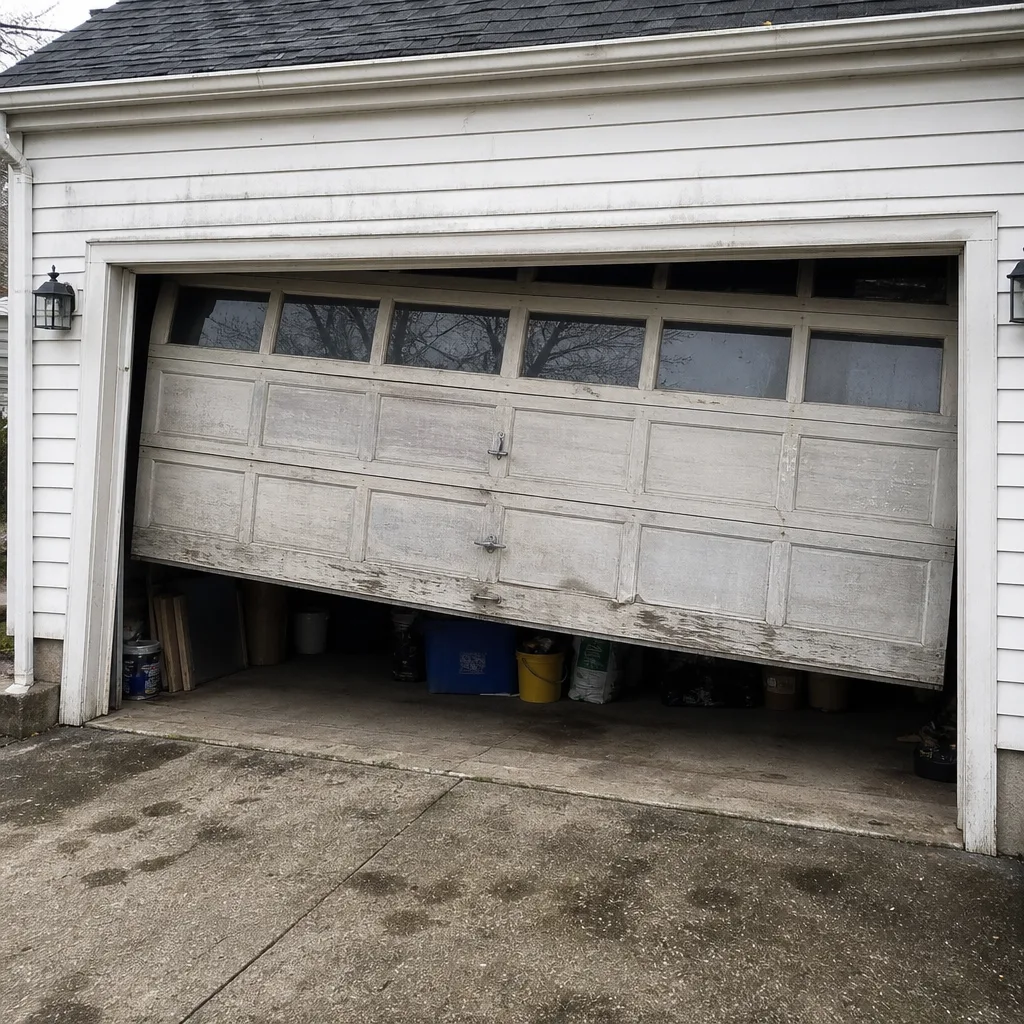 Before
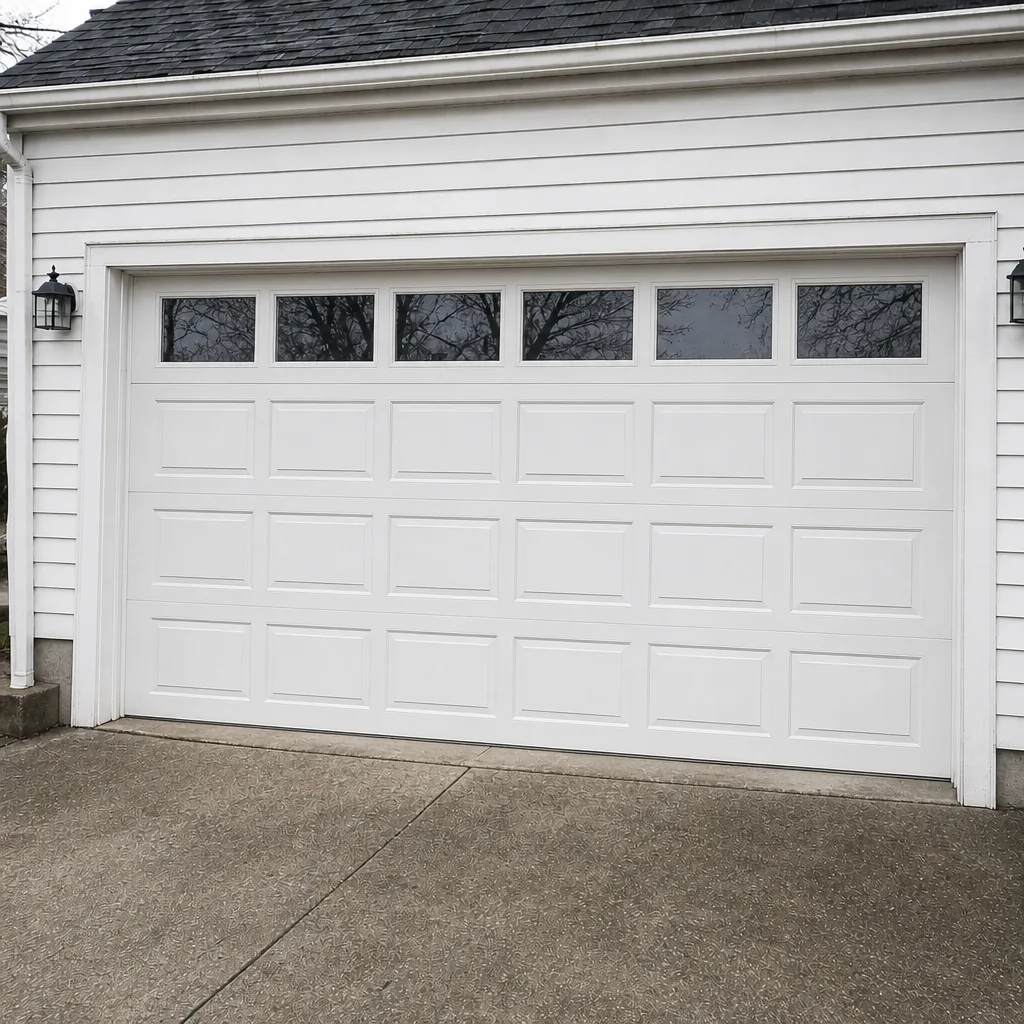 After
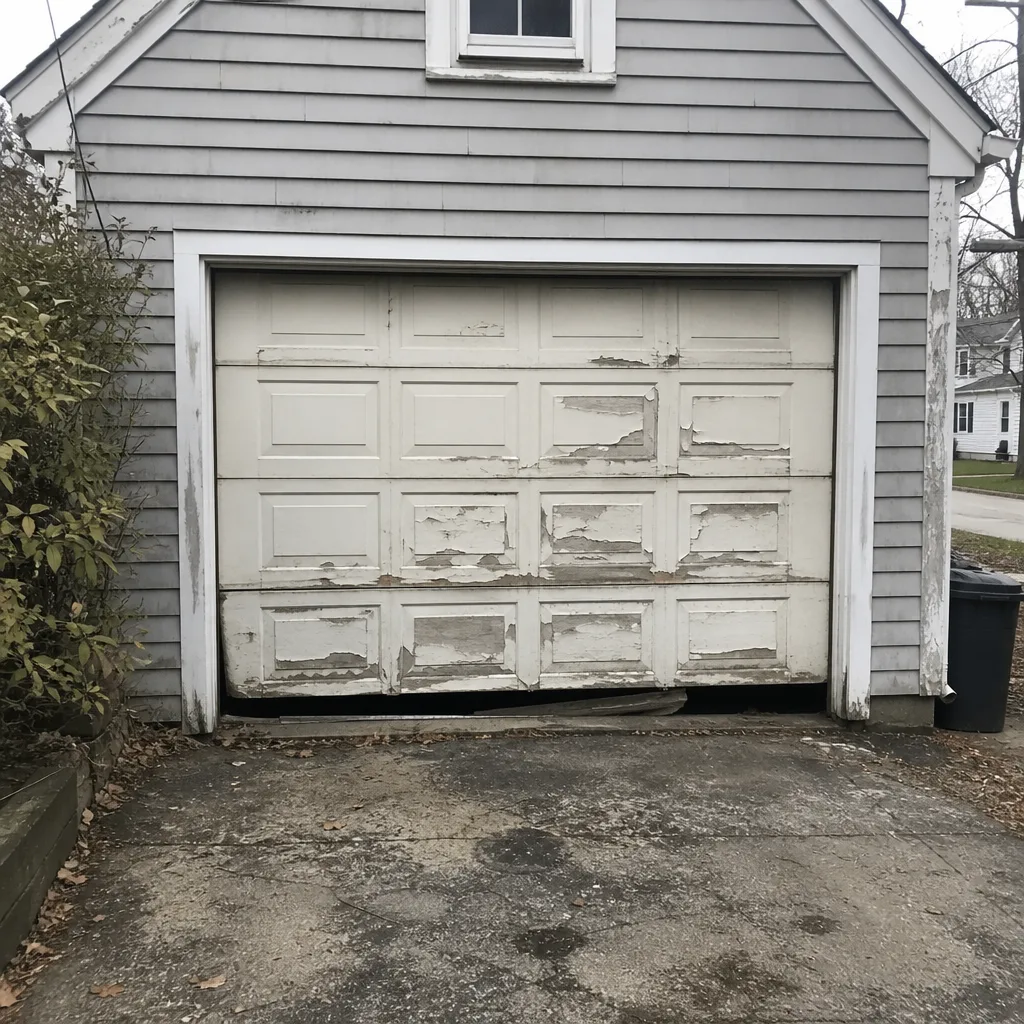 Before
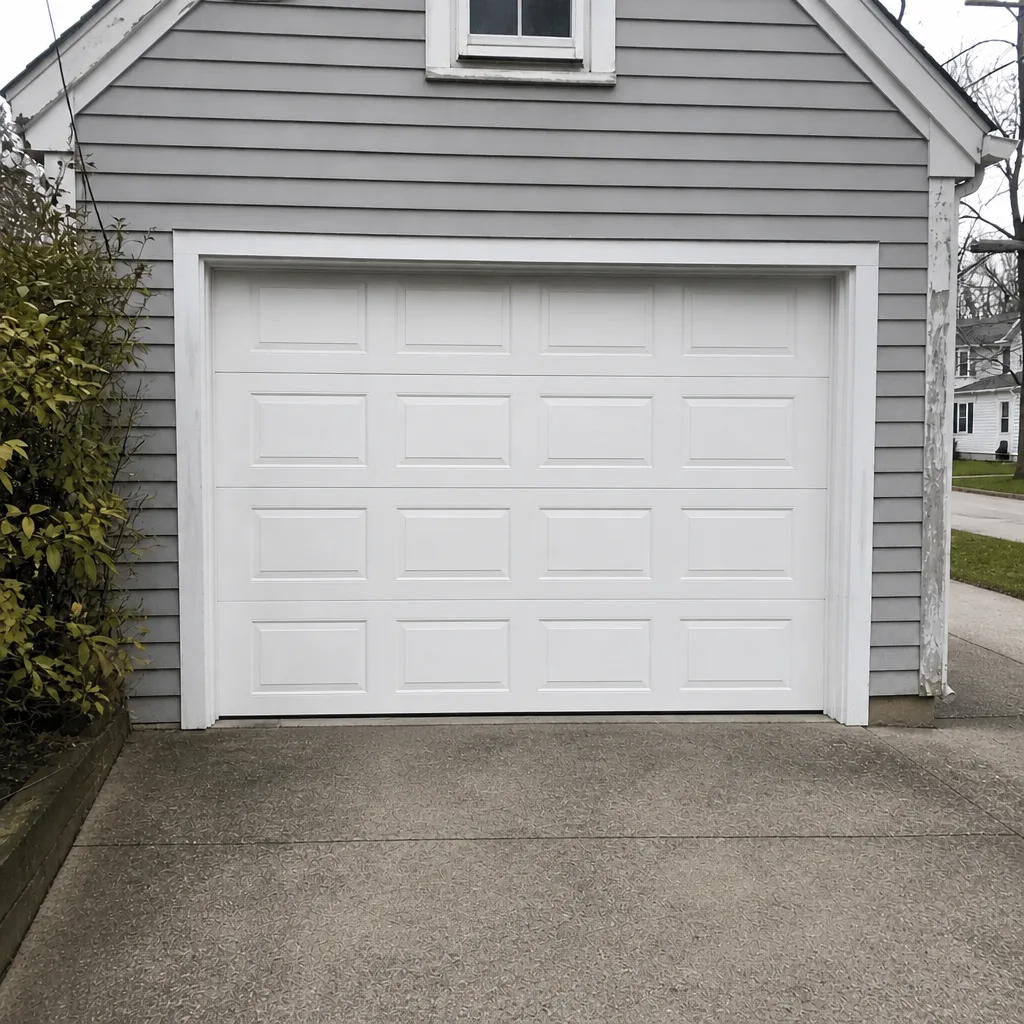 After
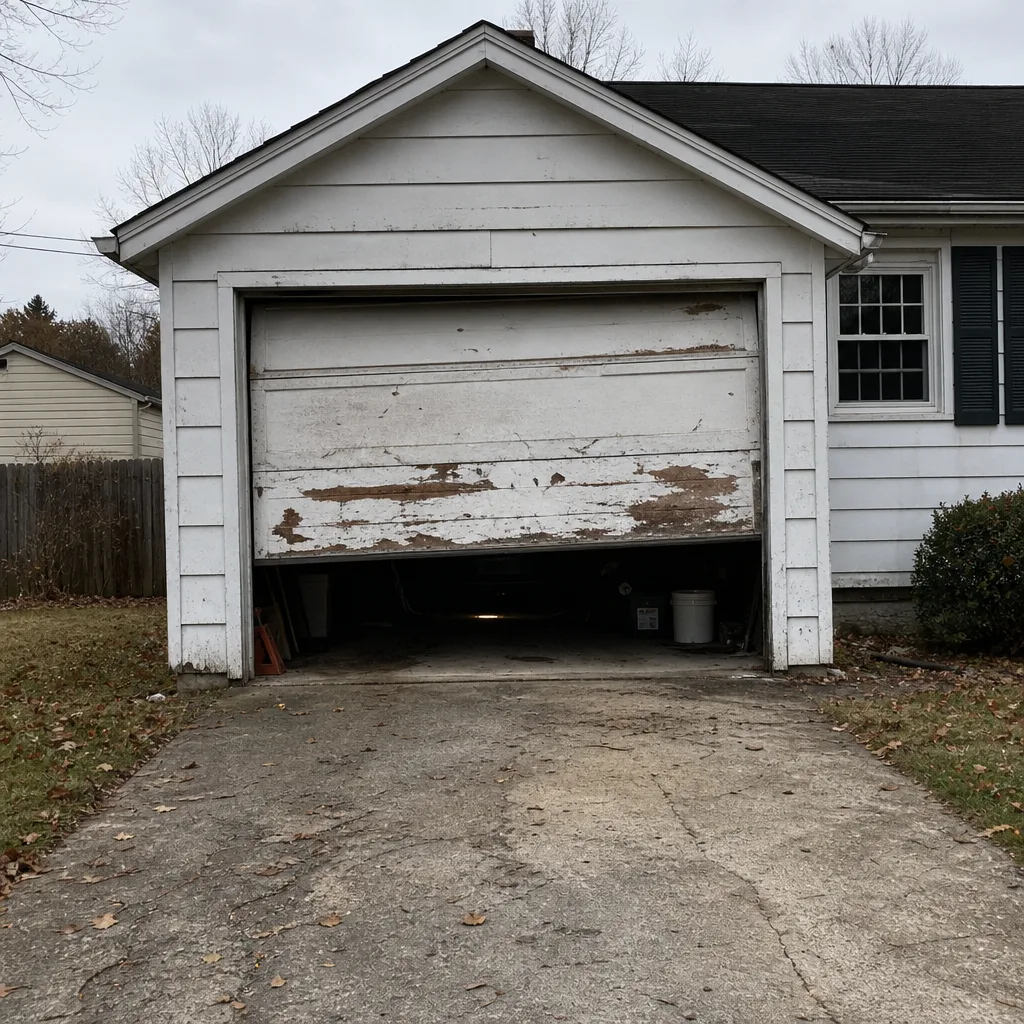 Before
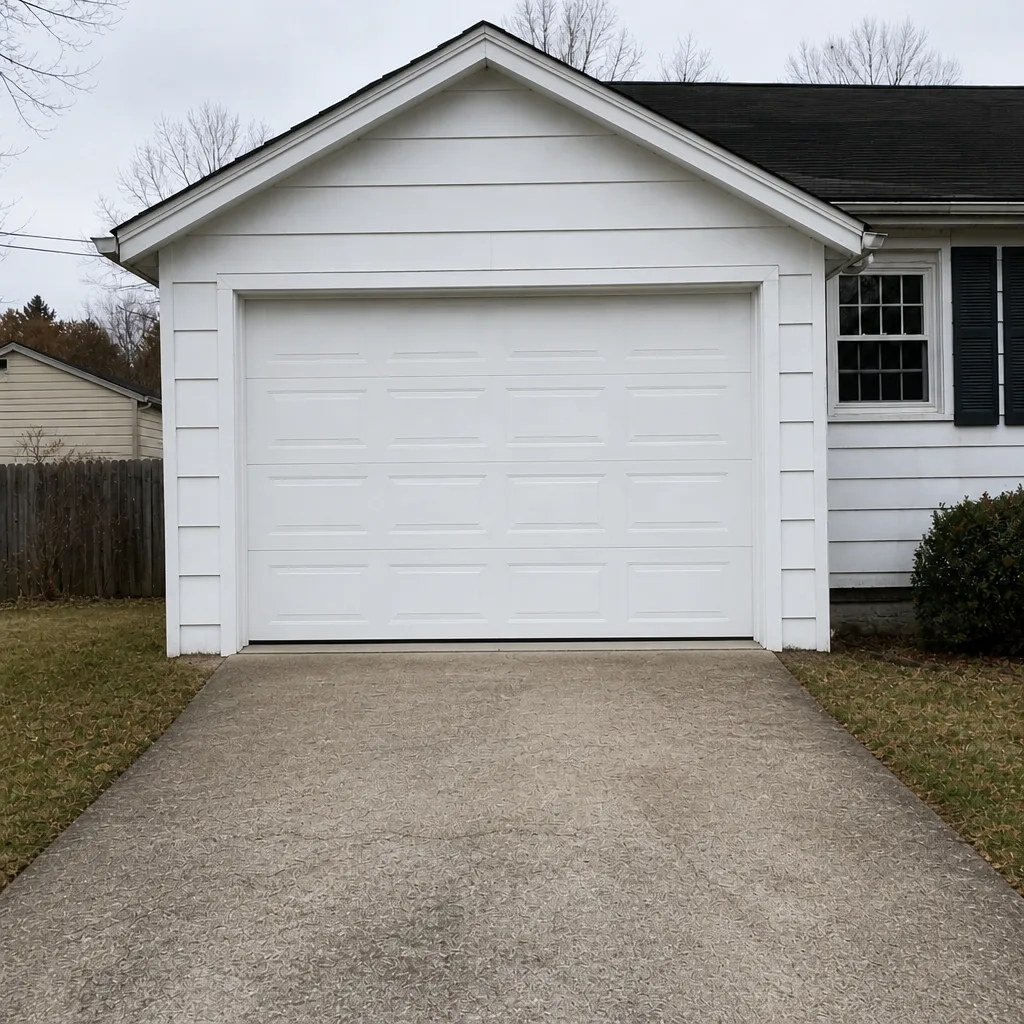 After
Frequently Asked Questions
Four times a year, aligned with the seasons. Fall is the preparation season and the most important – seal inspection, lubrication, and safety reverse testing. Spring is for post-frost track checks. Winter and summer are for monitoring. The annual balance test can be done any time; doing it in October and again in April works well for most doors.
Cold contracts the steel spring, which raises its stored tension, and the spring spends weeks under that extra load through a Franklin winter. When the first warm week arrives and the door’s daily cycle count jumps, a spring that was already near its limit can snap. February and early March are when we see the most spring failures. If a spring breaks, stop using the door and call (888) 484-8160 – estimates are free.
Not without checking the door first. If the door is binding, raising the force limit just strains the opener. Disengage the opener and test the door by hand; if it’s balanced and moves smoothly, a small force adjustment may be all that’s needed. If it binds, that’s a repair issue, not a settings issue. When in doubt, call for a diagnosis – estimates are free.
Clean and inspect the bottom weatherstrip and the concrete surface it contacts in the fall. Trapped moisture between the seal and the slab is what freezes and bonds them. A flexible, intact seal with no gaps is the best protection. Replace stiff or cracked weatherstrip before the first hard freeze – it’s an inexpensive part, and getting it done in October prevents a frustrating January.
They can, with attention to the finish. Summer humidity expands wood and can let water into composite doors at seams and edges. Check for bubbling paint, soft spots, and warping in late spring and early summer. Catch it early and a repaint or reseal stops the process; let it go and the damage can move from the finish to the structure. If a door is beyond repair, a replacement may be the right call, but we diagnose first.
The annual balance test. Disengage the opener, lift the door halfway by hand, and let go. If it holds its position, the door is balanced and the springs are doing their job. If it drops or rises on its own, you’ve caught a problem before it became an emergency. Combine it with lubrication and you’ve covered the most common causes of preventable failure. Call (888) 484-8160 if the test turns up anything that looks off.
The Bottom Line
Franklin’s garage doors don’t fail at random. Cold stresses the springs, frost heaves the tracks, humidity works on wood and composite panels, and fall is the window when all of it can still be prevented. The practical answer is a simple one: do the bottom seal and lubrication work in fall, do the post-frost track check in spring, watch the springs and opener in winter, inspect the wood in summer. Then add the annual balance test, because it catches most of what causes a door to fail. None of this is difficult, and none of it requires guesswork. When something looks wrong, call Franklin Garage Door Repair Pros at (888) 484-8160 for a free estimate. We work on the system you already have, and we’ll tell you the right fix – not the easiest upsell.
Written by the team at Franklin Garage Door Repair Pros.