Last updated November 23, 2026
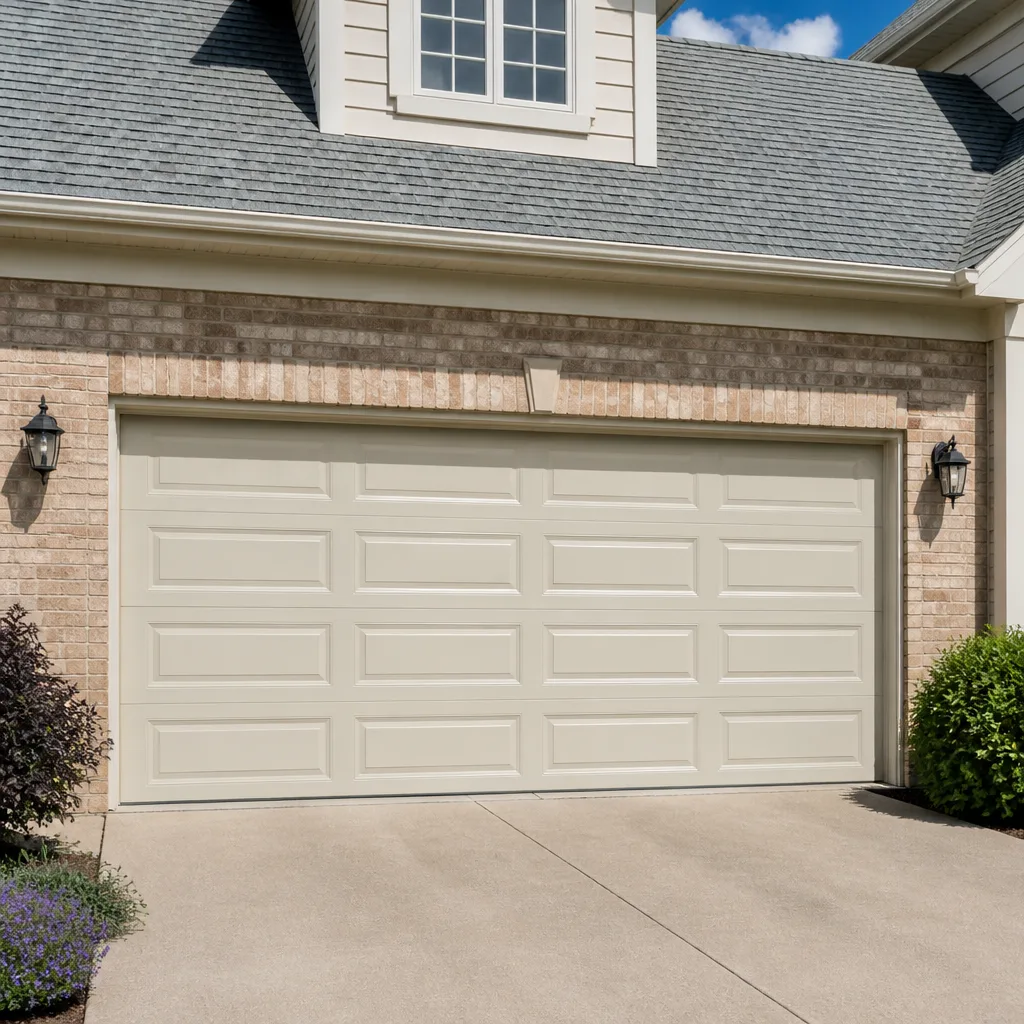 Raised-panel steel
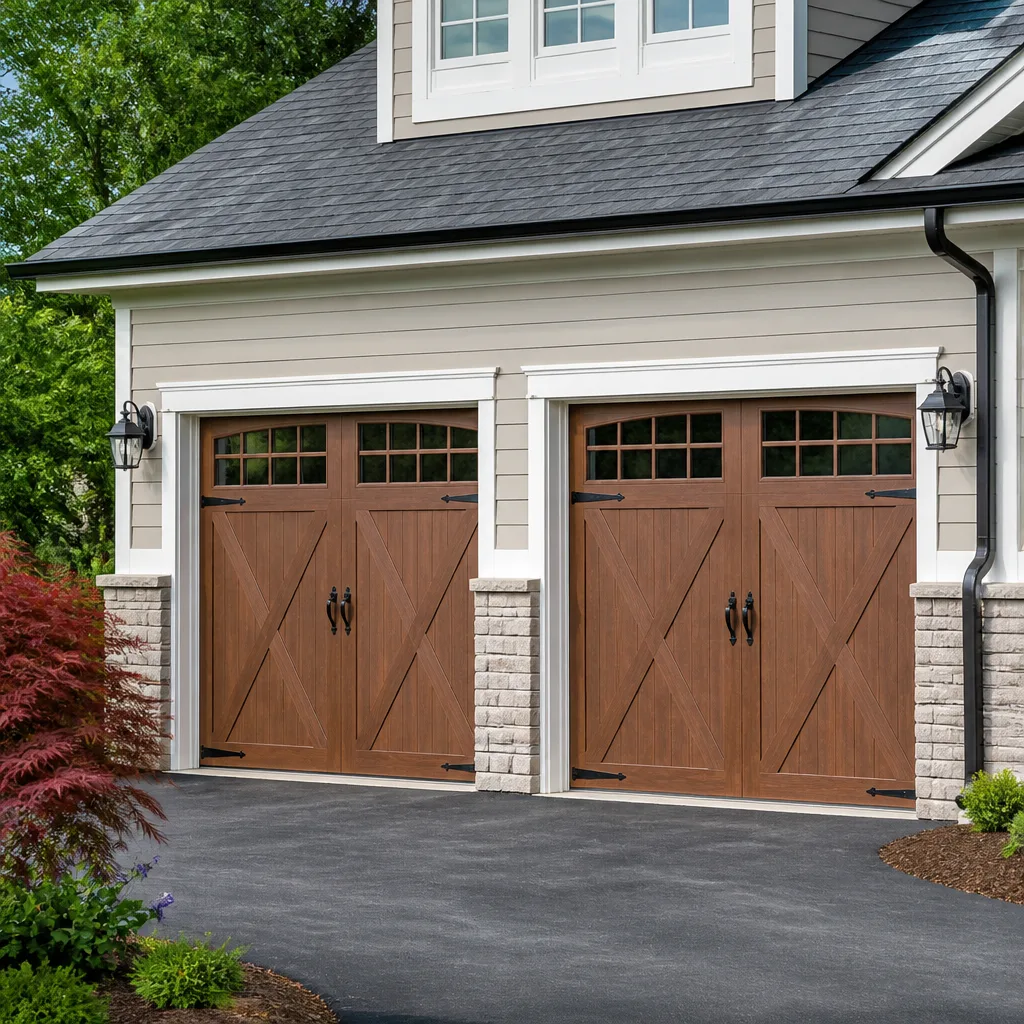 Carriage house
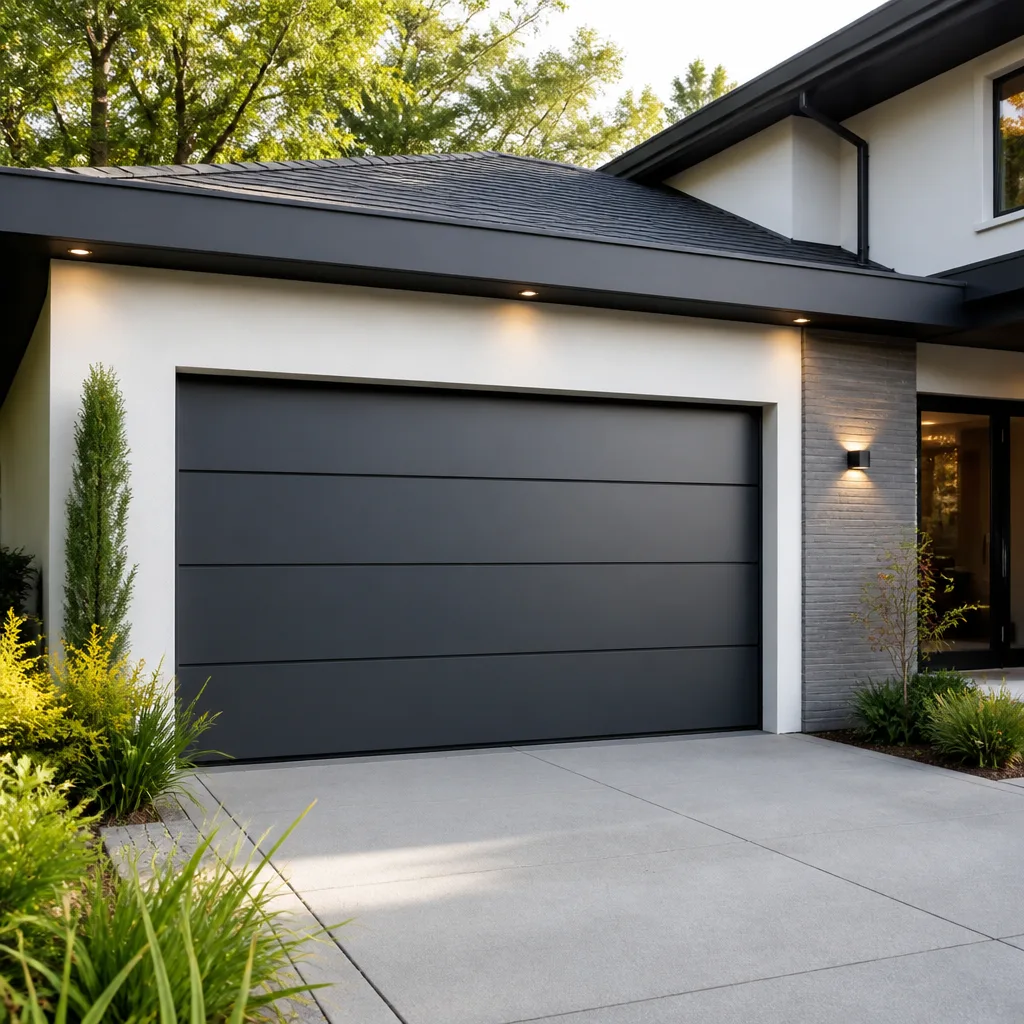 Modern flush
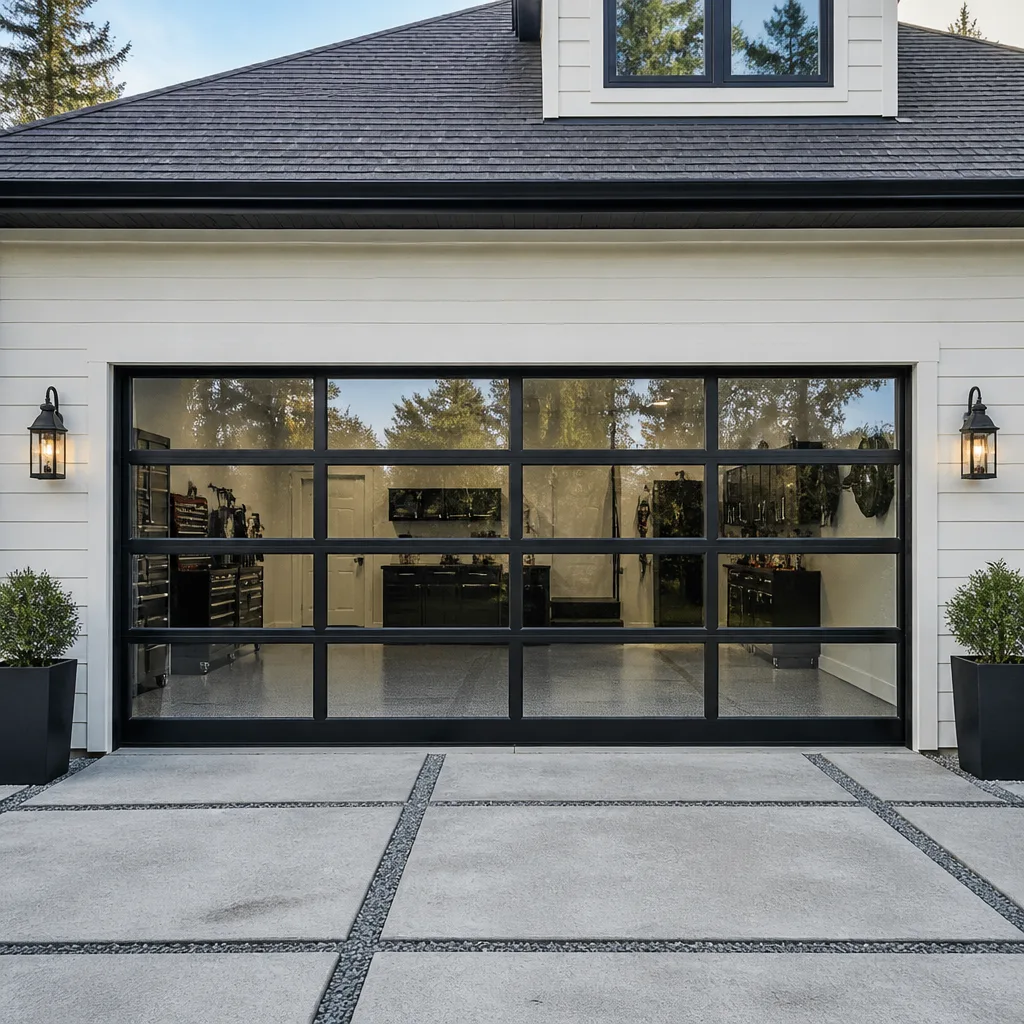 Full-view glass
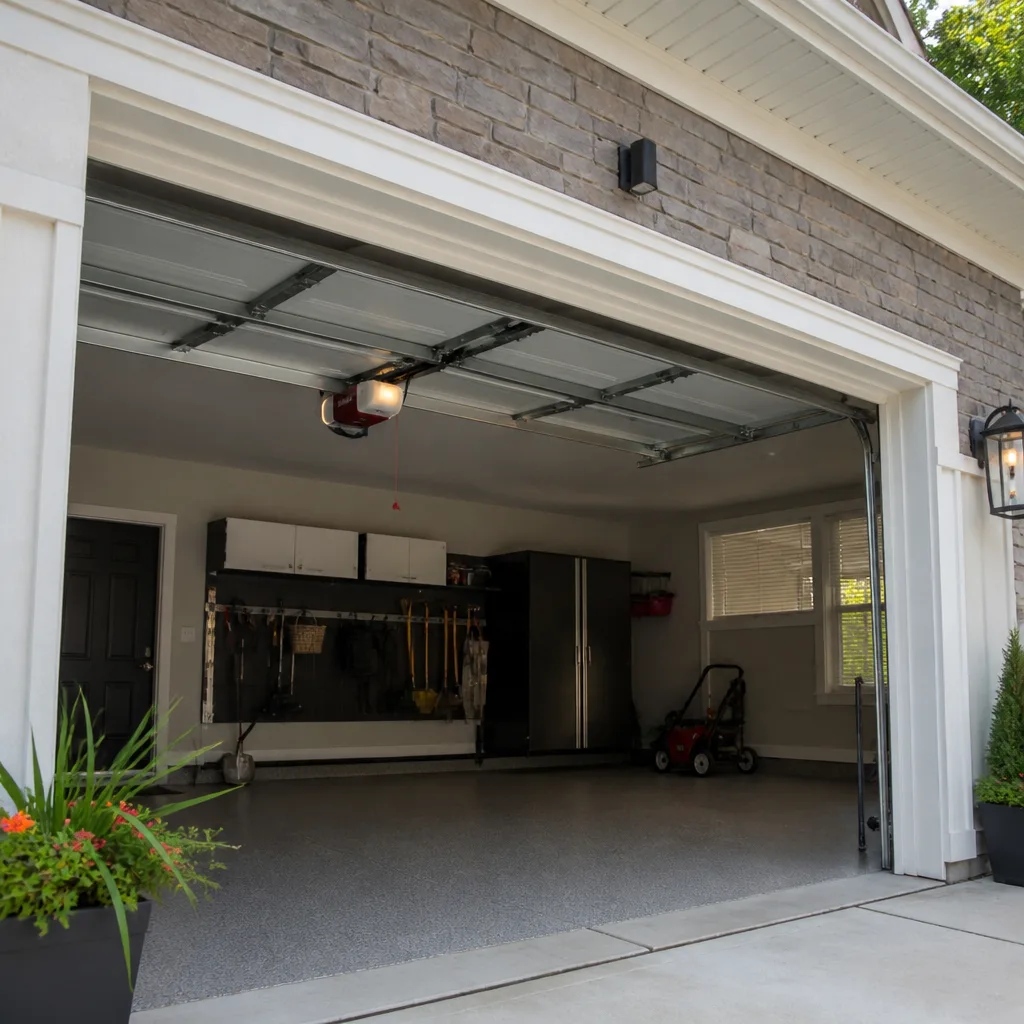 LiftMaster openers
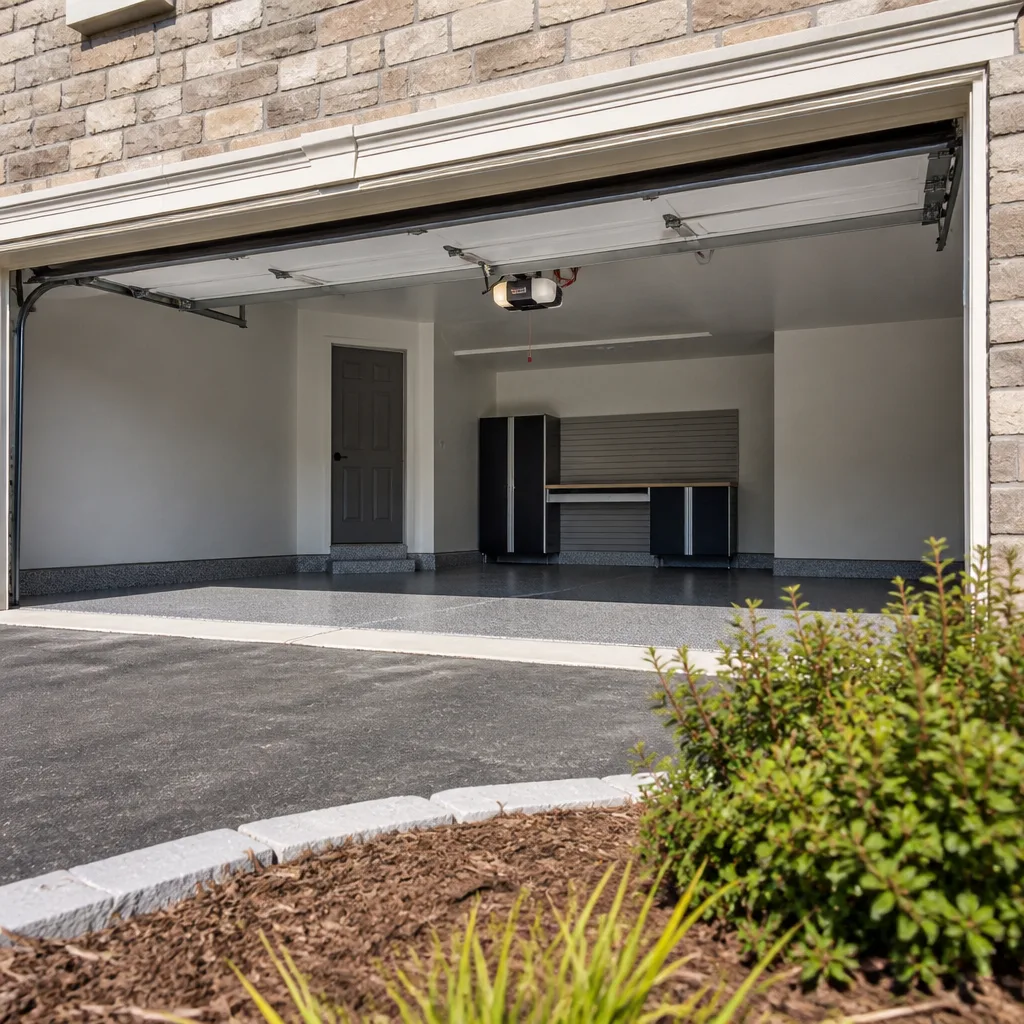 Chamberlain openers
Full 25-point door and opener safety check with every visit - springs, cables, rollers, tracks, and your LiftMaster or Chamberlain opener included
You get a price before we start. It does not change when the pro arrives.
Get your free estimateDIY vs Professional Garage Door: The Franklin Homeowner’s Decision Guide
Almost every garage door repair guide takes one of two positions. Some warn you off the entire machine and tell you to call a pro for a squeaky hinge. Others walk you through replacing a torsion spring with a winding bar and a prayer. Both are unhelpful. The real question isn’t whether you’re handy enough – it’s which specific tasks involve stored energy that can injure you in a fraction of a second, and which ones are genuinely safe for a careful homeowner to handle on a free morning. This guide draws that line task by task, with the mechanical reason behind each call, so a Franklin homeowner can decide with facts instead of fear or bravado.
Quick Answer
Lubrication, weather seal replacement, safety sensor alignment, and adjusting opener travel limits are all safe and sensible to do yourself. Anything involving torsion springs, extension springs, lift cables, bottom brackets, or the drums at the ends of the shaft is professional work, because those parts hold stored energy that can release without warning. If your door is heavy, crooked, stuck, or making a loud bang, call a trained technician – the diagnosis matters more than the wrench.
Styles & brands we work with
- Raised-panel steel
- Carriage house
- Modern flush
- Full-view glass
- LiftMaster openers
- Chamberlain openers
Table of Contents
- The Task-by-Task Breakdown: What’s Safe and What Isn’t
- The Tools a Franklin Homeowner Actually Needs
- Why Springs and Cables Sit on the Other Side of the Line
- Does DIY Actually Save Money? Running the Numbers Honestly
- How Franklin Winters and New England Humidity Treat Your Door
- What to Do Between Scheduling a Repair and the Technician Arriving
- Common Mistakes to Avoid
- Frequently Asked Questions
The Task-by-Task Breakdown: What’s Safe and What Isn’t
This is the table most guides won’t give you. Every row has a mechanical reason, not a lawyer’s reason. Read it as a starting map, then dig into the sections below for the specifics.
DIY-Safe Tasks
- Lubricating hinges, rollers, and tracks – no stored energy, no tension, nothing to release.
- Replacing the bottom weather seal – it slides into an aluminum retainer at the floor; the tension is in the springs above, not the seal.
- Cleaning and aligning safety sensors – low-voltage wiring at ankle height, no moving parts.
- Adjusting opener travel limits and force settings – this is a control on the opener housing, not a mechanical adjustment to the door.
- Replacing the opener’s remote batteries or re-pairing a remote – simple setup work.
- Clearing obstructions and tightening track bolts that have worked loose – as long as the door is down and disconnected from the opener and you are not bending the track back into place.
- Painting or staining a wood or steel door surface – cosmetic only, no mechanical involvement.
DIY-With-Caution Tasks
- Replacing rollers – safe on a door that’s properly balanced and fully down with the opener disconnected, dangerous on a door under tension. If the door will not stay down on its own, stop.
- Replacing a photo-eye or wall button – low voltage, but the wrong wiring on a newer opener can confuse the control board. Follow the manual’s terminal diagram.
- Adjusting the opener’s close-force setting – safe to touch in small increments, but a door that needs more force than the manual allows is telling you something is wrong mechanically.
- Touching up a bent track by hand – a small bend can sometimes be straightened with a rubber mallet and care, but anything that twists the vertical track out of plumb is a professional call, because a misaligned door can drop a roller out of the track.
Professional-Only Tasks
- Torsion spring replacement or adjustment – the spring is wound to hold the full weight of the door; releasing it wrong is how wrists and fingers break.
- Extension spring replacement or adjustment – same stored energy, different geometry, plus the risk of a snapped spring whipping through its safety cable.
- Lift cable replacement – the cables are under spring tension and can slice through a glove and hand if they snap.
- Bottom bracket replacement – the bottom bracket is the anchor point for the lift cable; release the tension and the bracket can spring off with enough force to break bone.
- Drum, shaft, and bearing plate work – if you’re up on the shaft, the whole torsion system is involved.
- Track replacement or re-alignment after impact – a bent track on a door under spring tension can drop the door.
- Panel replacement on a sectional door – heavier than they look and physically awkward to handle alone; panels under load can shift and pinch.
- Whole-door installation – sequencing, anchoring, spring winding, and balancing.
At Franklin Garage Door Repair Pros, our technicians have up to 12 years of experience and have seen what happens when a homeowner stops halfway through a spring swap. We don’t blame them – the tutorials make it look easy – but the safety line is real. If you’re in Franklin and the job is on the third list, call us at (888) 484-8160.
The Tools a Franklin Homeowner Actually Needs
Here’s the good news for anyone planning to do the safe DIY tasks well: you probably own most of what you need, and the rest costs less than a single professional visit. Skip the “garage door tool kit” listings on Amazon – they bundle a winding bar with a set of bits you’ll never use on a residential door. The genuinely useful tools sit in the standard homeowner kit:
- A torpedo level and a longer 24-inch level. You’ll use these on the track and to check panel alignment after any adjustment. A door that looks straight can be a quarter-inch off plumb and still work – until it doesn’t.
- A set of hex keys and a 1/2-inch socket set. Rollers, hinges, and the opener’s mounting brackets are held by these. Most residential systems use No. 2 square-drive hinges, so pick up a square bit.
- White lithium grease and silicone spray. Lithium on the hinges, rollers, and the torsion shaft bearings; silicone on the vertical tracks and the weather seal. Never use WD-40 as a lubricant on the moving parts – it attracts dust.
- A rubber mallet. For seating a new weather seal into its retainer and for gentle track work.
- A proper stepladder with a load rating you trust. This is the tool most often skipped, and the one that causes the most household injuries.
- A flashlight or work light. Half the “stuck door” calls we handle in Franklin turn out to be a roller out of its track that nobody could see in a dim garage.
- Work gloves that fit snugly. Not the loose kind – loose gloves snag on rotating parts.
What you don’t need: winding bars, spring clamps, or anything that implies you’re going to release tension. If you find yourself looking up how to use winding bars, that’s the moment to close the tab and call a technician. The tool itself isn’t the problem; the decision to use it is.
Why Springs and Cables Sit on the Other Side of the Line
Every garage door is a balancing act. The door itself weighs a few hundred pounds on a typical Franklin home, and the springs are wound so they lift most of that weight while the opener only has to overcome inertia and friction. When you see a door that lifts with two fingers, that’s not the opener doing the work – it’s the springs, and they are holding energy every second the door is closed.
A torsion spring on a standard residential door is wound to a force range that would break a wrist if it released while your hands are on the bar. Extension springs are a different shape but the same physics: they store tension along the track, and if they fail without a safety cable, they can fly. Those two sentences are the reason every professional treats spring work as a two-person, tool-dependent, measured job rather than a weekend project.
What goes wrong when springs or cables are DIY-adjusted incorrectly
We’re not going to talk about worst-case outcomes – you already know the risk exists. What’s more useful is understanding the mechanical failure modes, because they connect directly to the DIY decision:
- Over-wound torsion spring: the door feels light and lifts easily, but the spring is beyond its safe cycle limit and will break early – sometimes within weeks. A snapped spring immediately makes the door dead weight, and the runner-up failure on a single-spring door is the opener burning out trying to lift it.
- Under-wound spring: the opener has to do the lifting, which overheats the motor and burns out the gear assembly. This is one of the most common garage door opener repair jobs we handle, and the opener often gets blamed when the spring is the real problem.
- Cable slipped off the drum: the door hangs at an angle, one side drops, and the roller can jump the track. At that point the whole door is unstable and should not be cycled until a technician re-tensions it – running it up and down in that state can rack the panel seams permanently.
- Bottom bracket loosened while under cable tension: the bracket is the anchor, and if it comes free the cable snaps taut with the full stored load. This is the failure that most often causes a serious injury in home garage door work.
The pattern is always the same: the door “works” for a short while, then fails worse and more expensively than if it had been done right the first time. That’s the specific trap we want Franklin homeowners to avoid with garage door spring repair – measured, tool-correct work by someone who has done it hundreds of times.
Does DIY Actually Save Money? Running the Numbers Honestly
Most DIY guides pretend time is free. It isn’t. A clear-eyed comparison looks like this:
Where DIY clearly wins
- Weather seal replacement: the part is often under twenty dollars at a hardware store in Franklin, the job takes fifteen minutes, and there’s essentially no risk. This is a real savings.
- Lubrication and tune-up: lithium grease and a twenty-minute pass through the moving parts each season keep the door quieter and extend roller life. Free labor, real benefit.
- Sensor alignment and cleaning: the classic “my door keeps reversing” call is often a two-minute fix once you know what to look for.
- Remote re-pairing: the manual walks you through it in three steps.
Where DIY looks like it saves money and doesn’t
- Springs: the part itself can be inexpensive, but the tools, the risk of injury, and the likelihood of a wrong winding make the real cost-of-ownership math ugly. A single failed attempt and a follow-up emergency call often exceeds the cost of having it done right the first time.
- Rollers on a door under wrong tension: you can spend a Saturday replacing rollers on a door that never should have been cycled, then find the door still hangs – because the actual problem was spring balance all along.
- Bending a track back straight by hand: a track that’s been knocked out of plumb by a car bumper rarely comes back to true by hand. Attempting it often widens the damage to the door panel and the roller assemblies.
- Electrical diagnostics on a smart opener: swapping parts to “see if it fixes it” is how a $10 problem turns into a control-board replacement on a LiftMaster or Chamberlain unit. Diagnosis matters more than the swap.
Here’s the rule of thumb we give neighbors: DIY is worth it when the part costs more than the labor you’d spend, when the job is under thirty minutes, and when the failure mode is a small inconvenience rather than a physical hazard. Everything else is a paid call – usually a small one.
How Franklin Winters and New England Humidity Treat Your Door
Franklin doors live through a specific set of seasonal stresses, and the DIY decisions above need to be read through that lens. A few local realities that a generic guide will miss:
- Freeze-thaw cycles. The repeated thawing and refreezing that runs through a Massachusetts winter is hard on a bottom seal. Water gets under a cracked seal, refreezes, and lifts it. Checking the seal in November – and replacing it if it’s split – is one of the highest-value DIY jobs Franklin homeowners can do.
- Cold-weather spring fatigue. Springs that are near their cycle limit tend to snap on the first genuinely cold morning of the season. Not because cold breaks them directly, but because a door that’s stiff and heavy needs more pull than a tired spring can give. If your door suddenly feels heavier in January than it did in October, the door is telling you to book a check.
- Humidity and wood doors. The New England summer swells a wood door slightly, which is fine – but a door that was already binding gets worse, and the opener’s force setting gets cranked up to compensate. Adjusting force upward is one of the safe DIY tasks, but only in small steps and only if you’ve first checked that the door moves freely by hand.
- Snow and ice at the bottom of the door. Don’t force a frozen door closed with the opener. Clear the snow from the seal, disconnect the opener if it’s already straining, and let the door cycle once by hand before re-engaging.
- Leaves and grit in the tracks. Franklin’s fall is beautiful and terrible for garage door tracks. A quarterly pass with a shop vac on the vertical track and a wipe-down with silicone spray will prevent a surprising number of stuck-door calls.
Cold-weather work also matters for the tools: lithium grease thickens noticeably below freezing, so anything you apply in January should be a lighter weight than what you’d choose in July.
What to Do Between Scheduling a Repair and the Technician Arriving
Once a repair is booked, the safest move is usually to stop using the door. But there are things you can do in the meantime that genuinely help – and a few you shouldn’t do at all.
- Disconnect the opener. If your door has a manual release (usually a red handle on a cord), pull it once the door is down. This takes the motor out of the equation so a technician isn’t troubleshooting an opener that’s been fighting a jammed door for hours.
- Clear the doorway and the floor area. Clear a path for the technician, and sweep any loose snow, ice, or leaves out of the threshold – it makes a difference on the diagnosis.
- Photograph the door and the opener. A couple of phone pictures of the closed door, the spring above it, and the opener label give the technician a running start when they arrive.
- Note when the problem started. Was it after a bump from the car, after a cold snap, after a power outage, after a child held the wall button? Those details shorten the diagnostic step.
- Don’t force the door up or down. If it will not move by hand with the opener disconnected, it stays down. Cycling it risks the roller popping out of the track or a panel kinking.
- Don’t try “one more thing” before the technician arrives. A door that was a single spring job can become a spring plus panel plus track job in five minutes of hopeful fiddling. We’ve seen it happen.
If the door is stuck open and the house is exposed, emergency service is available – a door that won’t close is a security issue and we treat it that way. If the door is stuck closed but the garage is not your only exit, waiting for a scheduled visit is usually the right call. Either way, call (888) 484-8160 and we’ll get you on the schedule with a clear idea of what to expect.
Common Mistakes to Avoid
- Lubricating the tracks themselves with lithium grease. Grease attracts grit and the rollers will start dragging within a season. Silicone spray is the right choice on the track; lithium goes on the hinges and bearings.
- Backing the opener’s force setting all the way up to stop the door reversing. The force setting exists to protect fingers and small objects. If the door needs more force, the mechanical problem is the thing to fix, not the sensor.
- Running the door with a visibly bent track. In Franklin, this is often caused by a bumper knock during a tight winter parking job. The door will cycle – and then one roller will lift, and the door will come down crooked. Get the track looked at before cycling it again.
- Trying to straighten a bent bottom bracket by hand. The corner brackets are under cable tension. Never loosen, tighten, or straighten one yourself.
- Skipping the seasonal lubricant pass because the door “sounds fine.” Quiet doors are quiet because the moving parts are lubricated. Once they start squealing, the wear has already started.
- Coating the safety sensors with lubricant to stop them chirping. Sensors don’t chirp from lack of grease – they chirp because they’re misaligned, dirty, or failing. Wipe the lens with a dry cloth and re-check the alignment.
- Assuming a Craftsman or Raynor door is “too old” to fix. Age alone is almost never a reason to replace a door. Our technicians work on every major system, and a repair is usually the right answer long before a replacement is.
See the difference
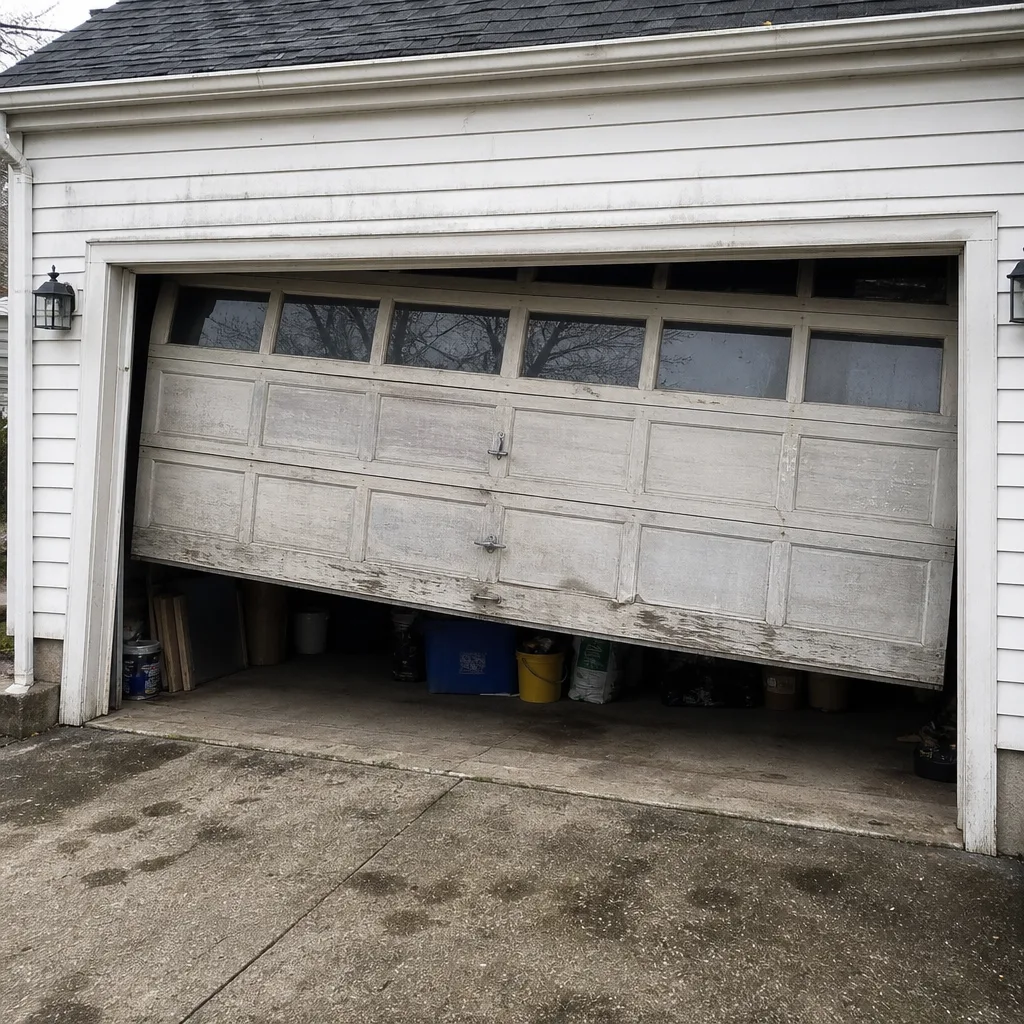 Before
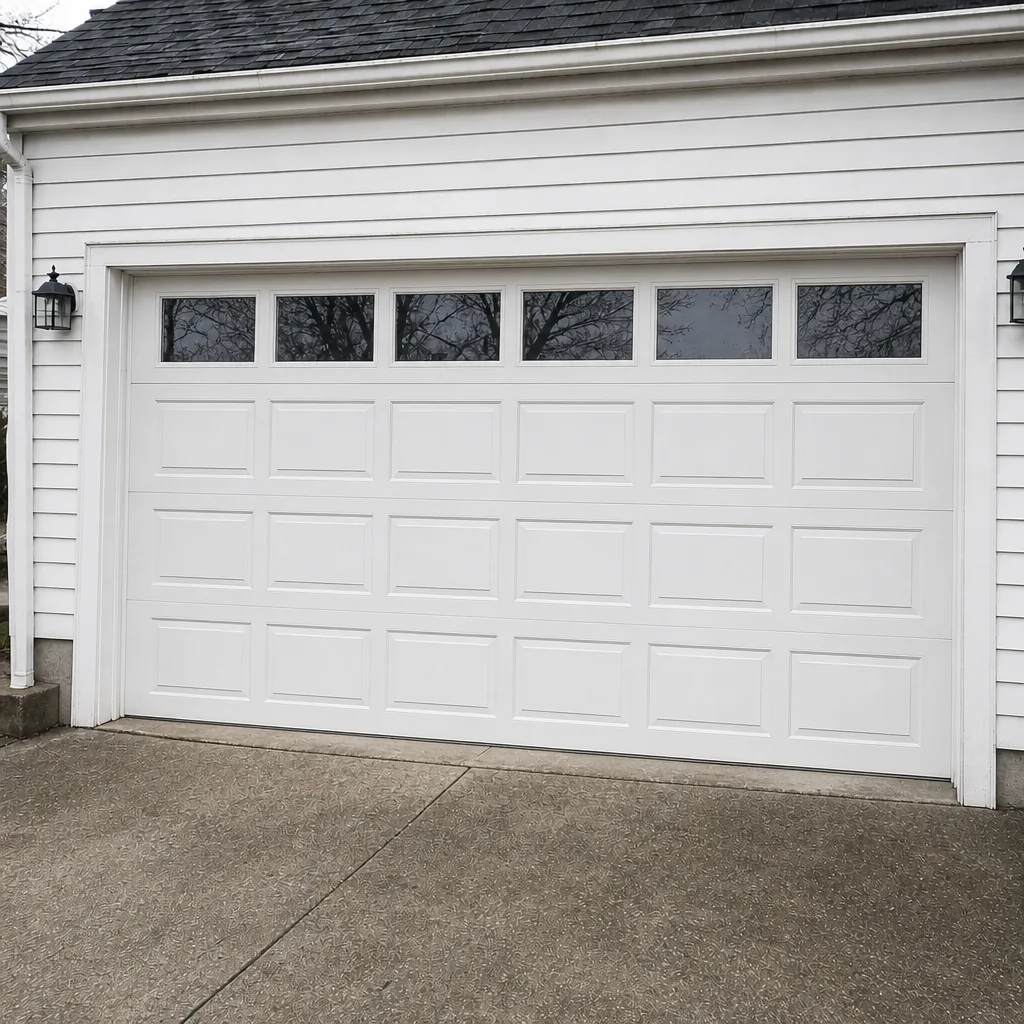 After
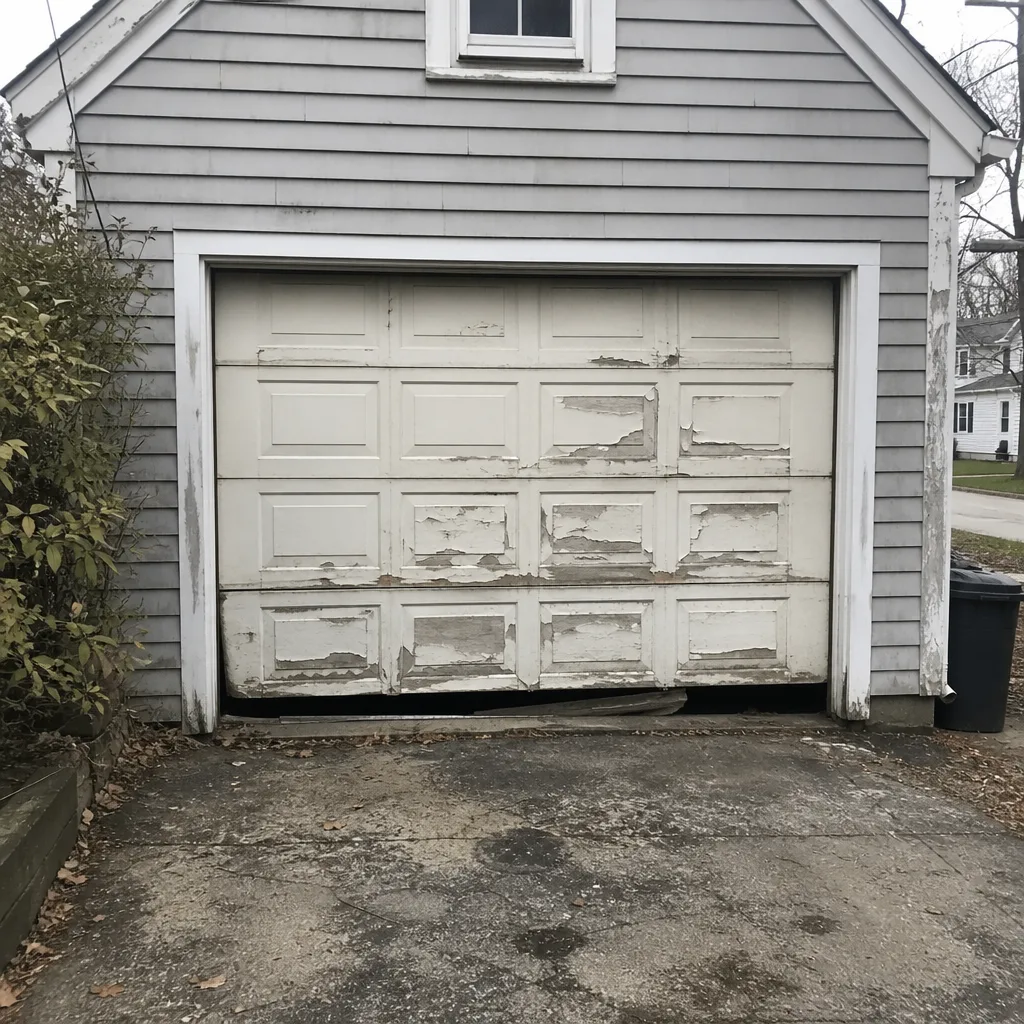 Before
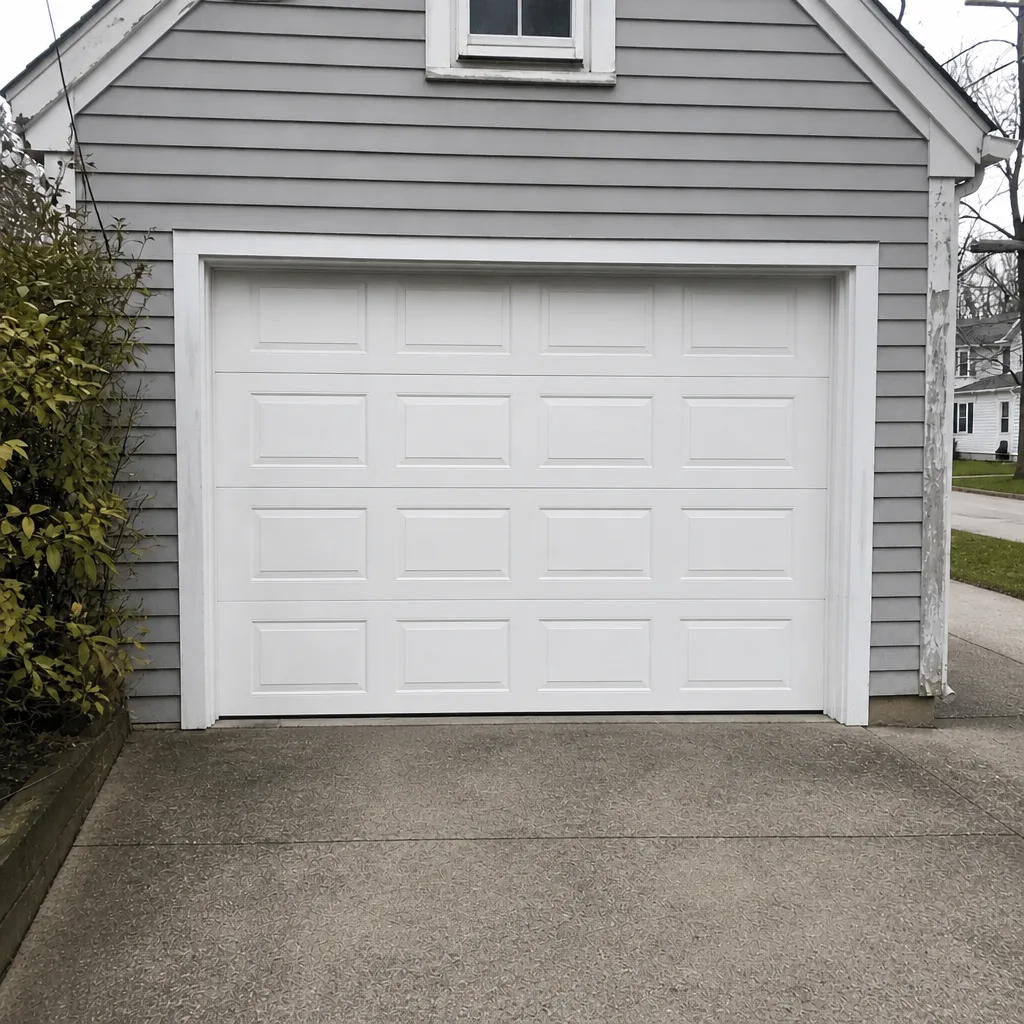 After
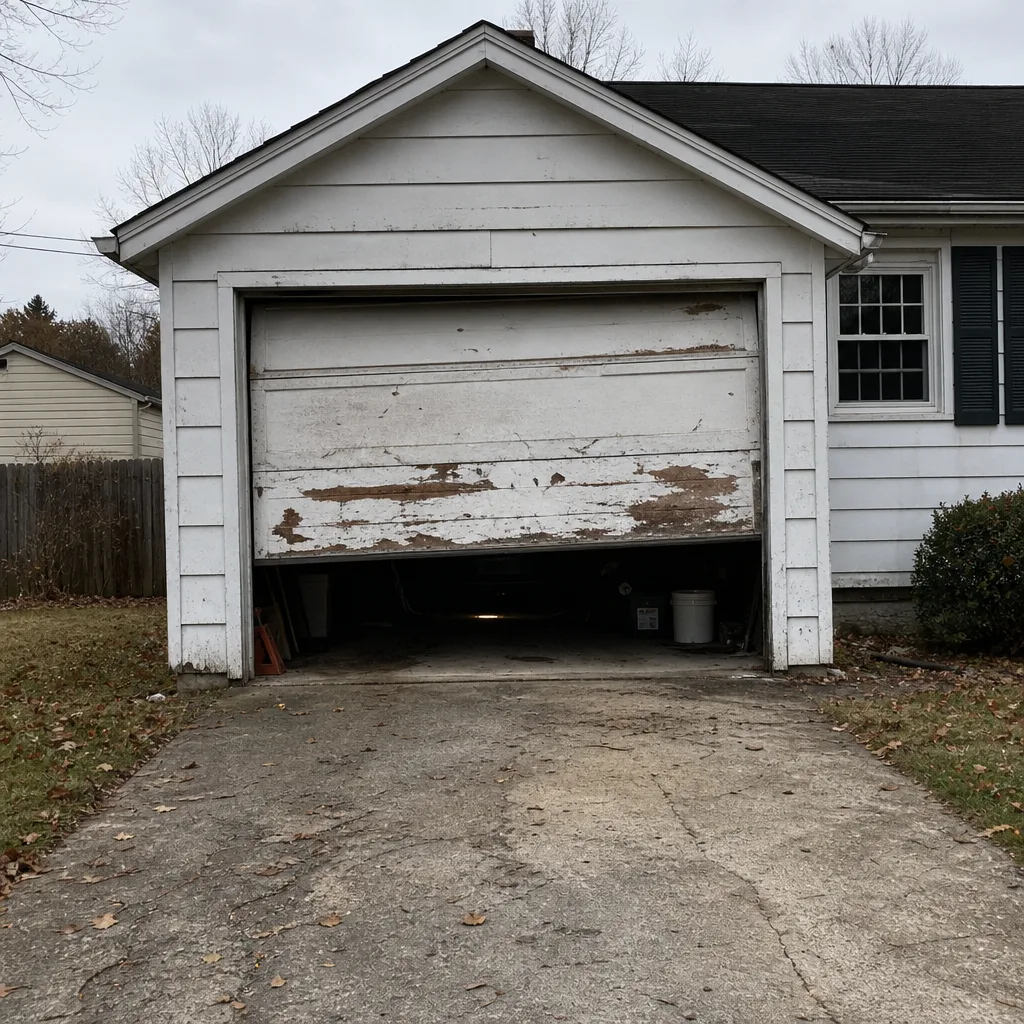 Before
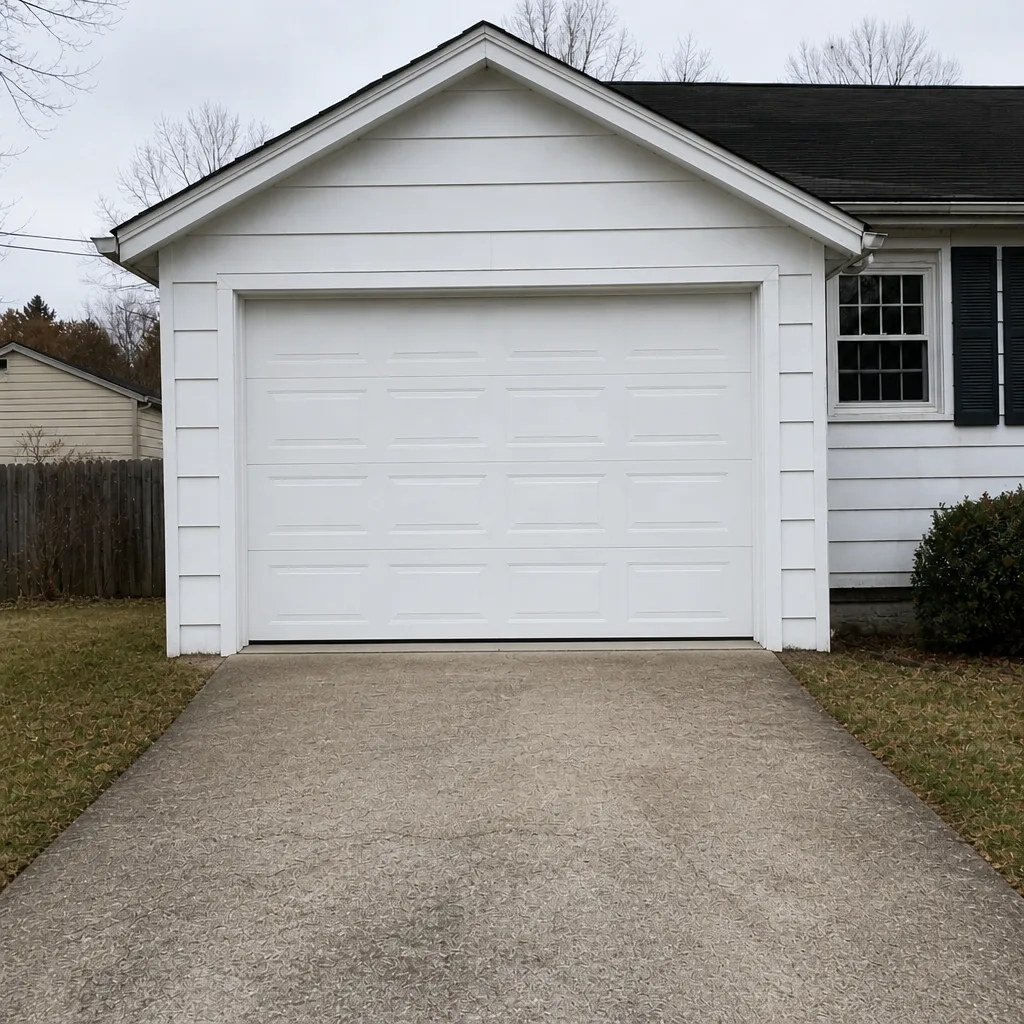 After
When to Call a Professional
Call a professional the moment any of these are true: the door will not move by hand with the opener disconnected; the door is heavy or slams down; you hear a loud bang from the spring area; the door is crooked or one side rises before the other; a cable is hanging loose or off its drum; a panel or track has been hit; the door has dropped unexpectedly or reversed mid-close more than once. Those signals point to a mechanical failure that needs eyes on it, not more force from the opener. Franklin Garage Door Repair Pros offers free estimates in Franklin – call (888) 484-8160. We can also help you decide whether garage door repair or replacement makes more sense, and we’ll tell you when the answer is “repair.”
Frequently Asked Questions
No – torsion and extension springs hold enough stored energy to cause serious injury if they release, so spring replacement belongs to a trained technician with the right tools. The part itself is not the problem; the release procedure is. If a spring has snapped, keep the door down, disconnect the opener, and call (888) 484-8160 for spring repair.
Lubricating hinges and rollers, replacing the bottom weather seal, aligning the safety sensors, adjusting opener travel limits, re-pairing remotes, and clearing debris from the tracks are all safe for a careful homeowner. Anything involving the springs, cables, bottom brackets, drums, shaft, or full panel replacement is professional work. If a task needs a winding bar to complete, it’s not a DIY task.
If your door is heavy to lift by hand, the spring balance is likely the root cause – not the opener. That’s often the case with a LiftMaster or Chamberlain unit that suddenly “can’t lift the door” after years of working fine. A technician can check the spring balance in a few minutes and tell you which part actually failed.
For many repair calls, yes – we can often get to a stuck door, a snapped spring, or a reversing opener quickly, and emergency service is available when the door won’t open or close. Installation and full replacement are scheduled because the door and hardware need to be measured and ordered first. Call (888) 484-8160 and we’ll tell you what your specific situation needs.
Call for emergency service right away – a door stuck open is a security and safety issue that shouldn’t wait. In the meantime, don’t try to force the door down or yank the release handle; a door in that state can drop or rack. Disconnect the opener if you can do so safely and keep the area clear.
No – the price we quote is the price you pay, provided the scope hasn’t changed. We diagnose before recommending anything, so the estimate is based on what’s actually wrong, not what it might be. Franklin Garage Door Repair Pros gives free estimates and written pricing before any work begins, so there’s nothing to be surprised by at the end.
The local professionals we connect you with are licensed and insured as the state requires, and they work on every major brand – LiftMaster, Chamberlain, Genie, Craftsman, Clopay, Amarr, Wayne Dalton, and Raynor. Our technicians have up to 12 years of experience, and they’ll diagnose the door before recommending anything. Call (888) 484-8160 with any questions.
The Bottom Line
The DIY-versus-professional question has a clear answer once you split the tasks by what’s physically at stake. Lubrication, seal replacement, sensor alignment, and remote setup are yours to do and worth doing – they’ll extend your door’s life and prevent small problems from becoming big ones. Springs, cables, bottom brackets, and full replacement belong to a technician because the energy stored in those parts doesn’t give you a second chance. If you remember one rule from this guide, it’s this one: if the job needs a winding bar, it isn’t a DIY job. Everything else is a judgment call you can now make with confidence. When the answer is “call someone,” Franklin Garage Door Repair Pros is ready at (888) 484-8160 with free estimates and same-day emergency service.
Get a Free Estimate in Franklin
Whether you’re planning a repair, wondering if a replacement makes sense, or just want a second opinion on a door that’s been acting up, we’re here for it. Call (888) 484-8160 for a free estimate – estimates are free, the price is quoted before work starts, and we’ll tell you honestly when the right move is to repair rather than replace. For a full picture of what we handle day to day, start with Franklin Garage Door Repair Pros.
Written by the team at Franklin Garage Door Repair Pros.