Last updated November 23, 2026
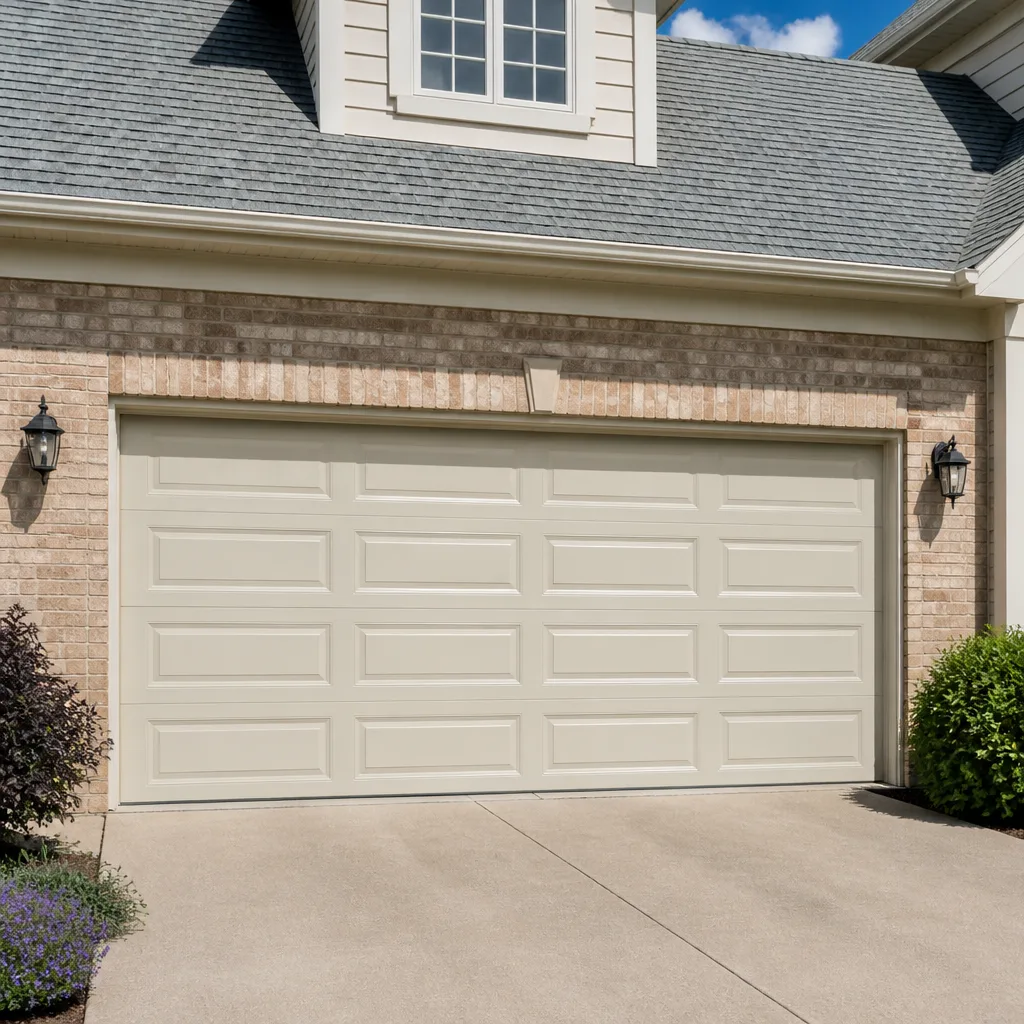 Raised-panel steel
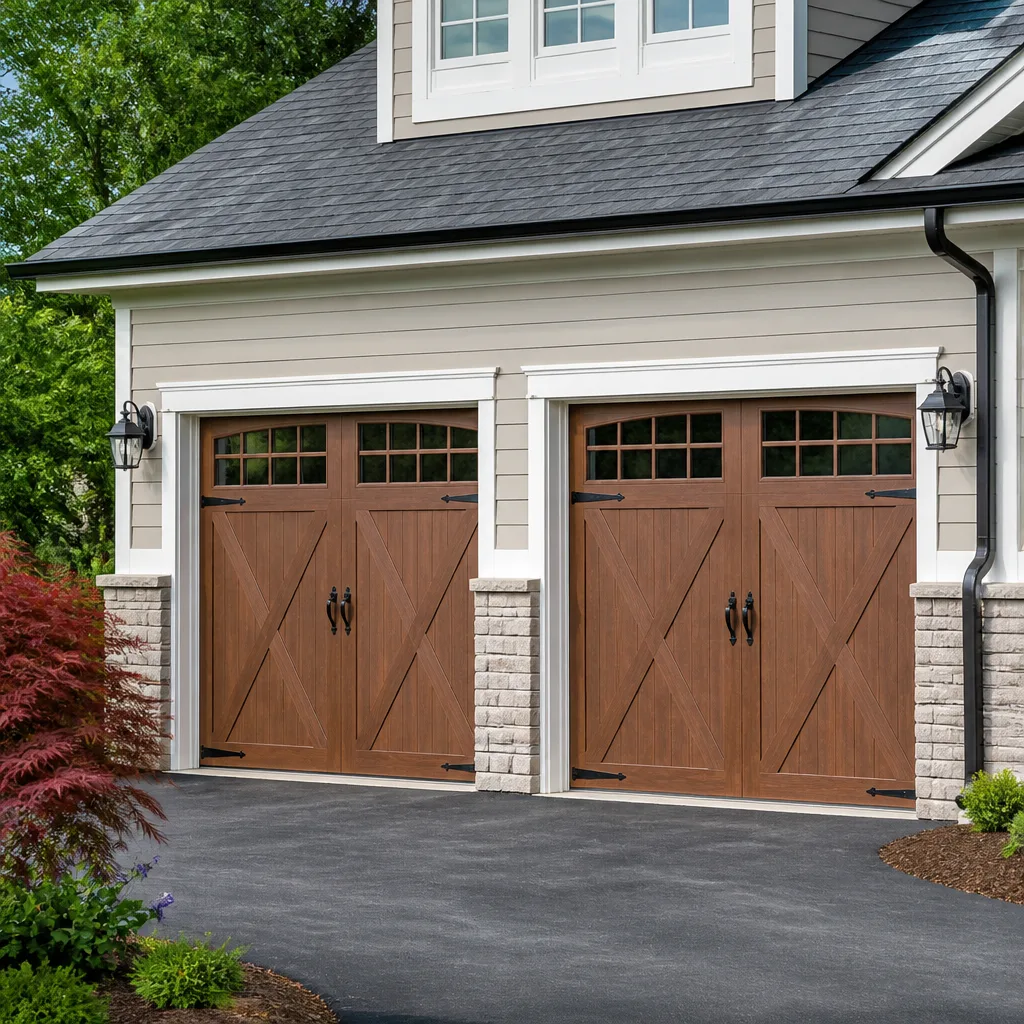 Carriage house
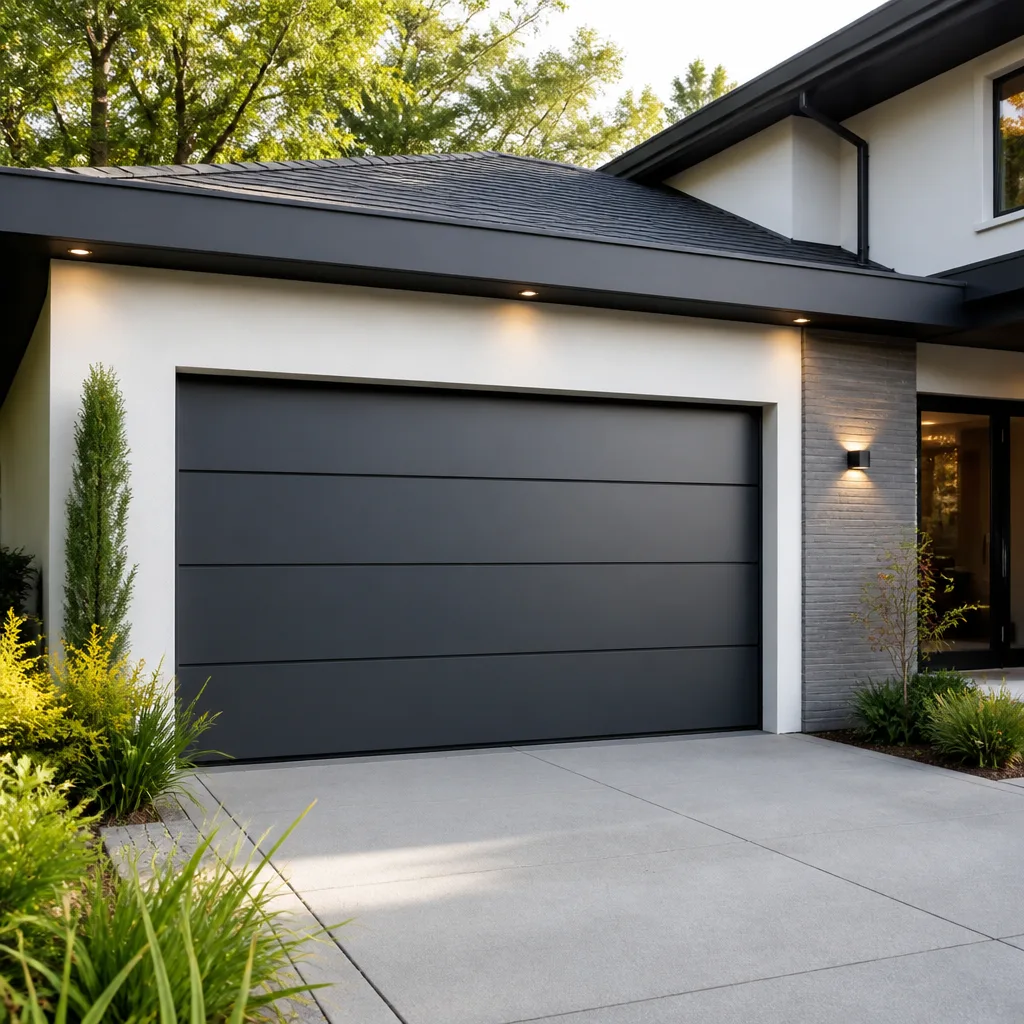 Modern flush
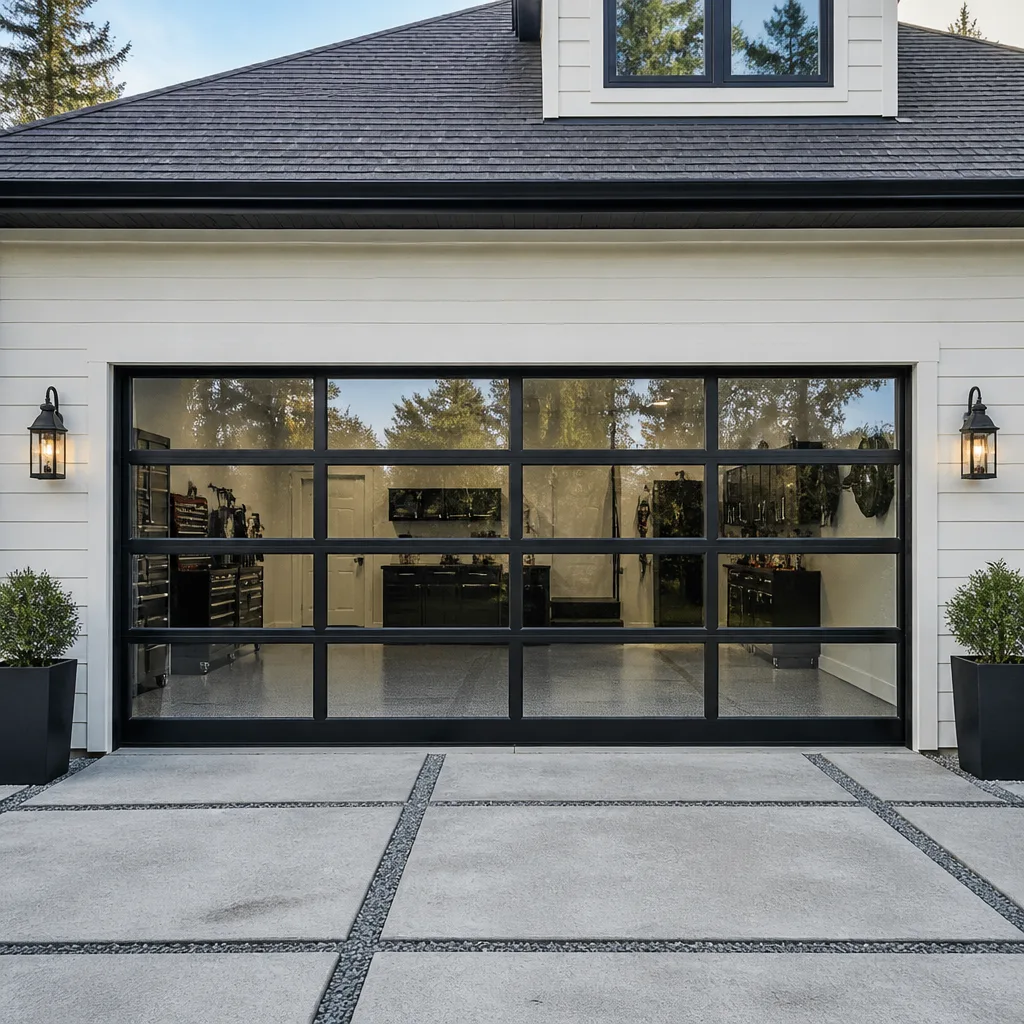 Full-view glass
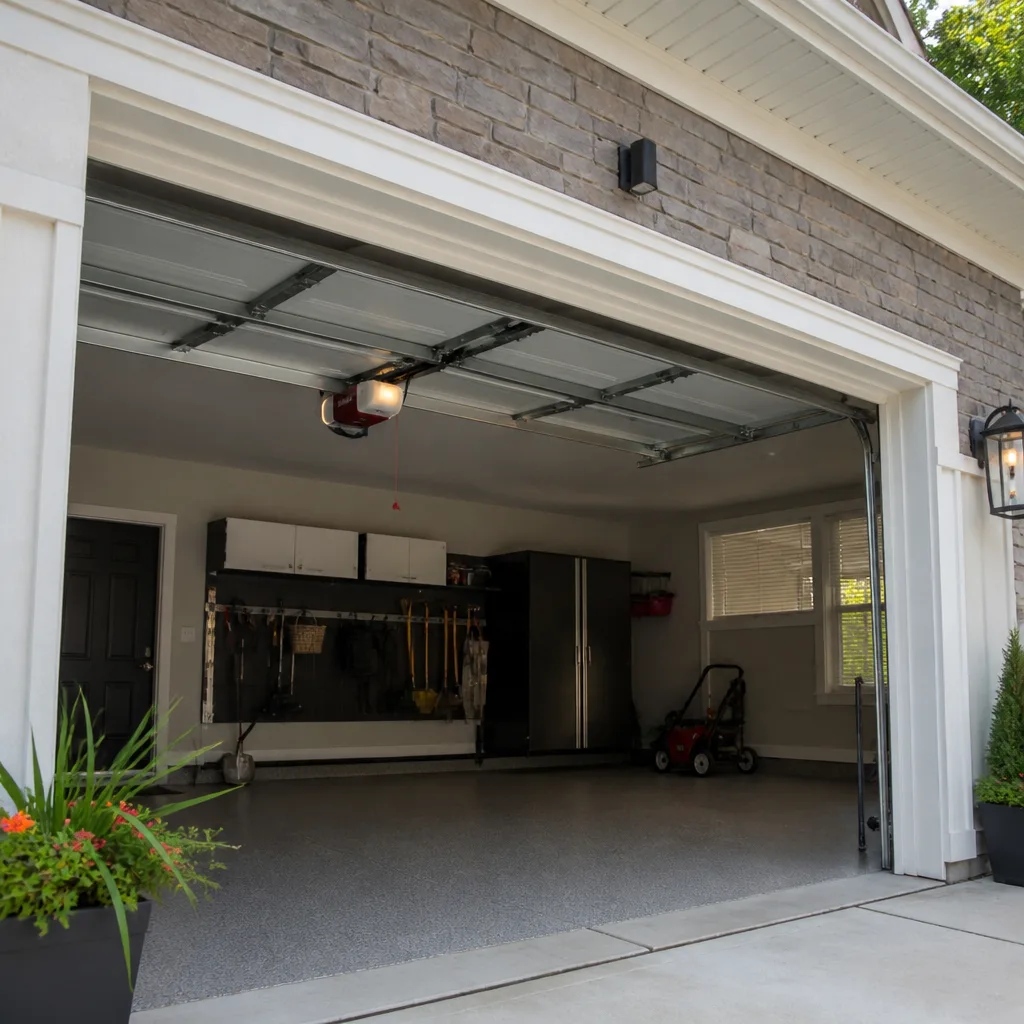 LiftMaster openers
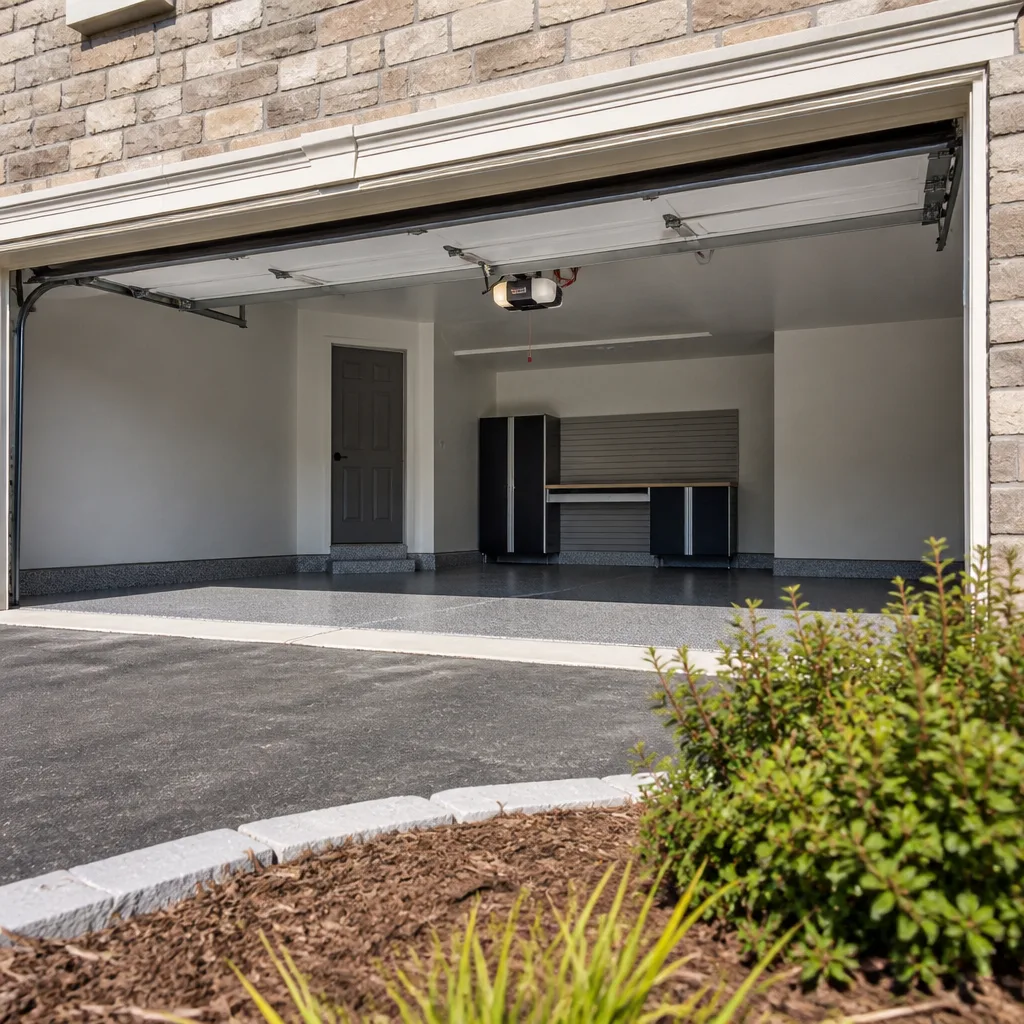 Chamberlain openers
Full 25-point door and opener safety check with every visit - springs, cables, rollers, tracks, and your LiftMaster or Chamberlain opener included
You get a price before we start. It does not change when the pro arrives.
Get your free estimateThe Complete Guide to Garage Doors in Franklin
Most garage door guides are written for a climate that doesn’t exist here. They talk about heat and humidity, or about mild winters where a door seal never freezes to the slab. Franklin is not that place. Our winters drive frost heave under the slab, stiffen the grease in every moving part, and turn a bottom seal into something that can bond itself to the concrete overnight. Franklin also has one of the more varied housing stocks you’ll find in the region: colonial-era homes near the town center, mid-century ranches, and newer subdivisions on the edges, each with different rough openings, header clearances, and structural quirks.
That mix matters far more than any brand brochure when you’re deciding whether to repair, replace, or upgrade a door. This guide walks through how Franklin’s climate and housing actually affect your garage door, what to check before you buy anything, how permitting works, where HOA rules bite, why insulation ratings get oversold, and when a repair beats a replacement. By the end you’ll know what questions to ask, what to budget, and what to avoid.
Quick Answer
A garage door in Franklin needs to handle hard freezes, frost heave, and heavy seasonal use, so seal quality, spring condition, and insulation matter more than brand name. Before buying anything, measure your rough opening and header clearance, confirm whether your HOA restricts style or color, and check with the town on permit triggers. For most homeowners, a repair-first approach solves the problem at a fraction of replacement cost.
Styles & brands we work with
- Raised-panel steel
- Carriage house
- Modern flush
- Full-view glass
- LiftMaster openers
- Chamberlain openers
Table of Contents
- How Franklin’s Housing Stock Shapes Your Door Choices
- What Franklin Winters Do to Your Garage Door
- Insulation: Which R-Value Actually Makes Sense in Massachusetts
- HOA Rules and Historic Districts in Franklin
- Permits and Code in Franklin
- Repair or Replace? A Decision Framework
- Why Brand-Agnostic Repair Capability Matters at Year Ten
- A Seasonal Maintenance Sequence for Franklin Homeowners
How Franklin’s Housing Stock Shapes Your Door Choices
Franklin’s homes don’t fall into one tidy category, and that’s the first thing to understand before you shop. A door that drops cleanly into a newer subdivision build may not fit a colonial with a shallower header. Rough opening size and header clearance are the two measurements that determine what’s even possible, and they vary more in Franklin than most homeowners expect.
Older homes near the town center frequently have tighter, less standardized openings. Attached garages were sometimes retrofitted decades after the house was built, and the framing reflects whatever was practical at the time. Newer construction on the outskirts tends to use consistent dimensions, which gives you more off-the-shelf options but doesn’t guarantee the opening is square.
What to measure before you buy
- Measure the rough opening width and height at three points each. If the numbers differ by more than an inch or so, the opening isn’t square and a standard door may bind.
- Measure the header clearance above the opening. Low-headroom situations call for a different track and torsion configuration.
- Check the side clearance on both sides for the vertical track.
- Note the ceiling height inside the garage, since it affects how high the door panels can travel.
If you skip this step, you can end up ordering a door in a popular Clopay or Amarr style that simply can’t be hung in your space. That’s why a measure happens before a purchase, not after. When you call for garage door installation, the first visit is about confirming what your opening will actually accept.
What Franklin Winters Do to Your Garage Door
Cold is the main stressor here, and it works on your door in a few ways that don’t show up in warmer climates. The most common is the bottom seal freezing to the concrete slab. Once that happens, the opener pulls against a bonded seal every time it lifts, which stresses the opener motor, the springs, and the panels themselves.
The second is frost heave. When the ground freezes and expands, it can shift the slab or push it upward slightly. A door that closed cleanly in October may not close flat in January. That’s a structural problem, not a door problem, but it surfaces at the door.
The third is lubrication and grease. Lubricant thickens in cold, so rollers, hinges, and springs that ran smooth in mild weather can drag. Drag translates into extra load on the opener and faster spring fatigue.
What a typical winter prep looks like
- Inspect the bottom seal for cracks, flattening, or any spot that sticks to the slab. A brittle or deformed seal should be replaced before the first hard freeze.
- Lubricate hinges, rollers, and the torsion springs with a product rated for cold weather. Generic oils can grit up at low temperatures.
- Test the door balance by disconnecting the opener and lifting the door roughly halfway by hand. It should stay in place. If it drops or rises on its own, the springs are out of balance.
- Check that the door closes flat across the whole width. A gap at one corner suggests slab movement or a track issue.
- Confirm the safety sensors align and the auto-reverse works. Cold weather can shift sensor brackets.
This is also the season when we get the most calls for garage door repair in Franklin. Doors that were fine in autumn suddenly won’t close, or the opener strains and stops halfway.
Insulation: Which R-Value Actually Makes Sense in Massachusetts
Manufacturers advertise insulation ratings as if the highest number always wins. In practice, the R-value you can actually use depends on where the garage sits relative to the living space above and adjacent to it. For a fully detached garage that nobody spends time in, chasing the top of the insulation range is money you won’t recover. For an attached garage under a bedroom, it’s a different calculation.
Think about three scenarios:
- Detached garage, no living space nearby: Basic insulation is usually enough. The priority is sealing drafts, not maximizing R-value.
- Attached garage with rooms above: Higher insulation reduces heat loss into the garage ceiling and helps stabilize the temperature in the rooms above. This is where a genuinely high R-value earns its cost.
- Attached garage you use as a workspace: Insulation plus a well-sealed bottom seal and perimeter weatherstripping makes the biggest difference. Without those seals, insulation alone does little.
A door’s published R-value also assumes the whole assembly is tight. Gap-riddled panels or a worn bottom seal let cold air in regardless of how thick the foam is. Insulation is only as good as the seal around it.
What manufacturers don’t emphasize
Many high-R-value doors use polyurethane foam, which is dense and performs well but also makes the door heavier. A heavier door needs a stronger spring and a more capable opener. If you upgrade the door without upgrading the springs to match, you’ll be replacing them sooner than you expect. Insulation gains always come with a hardware consequence, and a good installer factors that in before recommending anything.
HOA Rules and Historic Districts in Franklin
Franklin has a meaningful number of neighborhoods governed by homeowner associations, and their architectural rules vary from one association to the next. Some restrict door style to a specific panel configuration. Others define approved exterior colors, sometimes down to a short list. Assuming your neighbor’s door is allowed because it’s already installed is not a safe bet; rules can tighten, and enforcement is often retroactive.
Before you order, do two things:
- Get the current architectural guidelines from your HOA in writing, including any approved color list.
- Submit your intended door style and color through the association’s approval process and keep the record of it.
If your home sits in a historic district, the review process can be separate from the HOA and handled through the town. Historic districts often have design review requirements for visible changes, and garage doors facing a public street usually fall under them. Call the town’s building department or planning office to ask whether your address has any historic designation attached to it.
The frustrating version of this process is ordering a door, having it delivered, and then discovering the color was never approved. Getting written approval first costs a little time and saves a lot of money. We’ve seen this play out often enough in Franklin that it’s now part of every pre-installation conversation we have. The same rule applies to Wayne Dalton models: a great door in a disallowed color is still a problem.
Permits and Code in Franklin
Permit requirements depend on the scope of work and the town’s current rules, so the definitive answer always comes from the town’s building department. That said, certain situations are more likely to trigger a permit than others.
- Full door replacement: Frequently requires a permit because the door is considered part of the structure and the install touches framing and hardware.
- Spring replacement: Typically treated as a repair rather than construction and often does not require a permit. Confirm with the town, because classification can vary.
- Opener replacement: Usually does not require a permit unless it involves new electrical circuits.
- Structural changes: Widening the opening, altering the header, or converting a garage to living space will involve permits and possibly engineered drawings.
- Electrical work: New circuits for an opener, or adding an outlet, generally falls under electrical permit rules.
Building codes also govern safety features. The auto-reverse mechanism and photo-eye sensors are required on modern openers, and an inspector may check them if a permit is pulled. A door that reverses on contact with an obstruction and stops when the sensor beam is broken should be standard everywhere, not just where inspections demand it.
If you’re not sure whether your project crosses a permit threshold, call the town. A two-minute conversation saves you from a problem at resale, and any reputable contractor will tell you the same.
Repair or Replace? A Decision Framework
The honest answer for most Franklin homeowners is repair first. A door that opens and closes but has a broken spring, a worn seal, or a strained opener doesn’t need replacement. The question gets more interesting when you weigh cost against the remaining life of the assembly.
Repair is usually the right call when:
- The door panels are structurally sound with no rot, deep dents, or separation.
- The problem is isolated to springs, rollers, hinges, cables, or the opener.
- The track is straight and the door moves without binding.
- Replacement parts are available for your system, which is where brand-agnostic capability matters.
Replacement starts making sense when:
- Multiple springs and the opener have failed close together, and the assembly is near end of life.
- Panels are rotted, cracked, or badly dented across more than one section.
- The door is a safety hazard that can’t be corrected with hardware.
- You’re remodeling and the door size or style needs to change.
A repair-first approach means diagnosing before recommending. Our technicians have up to 12 years of experience, and the good ones do this automatically: they check the door as a complete system before writing an estimate. If you’ve been told you need a full replacement and you’re not sure, it’s worth a second opinion. Call (888) 484-8160 for a free estimate in Franklin.
Spring repair: the one repair you should never skip or delay
Springs are the most hazardous component on the door. Torsion springs store enormous tension, and a cable or spring that lets go under load can cause serious injury. When a spring breaks, the door often will not lift at all, or it drops hard. That is not a job to attempt without the right tools and training. Spring repair is one of the more dangerous tasks in this trade, and many generalists avoid it or farm it out.
If you suspect a spring has broken, stop operating the door by hand and don’t force the opener to try. Our garage door spring repair in Franklin is handled by trained technicians using spring winding tools and proper safety procedures. The fix itself is usually quick once we’re on site. The part that takes judgment is knowing which spring size matches your door’s weight and how to tension it safely.
Why Brand-Agnostic Repair Capability Matters at Year Ten
Brand loyalty makes sense when you’re buying new. It makes far less sense when your door is ten or twelve years old and one component fails. At that point, what matters is whether the technician you call can work on the equipment that’s already on your house.
This is where brand-agnostic capability earns its keep. Any installer can sell you a door from the line they carry. Repairing an older system takes familiarity with a wider range of hardware: torsion versus extension springs, differing track profiles, and opener logic from multiple manufacturers. We service LiftMaster, Chamberlain, Genie, Clopay, Amarr, Wayne Dalton, Craftsman, and Raynor products, which means the door in your garage is likely one we already know.
Openers in particular
Opener repair is a separate skill from door repair. LiftMaster and Chamberlain systems share some logic and parts conventions, but Craftsman and Genie units behave differently, especially when they’re paired with remote controls or smart-home integrations. A door that isn’t opening may have a dead spring, a misaligned sensor, a failing logic board, or a broken drive gear. Diagnosing the actual cause requires more than a general mechanical eye.
When a door stops working, the entire house feels it: the car is blocked, the bike is stuck inside, and the security gap if the door won’t close is real. Emergency calls are a core part of what we handle for that reason, and we treat them as urgent rather than as an upsell opportunity. Our garage door opener repair in Franklin covers legacy systems as well as newer smart-compatible units. If your opener is beeping oddly or the remote intermittently fails, that usually points to a specific component issue rather than the whole unit being finished.
And when the time does come for a full replacement, the relationship doesn’t need to start over. From a single spring repair to a complete new-door installation, we handle the range, so you’re not hunting for a second contractor mid-project.
A Seasonal Maintenance Sequence for Franklin Homeowners
Garage doors benefit from a small amount of routine attention, especially in a climate that has real winters. The sequence below is what a trained technician checks, condensed into what a homeowner can reasonably handle on their own.
Fall: prepare for the freeze
- Inspect the bottom seal for cracks and check whether it sits flat against the slab.
- Lubricate hinges, rollers, and springs with a cold-rated product.
- Test the balance by disconnecting the opener and lifting the door halfway. It should hold in place.
- Clear the tracks of debris and check for bends or loose hardware.
- Test the auto-reverse and photo-eye sensors.
Winter: watch, don’t force
- If the door strains to lift in cold weather, stop using the opener and have it looked at. Forcing it wears out the motor.
- Clear snow and ice from the base of the door so the seal doesn’t bond to the slab.
- Pay attention to new noises: grinding, snapping, or a door that dips on one side.
Spring: check for winter damage
- Look for a gap at one corner when the door is fully closed, which can indicate frost heave.
- Check the spring for gaps or a visibly relaxed coil.
- Re-test balance and auto-reverse.
- Inspect for rust on tracks and hardware after a wet winter.
Anything beyond lubrication and visual inspection belongs with a professional. Springs, cables, and track adjustments involve stored energy and heavy hardware that can hurt you if released unexpectedly.
Common Mistakes to Avoid
- Buying before measuring. Ordering a door before checking rough opening and header clearance is the single most common ordering error, and Franklin’s varied housing stock makes it especially risky. Measure first, choose the model second.
- Skipping the HOA approval step. Installing a door that was never approved can force a removal and second purchase. Get the written approval before delivery.
- Choosing the highest R-value without context. A detached Franklin garage gains little from a heavily insulated door. Match the insulation to whether living space is adjacent.
- Lubricating with the wrong product in cold weather. Thick grease stiffens in freezing temperatures and can load up the opener. Use a lubricant rated for the cold.
- Ignoring a frozen bottom seal. If the seal is sticking to the slab, the opener is straining on every cycle. That shortens spring and opener life and is easy to fix early.
- Replacing the whole door when one component failed. A broken spring, misaligned sensor, or dull track is not a reason to replace the assembly. Get a diagnosis before agreeing to replacement.
- Attempting spring work yourself. Torsion springs are under extreme tension. This is not a DIY task, and a mistake can cause serious injury.
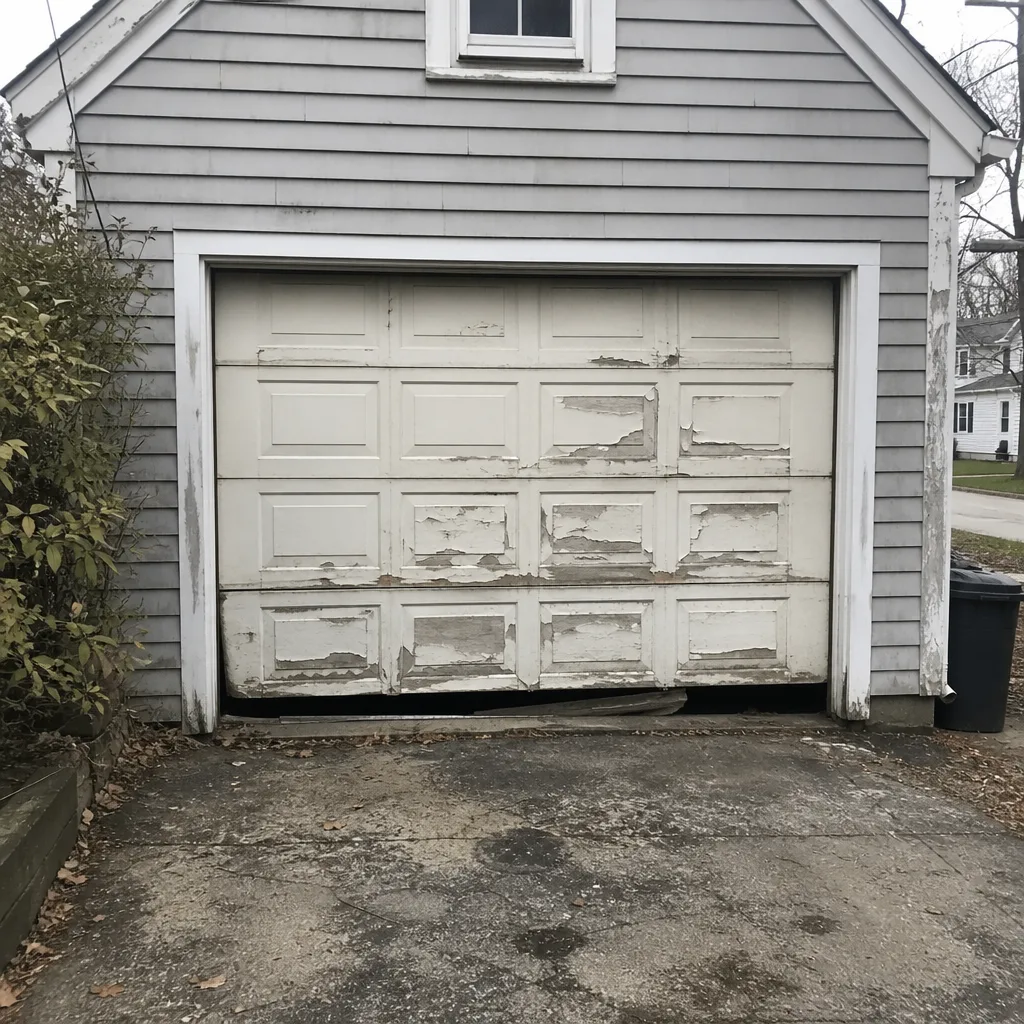
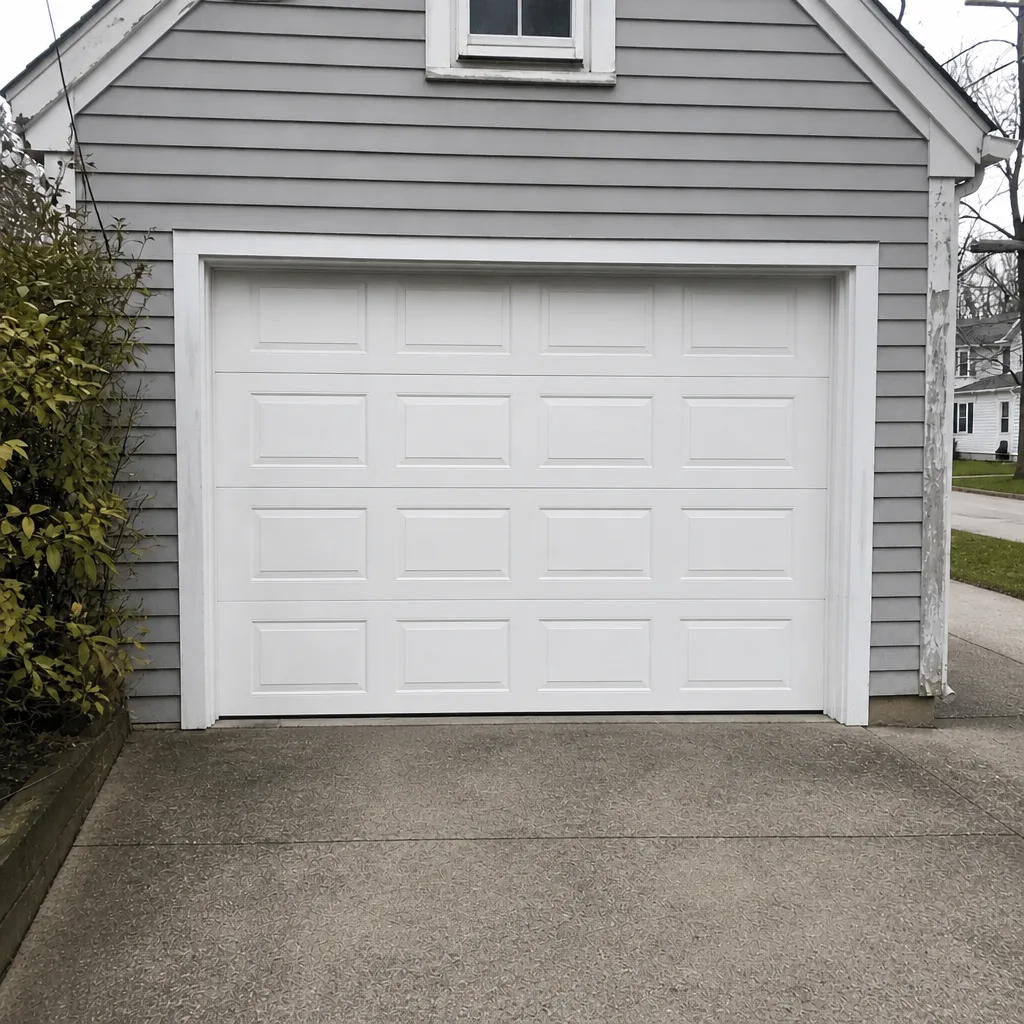
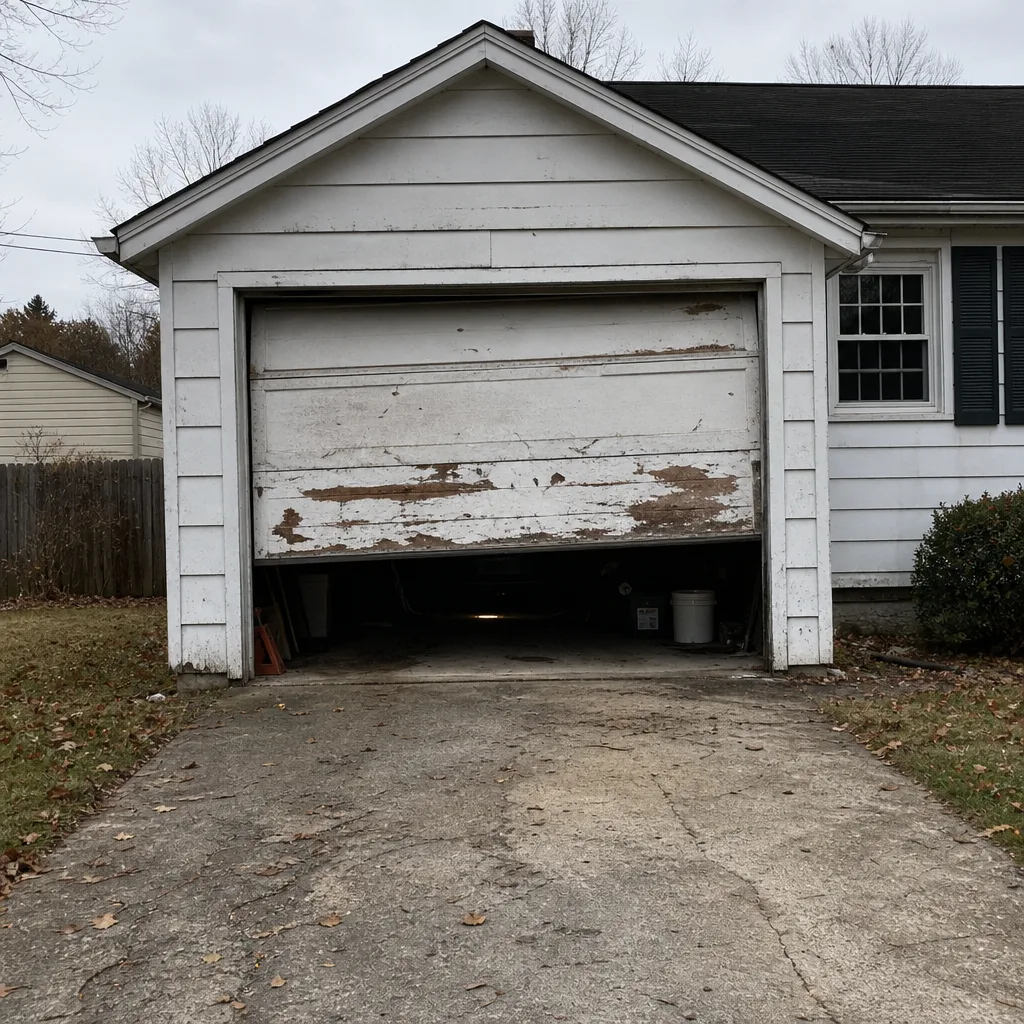
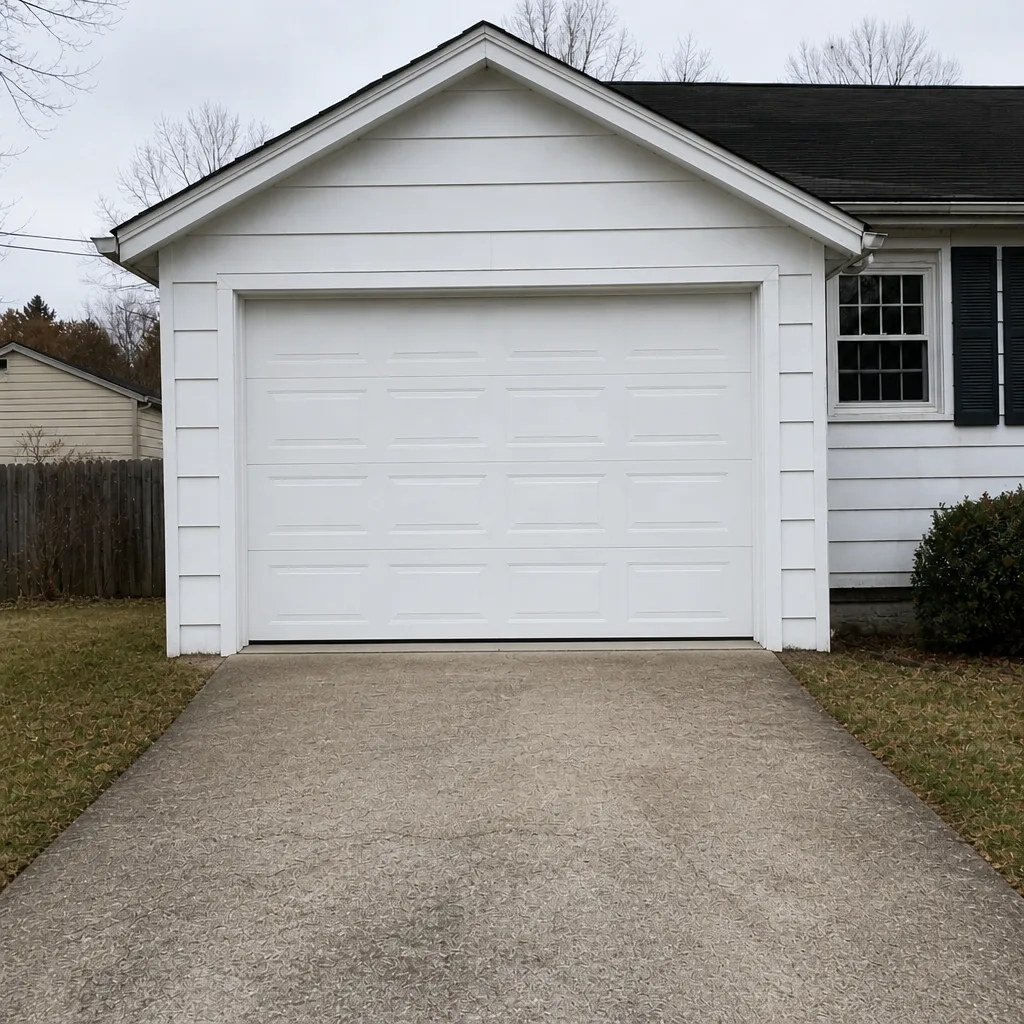
See the difference
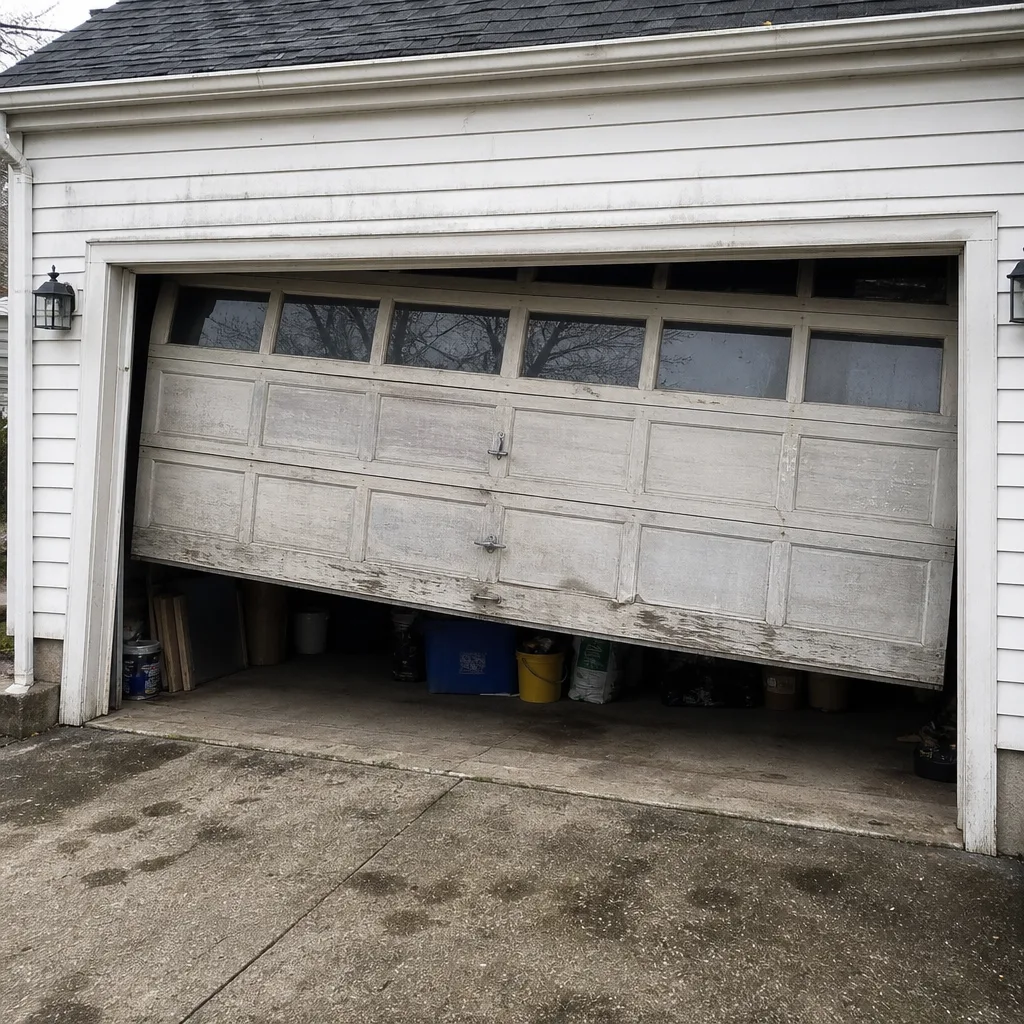 Before
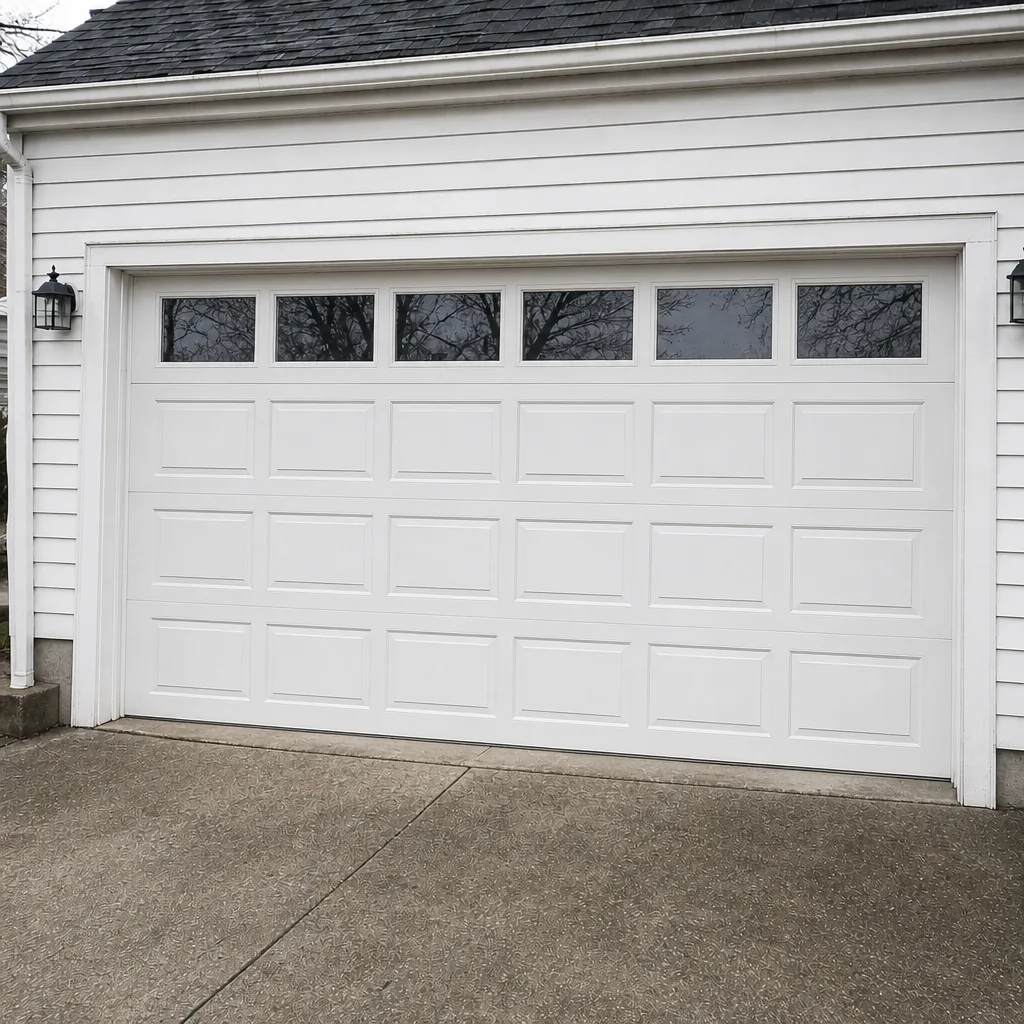 After
 Before
 After
 Before
 After
When to Call a Professional
Call a professional when the door won’t move at all, when you hear a loud snap from the spring area, or when the door drops or jumps on one side. Those symptoms point to spring or cable problems and should not be handled by hand. Call if the opener keeps reversing, if the safety sensors won’t stay aligned, or if a remote works only intermittently. Call when the door is visibly off its track or the panels have shifted. Call if the door won’t close fully, since an open door is a security gap. And call before a planned purchase if you’re unsure what your opening will accept. Franklin Garage Door Repair Pros offers free estimates in Franklin, and our technicians have up to 12 years of experience. Call (888) 484-8160.
Frequently Asked Questions
Cost depends on door size, material, insulation, and the hardware needed to match your opening. Because Franklin’s housing stock varies widely, the range is broad: a basic single-car door and a fully insulated double-car door land in very different places. The price we quote is always written down and agreed before any work starts, so you’ll know the final number before we begin. Call (888) 484-8160 for a free estimate; estimates are free.
The answer depends on scope and the town’s current rules, and the definitive source is the town’s building department. Full door replacement frequently requires a permit, while spring and opener repairs usually don’t. Structural changes to the opening nearly always do. Ask the town before scheduling work.
The bottom seal is bonding to the concrete slab, most often because moisture collects at the base and then freezes. A brittle or flattened seal makes it worse. Replace a worn seal before the freeze and keep snow cleared from the base of the door. If the door is straining to lift, have it checked rather than forcing the opener.
It depends on whether heated living space sits above or next to the garage. A detached garage with no adjacent living space gets little benefit from a high R-value; an attached garage under a bedroom benefits meaningfully from better insulation. Regardless of the number, the seals around the door matter as much as the foam inside it.
Likely yes. We service LiftMaster, Chamberlain, Genie, Clopay, Amarr, Wayne Dalton, Craftsman, and Raynor products. That means we diagnose and repair what’s already on your house instead of steering you to a replacement brand. Call (888) 484-8160 with your model and we’ll take it from there.
No. We diagnose first, then quote, and the written estimate sets the final price. If something unexpected turns up during the work, we’ll talk to you about it before doing anything that changes the cost. That’s how a repair-first approach works: you authorize the number you were given.
The Bottom Line
Franklin garage doors fail in predictable, local ways: frozen seals, frost heave under the slab, cold-stiffened hardware, and opener strain after a hard winter. The housing stock adds a second layer, since colonial-era openings and newer subdivision builds accept different doors. Measure before you buy, get HOA and historic approval in writing, confirm permit requirements with the town, and match insulation to how the garage is actually used. Springs belong with a trained technician, always. Most failures are repairs, not replacements, and a diagnosis before an estimate is what separates a good contractor from a salesperson.
Whether your door needs a new spring, a smarter fix for an aging opener, or a proper measure for a full replacement, we work on your brand. Our technicians have up to 12 years of experience, we service eight major brands, and we handle everything from a broken spring to a complete new installation. If your door won’t move, we will.
Call (888) 484-8160 for a free estimate in Franklin. We’ll diagnose the actual problem, walk you through the options, and quote a written price before any work begins. You can also start with Franklin Garage Door Repair Pros for a quick overview of everything we handle across repair, opener work, springs, and installation.
Written by the team at Franklin Garage Door Repair Pros.